The Pipeline Looks Full. The Revenue Says Otherwise.
There is a particular kind of frustration that hits founders and sales leaders around the end of a quarter. The CRM shows plenty of deals. The pipeline looks healthy. The team has been busy. But the revenue number tells a different story.
Deals that looked promising three weeks ago have gone quiet. Leads that came in hot are sitting untouched in a stage they should have left days ago. The forecast, which looked solid at the start of the month, is suddenly soft.
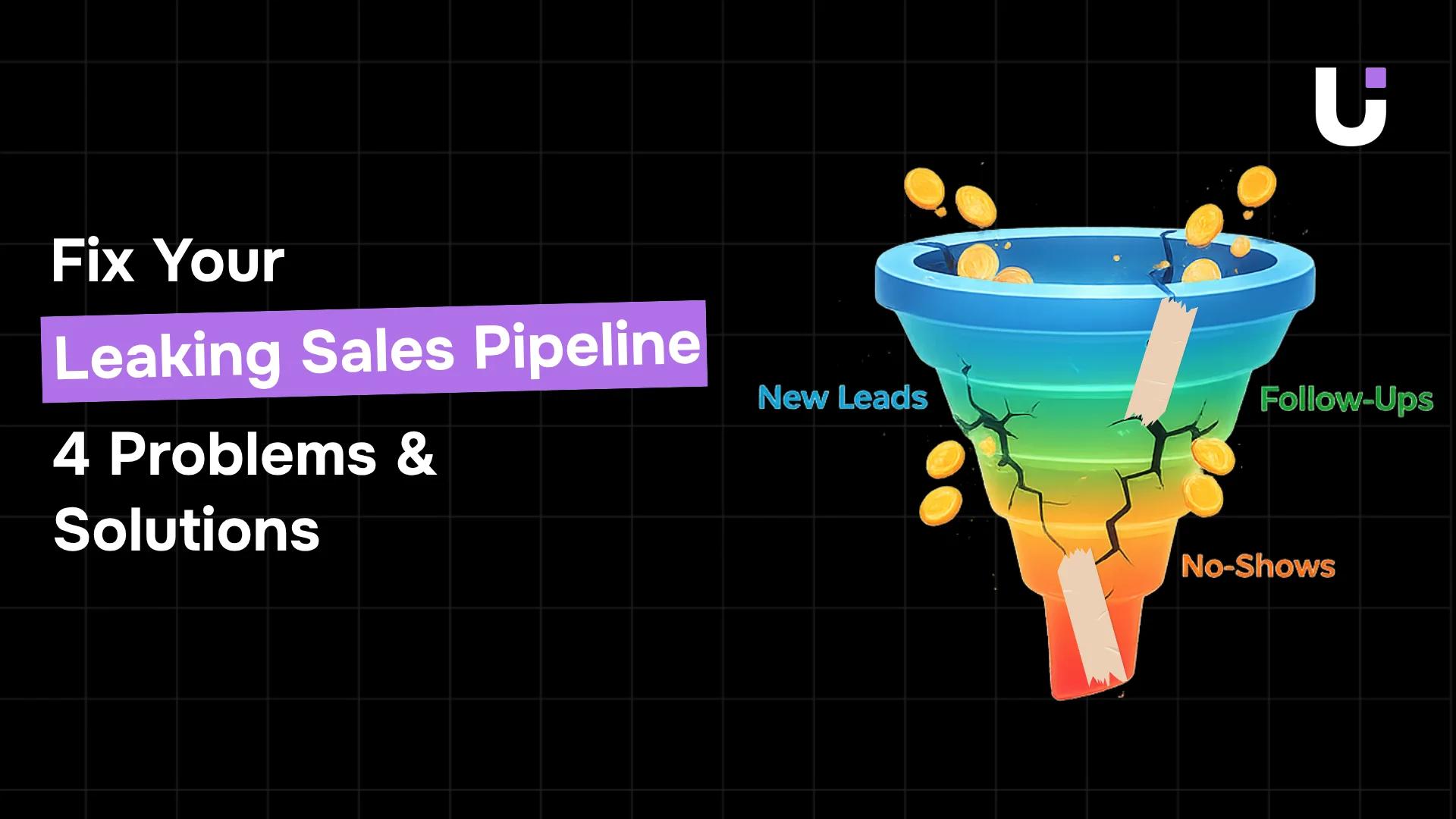
The pipeline is not empty. It is leaking. And most teams are plugging the wrong holes because they have never diagnosed where the leak actually is.
What Is Sales Pipeline Leakage?
Sales pipeline leakage is the loss of potential revenue at any point between first contact and closed deal. It happens when leads exit the pipeline before converting, not because they were unqualified, but because something in the process failed to move them forward.
Every pipeline has natural attrition. Not every lead is a fit. That is expected. Leakage is different. Leakage is the revenue that should have converted but did not because the system let it slip.
A few examples of leaked deals versus lost deals:
| Leaked Deal |
Lost Deal |
| Lead matched ICP but never got a follow-up |
Lead got a follow-up but was not a fit |
| Proposal sent on time but never chased |
Proposal sent but lost on pricing |
| Deal stalled at verbal agreement because nobody sent the contract |
Deal lost to a competitor with a better offer |
The distinction matters because it changes what you fix. Lost deals need better positioning. Leaked deals need better systems.
What Causes a Leaky Sales Funnel?
Pipeline leaks rarely come from one dramatic failure. They come from dozens of small gaps that compound across the sales pipeline stages until the cumulative loss is significant.
The four most common causes:
-
Speed gaps. The delay between a lead showing intent and the team making contact. Most teams measure response time in days. The ones closing at higher rates measure it in minutes.
-
Visibility gaps. The inability to tell high-intent leads from low-intent leads inside the pipeline. When every deal looks the same, reps default to gut feel and the pipeline conversion rate suffers.
-
Admin gaps. The overhead required to keep the CRM current. When updating the system takes longer than the selling activity itself, data goes stale and stages stop reflecting reality.
-
Follow-up gaps. The breakdown in sales follow-up process after initial contact. By day four or five, the cadence collapses because it depends on someone remembering rather than something triggering.
Most businesses have all four to some degree. One of them is always the loudest.
How to Calculate Sales Pipeline Leakage
You do not need a sophisticated analytics tool. You need your CRM data and five minutes.
Step 1: Count the leads that entered each pipeline stage over the last 90 days.
Step 2: Calculate the drop-off between each stage. If 200 leads entered Stage 1 and only 80 made it to Stage 2, that is a 60% drop at the top.
Step 3: Compare your drop-off against these benchmarks:
| Stage Transition |
Healthy Drop-Off |
Red Flag |
| New lead to first contact |
40 to 60% |
Above 70% (speed or routing problem) |
| First contact to proposal |
30 to 50% |
Above 60% (qualification or visibility issue) |
| Proposal to close |
25 to 40% |
Above 50% (follow-up or pricing problem) |
Step 4: Put a revenue number on the gap. Multiply the excess drop-off by your average deal value. If you are losing 20 more leads between Stage 2 and Stage 3 than your benchmark suggests, and your average deal is worth $5,000, that is $100,000 in leaked pipeline per quarter.
That number changes the conversation from "we should probably look into this" to "we need to fix this now."
The 4 Problems That Cause 90% of Pipeline Leakage
Problem 1: Leads Going Cold Before Anyone Follows Up
The symptom: Leads are entering the pipeline regularly, but conversion from first stage to second stage is dropping. When someone finally reaches out, the prospect has already moved on.
The root cause: A gap between where the lead arrives and where the follow-up action gets created. In most setups, a lead enters the CRM. Then:
-
Someone has to notice it
-
Someone has to decide who should handle it
-
That person has to find time to make contact
Each step introduces delay. The data is unforgiving: responding within five minutes makes you nine times more likely to convert compared to responding within one hour. After 24 hours, you are essentially cold-calling someone who was warm yesterday.
The fix:
-
Close the gap between lead capture and first action to under five minutes
-
Auto-create follow-up tasks the moment a lead enters the pipeline, assigned to the right person with context attached
-
Track average time from capture to first contact weekly. If it is above 30 minutes, you have a structural problem, not a discipline problem
Problem 2: No Visibility Into Which Leads Are Actually Hot
The symptom: Reps are spending equal time on every lead. High-intent leads get the same attention as tyre-kickers. The pipeline conversion rate is flat despite high activity.
The root cause: The pipeline shows where deals are but not how likely they are to close. Without scoring, reps default to recency bias, working the lead they just spoke to rather than the lead most likely to convert.
The fix: Score every lead on two dimensions:
| Dimension |
What It Measures |
Example Signals |
| Fit |
Does the lead match your ICP? |
Industry, company size, role, budget |
| Intent |
Is the lead actively engaging? |
Email opens, pricing page visits, reply speed |
The priority matrix is simple:
-
High fit + high intent = top of the list, act now
-
High fit + low intent = nurture track, stay visible
-
Low fit + any intent = deprioritise, do not waste rep time
Review scores weekly. The shift in how reps allocate their time will be immediate.
Problem 3: The Team Is Spending Too Much Time on CRM Admin
The symptom: Reps are logging calls, typing notes, updating stages, and scheduling reminders. Pipeline data is frequently stale because reps fall behind on updates.
The root cause: Most CRMs are databases, not workflows. Every interaction generates admin:
-
Call finished → type up notes
-
Email sent → log it to the record
-
Deal progressed → change the stage
-
Follow-up needed → create a reminder
Each task takes under two minutes. Across 20 to 30 active deals, they consume hours every week. Sales reps spend just 34% of their time actually selling. The rest goes into admin, meetings, and searching for information.
When reps fall behind, the sales follow-up process breaks because triggers depend on data that has not been entered yet. The pipeline becomes a snapshot of last week.
The fix:
-
Auto-log call transcripts and email threads to the correct record
-
Trigger stage changes based on outcomes, not manual clicks
-
Create follow-up tasks as a byproduct of pipeline events, not as a separate admin step
-
Audit this week: track how many minutes each rep spends on data entry over five days. The number will be the business case.
Problem 4: Follow-Up Falls Apart After Day 3 or 4
The symptom: First contact goes well. The proposal gets sent. Then silence, from your team. Deals stall in the middle stages and prospects cool off.
The root cause: Follow-up after the first interaction depends entirely on human memory. A rep sends the proposal, makes a mental note to chase on Thursday, gets pulled into three other deals, and Thursday becomes the following Monday.
The data confirms this:
-
80% of deals require at least five follow-up touches to close
-
44% of salespeople give up after just one attempt
-
The gap widens with every day that passes after initial contact
The fix: Map your sales pipeline stages to automatic follow-up triggers:
| Pipeline Event |
Follow-Up Action |
Timing |
| Demo completed |
Send proposal |
Within 24 hours |
| Proposal sent, no reply |
Follow-up email |
48 hours |
| Still no reply |
Second follow-up |
Day 5 |
| Verbal agreement |
Send contract |
Same business day |
| Contract sent, unsigned |
Reminder |
Day 3 |
When these triggers are built into the system, the follow-up process runs consistently across every rep, every deal, and every week.
The Diagnostic: Which Leak Is Costing You the Most?
Pull your pipeline data from the last 90 days and check four numbers:
| Metric |
Red Flag Threshold |
Points To |
| Average time from lead capture to first contact |
Above 1 hour |
Problem 1: Speed |
| Conversion rate from first meeting to proposal |
Below 30% |
Problem 2: Visibility |
| Manual CRM updates per rep per day |
Above 15 |
Problem 3: Admin |
| Conversion rate from proposal to close |
Below 25% |
Problem 4: Follow-up |
Start with the number that looks worst. That is where the biggest revenue recovery sits.
How WorksBuddy Seals a Leaking Pipeline End to End
Most teams try to fix these problems one tool at a time. A lead routing plugin for speed. A scoring add-on for visibility. An automation connector for admin. A sequence tool for follow-up. Four subscriptions, four data sources, and a fragile chain of integrations.
WorksBuddy handles all four inside a single platform. Here is what happens across your pipeline from the moment a lead arrives to the moment revenue lands in your account:
-
LIO captures every lead instantly from web forms, ad platforms, and integrations, and TARO creates the follow-up task simultaneously. The gap between capture and first action closes to zero. The task is assigned, prioritised, and loaded with context before the rep finishes reading the notification. Problem 1 fixed.
-
LIO enriches and scores each lead on arrival with company data, role context, fit score, and intent score. Reps open a live priority list, not a flat CRM view where every deal looks the same. EVOX moves low-intent, high-fit leads into a nurture sequence automatically so nothing falls out of the pipeline just because it is not ready today. Problem 2 fixed.
-
LIO auto-logs every interaction and triggers stage changes based on outcomes. Calls, emails, and meetings attach themselves to the correct record. TARO creates the next task as a byproduct of the stage change, not as a separate admin step. Reps stop feeding the CRM. The pipeline updates itself. Problem 3 fixed.
-
EVOX fires follow-up sequences tied to pipeline events. Proposal sent with no reply in 48 hours? Next touchpoint triggers. Lead quiet for five days? Re-engagement starts. Someone replies? EVOX stops instantly and TARO surfaces the conversation to the rep with full context. The sales follow-up process runs on system logic, not memory. Problem 4 fixed.
-
PRAX generates the project plan the moment a deal converts. Team assigned, milestones set, timeline locked. No handoff meetings. No "what did we sell them?" conversations. Sales and delivery share the same data.
-
INZO sends the invoice when a milestone is delivered. Payment reminders escalate on schedule. Cash flow updates in real time. The revenue your pipeline earned does not leak on the other side because nobody told finance.
Every agent shares the same data. When one acts, the others respond. The pipeline stops leaking at the top because LIO and TARO close speed gaps. It stops leaking in the middle because EVOX closes follow-up gaps. And it stops leaking after the close because PRAX and INZO connect delivery and billing to the same system that captured the lead.
The Pipeline Does Not Fix Itself. But It Does Not Have to Stay Broken Either.
You have read the four problems. You have probably identified which one is costing you the most. The diagnostic takes five minutes. The fix should not take much longer to start.
WorksBuddy's free plan is live. No credit card. No 14-day countdown. No sales call standing between you and a pipeline that actually holds water. Sign up, connect your leads, and the agents start working before your next pipeline review.
Paid plans open the full agent lineup for teams ready to connect every stage from first touch to final invoice. But the free plan is more than enough to stop the biggest leak this week.
Four problems. One platform. A pipeline that finally stops losing the deals your team already earned.


 Elena Petrova15 September 2026


