TL;DR: Most articles on people, process, and technology stop at the definition. This one shows IT company owners where the three break down in practice, which layer to fix first, and how automating the process layer removes your team as the daily bottleneck. You'll leave with a five-step sequence you can apply to a real workflow this week.
What people process technology actually means
The people process technology framework is a three-part model for improving how organizations operate. First named by Harold Leavitt in the 1960s and later formalized in IT service management, it holds that sustainable performance comes from aligning your people, your processes, and your tools — in that order.
Most teams treat the three pillars as a checklist: hire capable people, buy better software, document some workflows. The framework breaks down when you do it that way. Technology purchased before processes are defined creates expensive shelfware. Processes designed without the right people to run them create bottlenecks that no tool can fix.
The sequencing is what most implementations miss. Process is the load-bearing pillar. It defines what your people need to do and what your technology needs to handle. Get the process mapped first, and how IT process automation removes the manual coordination that slows teams down becomes a clear next step rather than a guessing game.
As a strategic model designed to enhance organizational performance, the framework only delivers results when all three elements reinforce each other — and that reinforcement has to be built in a specific sequence, not all at once.
Why the framework matters for business operations
When you align people, process, and technology in the right sequence, four things improve in ways IT owners can actually measure.
Faster delivery. When your team knows exactly who owns each step and the process is documented before any tool touches it, work moves without the back-and-forth that kills sprint velocity. Tasks don't sit in inboxes waiting for someone to figure out what happens next.
Fewer errors. Most mistakes in IT operations aren't skill problems — they're process gaps that technology then amplifies. A misconfigured handoff in your ticketing workflow produces the same wrong output a hundred times before anyone notices. Fix the process first, and you remove the error at the source rather than patching it downstream.
Clearer accountability. Ambiguity about ownership is one of the most expensive coordination problems a small IT company carries. When the three pillars are aligned, every task has a named owner, a defined trigger, and a visible status. That's what how IT process automation removes the manual coordination that slows teams down looks like in practice.
Lower coordination cost. The hours your team spends chasing updates, re-explaining context, and manually routing work are a direct tax on your margins. A properly sequenced digital transformation framework eliminates most of that overhead — not by adding more tools, but by making the tools you already have run processes that are actually worth automating.
That last point is where most implementations break down.
Where most IT teams get the order wrong
The most common mistake IT teams make is buying software before they understand the process it's supposed to run. A new ticketing system, a project management platform, an IT process automation tool — none of them fix a broken workflow. They just make the broken workflow move faster.
HappySignals puts it plainly: many organisations implement tech and processes without first understanding the problems end-users face. That's the wrong order.
Here's what that looks like in practice. A five-person IT team buys a workflow automation tool, spends two weeks configuring it, and still has the same handoff delays they started with — because the handoff problem was never documented, let alone fixed.
The people process technology framework only works when process comes first. People need clear steps before they can follow them consistently. Technology needs a documented process before it can automate anything worth automating. Skip that sequence and you're automating confusion.
This is the gap most generic guides miss. They describe the three pillars without telling you which one carries the load. Process does. Once that's mapped, specific automations you can build once your process is documented become obvious rather than speculative.
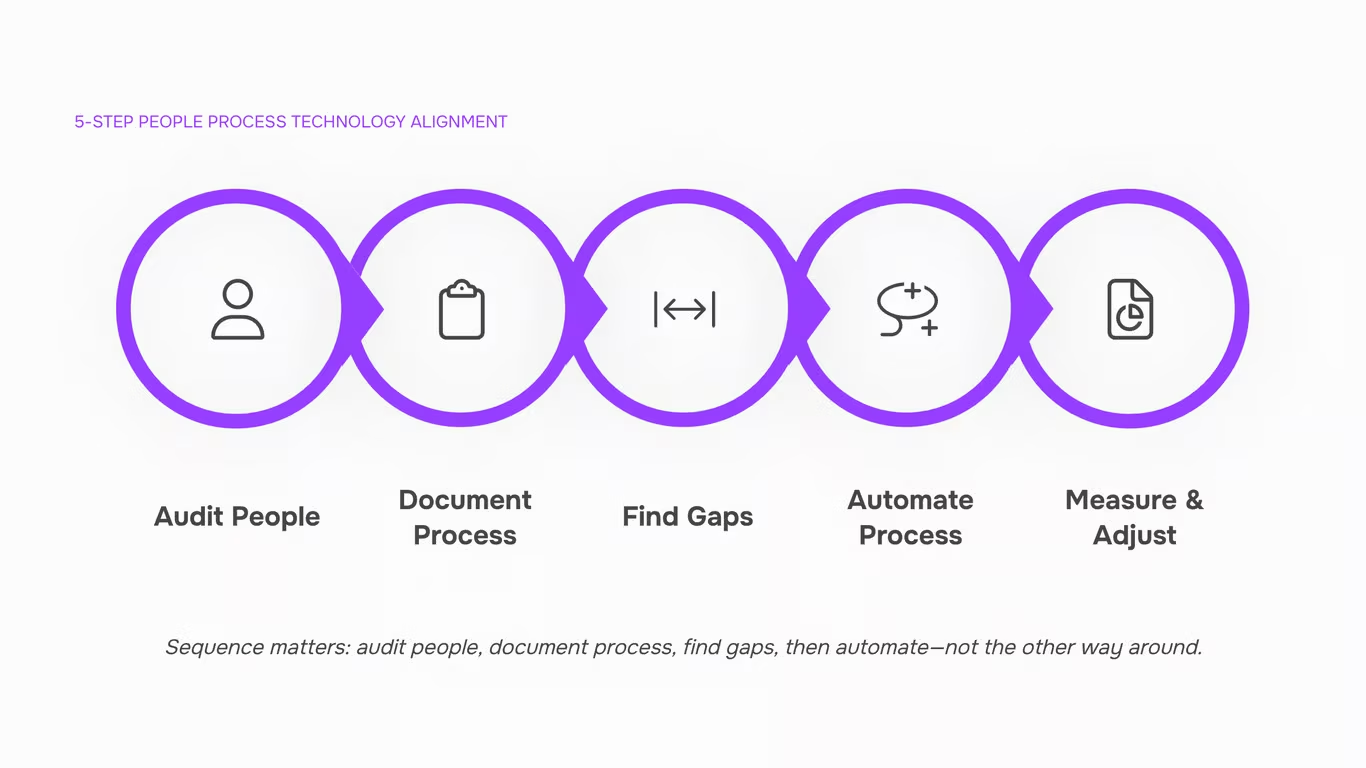
5 steps to align people, process, and technology in your operations
Most IT operations failures don't start with bad technology. They start with a process that was never documented, handed to a tool that had no idea what to do with it. These five steps fix that in order — and the order matters.
Step 1: Audit your people layer
Before touching any tool or workflow, map who does what today. List every role involved in your core operations: who handles client onboarding, who escalates tickets, who approves purchases. The goal isn't an org chart — it's a responsibility map that shows where decisions actually get made versus where they're supposed to get made.
For a 15-person IT services firm, this often reveals that one senior engineer is the unofficial decision point for five different workflows. That's a bottleneck, not a feature.
Step 2: Document your processes before you automate them
As Prosci notes, mapping and analyzing existing processes to identify roadblocks and redundancies is the step that forms the basis for everything that follows. Write out each process as a sequence of trigger-action pairs: "when X happens, person Y does Z." If you can't write it out, you can't automate it.
Pick one process to start — client ticket routing is a common choice for IT teams. Write the current steps, including the manual ones people do out of habit. That document is your baseline.
Step 3: Identify the gaps between people and process
Compare your responsibility map from Step 1 against your process documentation from Step 2. You're looking for three things: steps with no clear owner, steps that require manual handoffs between tools, and steps that depend on one person's memory rather than a defined rule.
These gaps are where IT process automation removes the manual coordination that slows teams down. A gap isn't a failure — it's a specific target.
Step 4: Automate the documented process
Only automate what you've already documented and gap-analyzed. This is the step most teams skip to, and it's why their automation breaks within a month.
Once your process is clean, Revo lets you wire up trigger-based workflows without writing code — connecting your ticketing system, communication tools, and project management in one sequence. For example, a documented ticket-escalation process becomes an automated rule: ticket open for more than four hours with no response triggers a Slack alert to the on-call engineer and updates the client record automatically. See specific automations you can build once your process is mapped for a practical starting list.
Step 5: Measure, then adjust
Set two or three metrics before you turn the automation on: average resolution time, number of manual touchpoints per ticket, or escalation rate. Check them after 30 days. If the number moved in the right direction, the alignment is working. If it didn't, the problem is usually back in Step 2 — the process wasn't fully documented, or the gap analysis missed a dependency.
This is what the technology layer looks like when it runs your processes automatically — not a set of disconnected tools, but a measurable feedback loop. To align people, process, and technology effectively, you need that loop running before you call the implementation done.
Most digital transformation projects don't stall because the technology failed. They stall because teams bought software before they fixed the process it was supposed to run.
The people process technology framework is the operating model underneath every successful transformation, not a separate initiative you run alongside one. When companies treat it as a checklist — train people, buy tools, call it done — they skip the middle layer. Process is where the actual work lives. Skip it, and the technology automates chaos instead of eliminating it.
This is why the sequence from the previous section matters. You audit people first because you need to know who owns what. You map processes second because that's what the technology will run. The gap analysis tells you where automation will actually help versus where it will just move the problem faster.
Once your process is documented, IT process automation removes the manual coordination that slows teams down. That's the digital transformation framework working as designed — people directing it, process defining it, technology executing it.
What good alignment looks like in practice
Take a typical IT service company running client onboarding manually. A new client signs, and from there it's a chain of Slack messages, forgotten email threads, and a senior engineer manually assigning access credentials three days later than promised. The people are capable. The technology (a PSA tool, a ticketing system) exists. But there's no documented process connecting them, so every onboarding runs differently depending on who's in the office.
Good alignment looks like this instead: a signed contract triggers a structured checklist, ownership is assigned automatically, and the client receives a status update without anyone remembering to send it. The engineer gets one clear task, not five Slack pings.
That's workflow automation for IT teams working as it should — process documented first, technology executing it consistently after.
The business operations improvement here isn't the tool. It's the sequence. Once your process is written down and assigned, specific automations become straightforward to build. Without that documented process, you're just automating chaos.
Run your process layer without manual intervention
Once your process is documented and ownership is assigned, manual execution is the bottleneck. That's where IT process automation removes the coordination work your team shouldn't be doing.
In practice: a new client onboarding triggers a checklist, assigns tasks by role, and escalates overdue items automatically. No one chases status in Slack.
Revo handles this without code. You map the trigger, set the conditions, and the workflow runs. For specific automations you can build once your process is mapped, the setup takes under five minutes per workflow.
See what the technology layer looks like when it runs your processes automatically.
Closing
The people process technology framework only works when you sequence it right — and most teams skip straight to buying tools before they've documented what those tools are supposed to run. You now know the order: map your people, document your process, identify the gaps, then automate. The hard part isn't understanding the framework. It's staying disciplined enough to document your workflow before you wire it up.
That's where execution breaks down for most teams. They document a process, build the automation, then drift back to manual work when something changes or a new edge case shows up. See how Revo handles the execution layer automatically — keeping your documented process running consistently without daily babysitting.
FAQ
Q. How can people, process, and technology improve business operations?
A. Aligning all three in the right sequence removes bottlenecks, eliminates errors at their source, and cuts the coordination overhead that taxes your margins. Process is the load-bearing pillar — it defines what people do and what technology automates.
Q. What are the benefits of aligning people, process, and technology in an organization?
A. Faster delivery without back-and-forth delays, fewer errors from documented workflows, clearer accountability with named owners, and lower coordination costs by eliminating manual routing and context-chasing.
Q. Can people, process, and technology be optimized for better productivity?
A. Yes — but only if you optimize in the right order. Document your process first, identify gaps between people and process, then automate. Automating before you've mapped creates expensive shelfware that amplifies existing problems.
Q. How do people, process, and technology impact digital transformation?
A. Digital transformation fails when teams buy tools before understanding their workflows. The framework prevents that by forcing process documentation first, making it clear what technology should actually automate and why.
Q. What role does technology play in enhancing people and process management?
A. Technology automates documented processes and removes manual coordination — but only after people know their roles and processes are mapped. Technology without process is just expensive shelfware; process without technology is a bottleneck.
Q. Which pillar should you fix first: people, process, or technology?
A. Process is the load-bearing pillar. Map your people's responsibilities first, then document your processes, then identify gaps, then automate. Buying technology before documenting process is the most common implementation failure.


 Elena Petrova15 September 2026


