TL;DR: Most lead generation guides for realtors cover where to find leads and stop there. This one maps the full capture-to-contact cycle — where leads go silent in a typical real estate pipeline, which workflow gaps cause it, and what a faster response system actually looks like. You'll leave with specific strategies and tools you can put to work immediately.
Why most realtors lose leads before responding
Most realtors don't lose leads because they lack a strategy. They lose them in the gap between inquiry and response.
Research consistently shows that leads contacted within five minutes convert at dramatically higher rates than those reached after an hour. In real estate, where a buyer submits the same inquiry to three agents simultaneously, being second is the same as being last.
The failure point is almost never the lead source. It's what happens after the form is submitted, the portal inquiry lands, or the open house sign-in sheet gets collected. Leads sit in inboxes. Routing decisions get made manually. Follow-up depends on whoever checks their phone first.
This is pipeline leakage, and it compounds fast. A high-volume paid source like Zillow Premier Agent delivers intent-ready leads, but that intent has a short half-life. Without automatic capture and routing, you're paying for leads your team can't act on fast enough.
Tagging and categorizing leads by source, intent, or property type is one piece of the fix. The bigger piece is having a system that removes the manual steps entirely, so response happens in seconds, not hours.
Real estate lead generation strategies only work when the infrastructure behind them can keep up.
Online channels that consistently generate real estate leads
Not all online channels produce the same kind of lead. Some deliver volume. Others deliver intent. Knowing the difference determines where your budget and time actually belong.
SEO and local search produce the highest-intent traffic over time. A buyer searching "3-bedroom homes in Austin under $500K" is already in motion. Ranking for those terms takes 6-12 months of consistent effort, but the leads who find you organically convert at higher rates than almost any paid source. The tradeoff: slow to build, hard to scale quickly.
Google Ads (pay-per-click) compresses that timeline. You can generate leads within days of launching a campaign. The cost per lead runs high, often $30-$100+ depending on market, and the intent varies. Buyers clicking ads are earlier in their decision cycle than organic searchers, so your follow-up speed matters more here.
Listing portals like Zillow Premier Agent sit in a different category entirely. They offer volume, but the leads are shared across multiple agents and the intent is mixed. Many are early researchers, not active buyers. For most realtors, portal leads work best as a volume supplement, not a primary channel.
Social media (primarily Facebook and Instagram) works well for brand visibility and retargeting warm audiences, but cold social traffic rarely converts directly. The exception: video content that demonstrates local market knowledge tends to generate inbound messages from serious buyers and sellers.
If you want a clearer view of which tools support these channels, this breakdown of real estate lead generation tools and software covers the options worth evaluating.
The core question for how to generate more leads as a realtor online isn't which channel to use. It's which channel fits your timeline, and whether your system can capture and respond to leads before they go cold.
Paid ads generate volume. Referrals generate buyers who already trust you before the first call.
Among the most effective lead generation for realtors, three offline channels consistently outperform paid search on conversion rate: past-client referrals, open houses, and local community presence (sponsoring neighborhood events, school fundraisers, local business partnerships). The reason is simple — these leads arrive with social proof attached. A referred prospect has already heard someone they trust say your name.
Open houses remain underrated as a real estate lead generation strategy. Every attendee who walks through is a self-qualified buyer or a neighbor who knows someone looking. The mistake most agents make is treating open houses as one-time events rather than list-building moments.
The real operational problem is attribution. Most agents can't tell you which referral source produced their last five closings because they're tracking it in a spreadsheet — or not at all. Tagging and categorizing leads by source, intent, or property type fixes this. When every offline lead gets a source tag at entry, you can see within 90 days which channels are actually producing pipeline versus which ones just feel productive.
For a broader view of proven lead generation strategies that apply across industries, the attribution principle holds everywhere: channels you can measure, you can improve. Channels you can't measure, you eventually defund by accident.
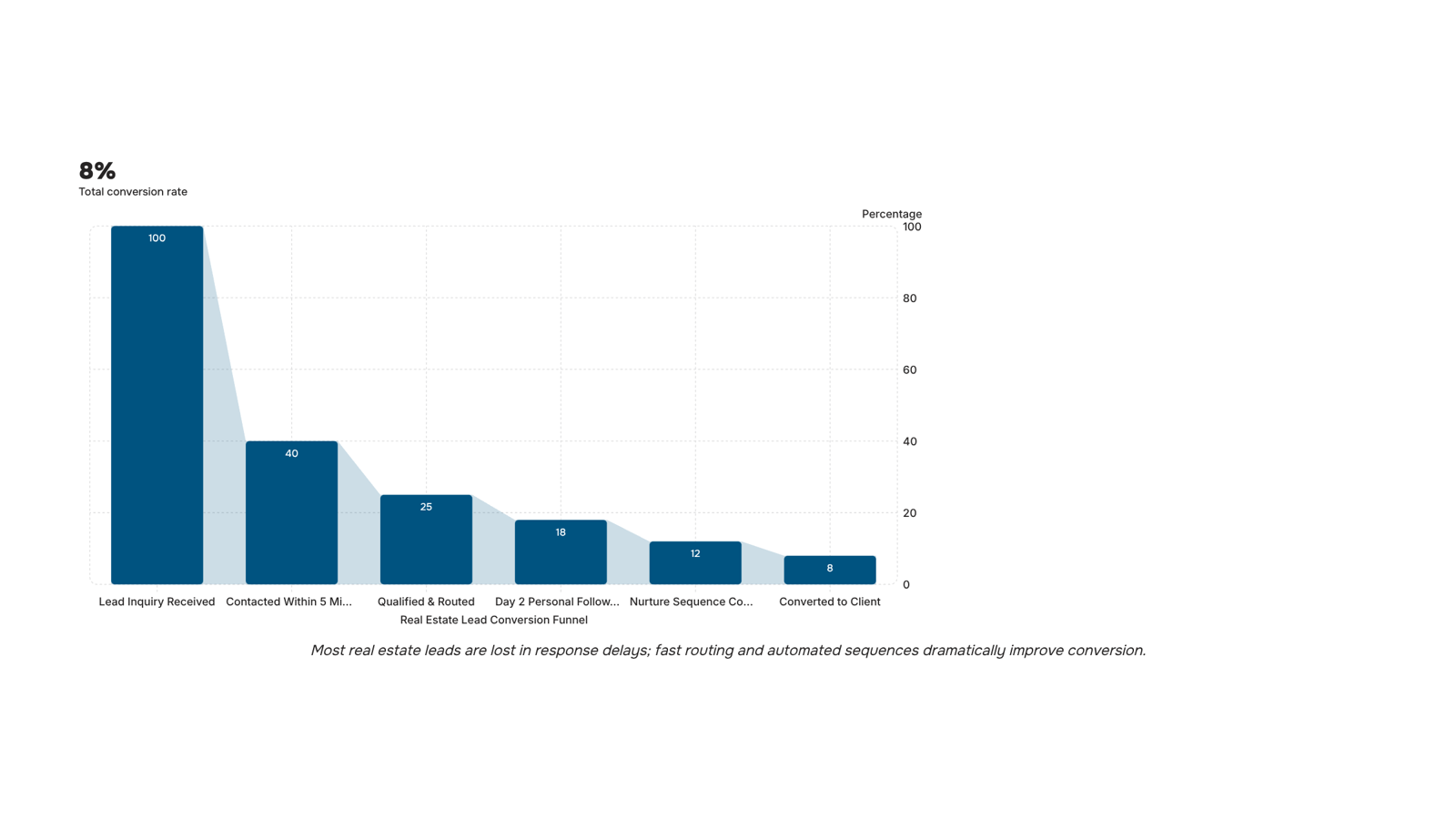
How to capture leads from multiple sources without losing any
The operational problem isn't finding leads — it's that they arrive through five different doors and you're only watching one.
A buyer fills out your website form. Another sends a DM on Instagram. A referral comes in via text. A Zillow inquiry lands in a separate inbox. Without a single capture layer, each of those leads lives in a different place, and the ones you don't see in the next hour are effectively lost. Research consistently shows that response time is one of the strongest predictors of conversion in real estate — and fragmented sources make fast response nearly impossible.
The fix isn't checking more inboxes. It's routing every source into one system before you ever look at it.
Lio's Multi Source Lead Capture pulls inquiries from web forms, portals, social channels, and manual referral entries into a single feed. Every lead gets a source tag automatically, so you can see at a glance whether your Instagram ads or your Zillow listing is actually producing pipeline. That's where Lead Source Tracking pays off — not just for tidiness, but for budget decisions. If referrals close at 3× the rate of paid portal leads, you need that data before you renew a $500/month Zillow Premier Agent subscription.
For anyone serious about lead generation for realtors that compounds over time, owned channels plus proper source attribution beats high-volume paid leads almost every time. The tradeoff is setup effort upfront versus chasing untracked leads indefinitely.
Choosing the right CRM to manage your real estate pipeline is the natural next decision once your capture layer is in place.
Routing and qualifying leads so agents respond in minutes, not hours
Speed is the variable most agents underestimate. Research consistently shows that contacting a lead within five minutes of inquiry produces dramatically higher conversion rates than waiting even thirty minutes — and in real estate, where a buyer may have submitted the same form on three different sites, the agent who responds first usually wins the conversation.
The problem is structural. When leads arrive from Zillow, your website, Instagram DMs, and referral calls simultaneously, manual triage creates a gap. Someone checks the inbox at 11am. The lead came in at 9am. That two-hour window is often enough to lose the deal.
Real-time lead routing closes that gap by sending each new lead directly to the right agent the moment it arrives, based on criteria you set: geography, property type, agent availability, or lead score. Pair that with AI lead scoring, which assigns a 0–100 score based on firmographic fit and engagement signals, and your team stops guessing which inquiries deserve immediate attention.
Lio's Real Time Lead Routing and Instant AI Lead Qualification work together as the operational layer that makes this repeatable. Every inbound lead gets scored and assigned automatically, so the agent receives a notification with context, not just a name and phone number. This is what separates agents who consistently convert real estate leads into clients from those running on manual follow-up and memory.
For a fuller picture of how routing fits into your pipeline, how Lio captures and routes every lead the moment it comes in explains the end-to-end flow.
Each platform in your real estate lead generation strategy serves a different buyer stage, so treating them interchangeably wastes effort.
LinkedIn works best for commercial and investment leads. Search by job title and location, connect with a short note referencing a specific property type or market trend, then move the conversation to a call. LinkedIn's Sales Navigator lets you filter by company size and seniority, which matters when you're targeting business owners relocating offices or investors expanding portfolios.
Instagram converts better for residential buyers. Short-form video walkthroughs, neighborhood cost-of-living breakdowns, and "just listed" Reels consistently outperform static posts for reach. The tactic most agents skip: add a Linktree or direct booking link in bio, then DM every comment with a follow-up question to qualify intent before spending time on a call.
Facebook still delivers the lowest cost-per-lead for local audiences when you run geo-targeted ads with a specific offer (free home valuation, market report) rather than a generic "contact me" ask.
The real gap in most real estate lead generation strategies isn't platform choice — it's what happens after someone engages. Social contacts need to be tagged by source and intent immediately, or they stall. Tagging and categorizing leads by source, intent, or property type the moment they enter your pipeline is what separates leads that convert from ones that go cold.
Turning real estate leads into clients: the follow-up sequence that works
Most realtors lose deals not at the lead stage, but in the 48 hours after. A lead that doesn't hear from you within the first hour is significantly less likely to convert — and in a high-volume pipeline, manual follow-up at that speed isn't realistic.
A follow-up sequence that actually converts real estate leads into clients looks like this:
Hour 1: Automated text or email confirming receipt, with one specific question ("Are you looking to buy in the next 90 days?")
Day 2: Personal call or voice note. Reference their inquiry specifically.
Day 4: Value-add email — a neighborhood report, recent comparable sales, or a short market update.
Day 7: Final check-in. Keep it short. Give them an easy out if timing isn't right.
The sequence works because it spaces contact across channels without overwhelming the prospect. Manual follow-up breaks down when you're managing 30-plus leads simultaneously — you miss the Day 2 call, the Day 4 email never goes out, and the lead goes cold.
Automated nurturing removes that gap. AI lead scoring lets you prioritize which leads get your personal time and which ones run through the sequence untouched.
For lead generation for realtors to pay off, the follow-up system matters as much as the lead source itself.
Closing
Generating leads is only half the job — the other half is making sure none of them fall through the cracks. You can build the perfect mix of SEO, paid ads, referrals, and open houses, but if your leads sit in five different inboxes waiting for manual routing, you're leaving closings on the table. The agents winning right now aren't the ones with the most lead sources. They're the ones with systems that capture, route, and score automatically, so every inquiry gets a response in minutes, not hours.
That's where the real conversion happens. Ready to stop losing leads in the gaps? Start by auditing where your current leads actually go after they land — and whether your team can respond within five minutes consistently.
FAQ
What are the best lead generation strategies for real estate agents?
SEO and local search deliver highest-intent leads over time; Google Ads compress that timeline but cost more; referrals and open houses convert at higher rates than paid sources; social media works best for retargeting warm audiences. The real differentiator is response speed — leads contacted within five minutes convert dramatically higher.
How can I generate more leads as a realtor online?
Rank for local search terms (6-12 months, high intent); run Google Ads for faster volume; use listing portals like Zillow as supplements; leverage Facebook and Instagram for retargeting and video content. Success depends on which channel fits your timeline and whether your system can capture and respond before leads go cold.
What are the most effective ways to convert real estate leads into clients?
Respond within five minutes — research shows this dramatically increases conversion rates. Tag leads by source and intent so you prioritize high-converting channels. Track attribution so you know which referral sources and strategies actually close deals, then double down on those.
What are the top real estate lead generation companies?
Zillow Premier Agent delivers shared, high-volume leads; Google Ads provides fast, intent-driven traffic; SEO and local search produce organic, high-converting leads over time. The best choice depends on your market, budget, and whether your system can respond fast enough to capture the conversion.
How fast should a realtor respond to a new lead?
Within five minutes. Research consistently shows leads contacted within five minutes convert at dramatically higher rates than those reached after an hour — in real estate, where buyers submit inquiries to multiple agents simultaneously, being first is the difference between closing and losing.


 Elena Petrova15 September 2026


