TL;DR: Most articles on project management stages list the five phases and call it done. This one focuses on what happens at the transitions: where IT projects actually stall, what decisions need to be made before moving forward, and how AI-driven prioritization catches slippage before it turns into a missed deadline.
What the project management stages actually are
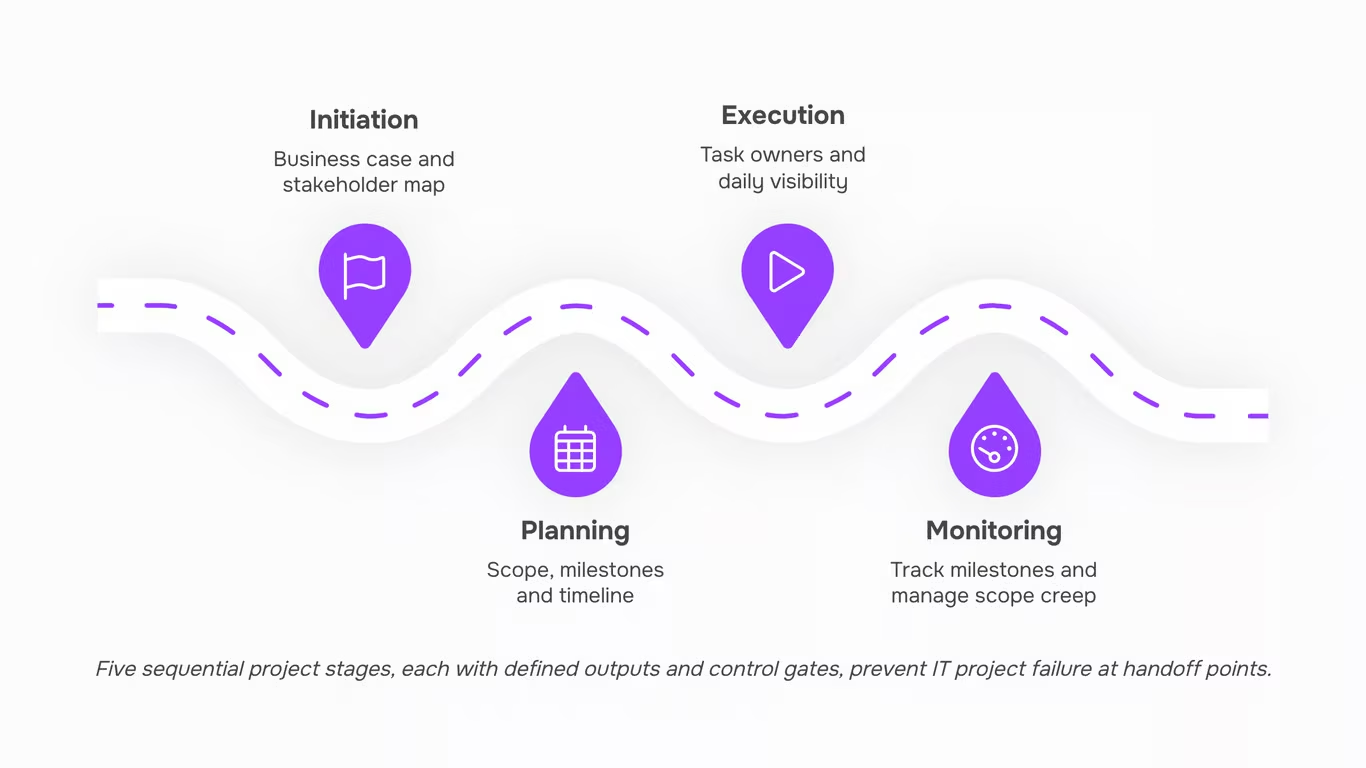
The five project management stages are initiation, planning, execution, monitoring and controlling, and closure. Each one has a defined entry point, a set of outputs, and a clear handoff to the next. These five stages provide a structured framework for managing complex work — the structure is the point.
Here is what each stage produces:
- Initiation — a project charter, defined objectives, and stakeholder sign-off. Without this, scope arguments start on day one.
- Planning — a work breakdown structure, schedule, and budget baseline. This is where resource conflicts surface before they cost money.
- Execution — deliverables built against the plan. Teams assign tasks, track dependencies, and manage handoffs.
- Monitoring and controlling — runs parallel to execution. You compare actual progress against the baseline and flag variance early.
- Closure — formal sign-off, lessons documented, contracts closed. Skipping this stage leaves clients without confirmation and teams without a clean record.
The problem most IT owners hit is treating these as one continuous blur. Work bleeds from planning into execution before the scope is locked. Monitoring gets skipped because execution feels urgent. Each shortcut creates rework downstream. A project management checklist built around stage gates catches these gaps before they compound.
Why the stages matter for IT teams specifically
For IT teams, the cost of treating the stages of project management as optional checkpoints shows up in three places: blown budgets, misallocated engineers, and client sign-offs that arrive weeks late.
Each stage protects a specific outcome. Initiation locks the budget ceiling before a single sprint is scoped. Planning maps which engineers own which workstreams, so you're not reassigning people mid-build. Execution is where delivery commitments get tested against reality. Monitoring and controlling is the feedback loop that catches scope creep before it compounds. Closure captures what went wrong so the next project doesn't repeat it.
Skip or rush any one of them and the failure doesn't stay contained. A weak initiation means planning inherits bad requirements. Poor planning means execution runs on guesswork. Teams at earlier organizational project management stages of maturity tend to collapse initiation and planning into a single conversation, which is where budget overruns typically start.
The handoff between stages is where most IT projects actually break down. Taro shows you exactly where work goes to die by surfacing the specific transition points where tasks stall, owners go silent, or approvals sit unsigned.
Each stage is a control point. Treat it that way.
Stage 1: Initiation — define the project before you scope it
Initiation is where most IT projects quietly fail. Not in execution, but weeks earlier, when someone skipped the business case or assumed stakeholders agreed on scope when they didn't.
Project initiation is the first of the five project management stages, and its job is simple: establish whether the project is worth doing and who owns what before a single task gets assigned.
Three outputs matter here:
- Business case: What problem does this solve, and what does success cost to achieve? Tie it to a number your client or CFO will recognize.
- Stakeholder map: Name every person who can block delivery or change requirements. A missing stakeholder at initiation becomes a scope change in month three.
- Success criteria: Define what "done" looks like before planning starts. Vague criteria are the leading cause of client sign-off disputes at the end.
The exit criterion for initiation is formal sign-off on those three outputs. No sign-off, no move to planning. That single gate prevents the most common failure pattern in IT project management: teams that start building before the problem is fully defined.
A project management checklist built around these outputs gives your team a repeatable way to clear initiation without missing anything.
Stage 2: Planning — build the plan your team will actually follow
The project planning phase is where ambition meets reality. You take the approved business case from initiation and turn it into a document your team can actually execute against.
Four outputs define a complete plan:
- Scope statement — what's in, what's out, and who agreed to that boundary
- Milestones — the 4–8 checkpoints that mark meaningful progress, not just busy weeks
- Task assignments — every deliverable has one owner, not a group
- Timeline — sequenced tasks with dependencies mapped, not a list of due dates
Most teams skip the fifth output: exit criteria. An exit criterion is a specific, verifiable condition that must be true before execution starts. Something like "all third-party API credentials confirmed and tested in staging." Without it, teams drift from planning into execution before the foundation is solid, and that's where scope creep starts.
A useful project management checklist can help you confirm each output is actually complete before you move forward.
In the project management stages framework, planning is the stage where most time-saving happens downstream. Thirty minutes spent clarifying ownership and sequencing tasks now prevents three days of confusion during execution.
Taro structures this by letting you build the project as a single source of truth from day one, with phases, milestones, and assignments visible to everyone before a single task starts.
Stage 3: Execution — keep work moving once it starts
Execution is where the plan meets reality, and where most projects quietly start to fail.
Four activities determine whether the project execution stage stays on track or drifts.
Task assignment means every deliverable has one named owner, a due date, and clear acceptance criteria. Shared ownership is no ownership.
Daily status visibility keeps the team from working in silos. This doesn't require a daily standup; it requires a live view of what's in progress, what's blocked, and what's overdue. Without that view, a two-day blocker becomes a two-week delay before anyone notices.
Blocker resolution needs a defined path. Who gets notified when a task stalls? What's the escalation window? Teams that answer these questions in planning resolve blockers in hours. Teams that don't answer them resolve blockers in days, if at all.
Scope change control is the one most teams skip. A small, undocumented change to a deliverable mid-execution is how timelines slip by weeks. Every change request needs a written record and an explicit decision, even if the answer is yes.
The stages of project management only work if execution has guardrails, not just momentum. Taro gives every project a single source of truth from day one, so task ownership and status are visible without manual check-ins. If you want a practical reference alongside this, the Project Management Checklist: 8 Elements That Fix Failure covers the specific gaps that surface during execution.
Stage 4: Monitoring and controlling — catch problems before they compound
Monitoring doesn't start when execution ends. It runs alongside it, the entire time, which is what separates teams that catch problems early from teams that discover them at the deadline.
The three signals that a stage transition is at risk:
- Milestone drift: a deliverable that was "almost done" two status updates ago is still almost done. Stall time over 48 hours on a critical path item is a reliable early warning.
- Scope creep without a change log: new requests are being absorbed into the current stage without formal review, quietly expanding the workload.
- Blocked tasks with no owner: blockers sitting unassigned for more than a day compound fast, especially in IT projects where one dependency can freeze three others.
Most teams catch these signals too late because monitoring depends on people remembering to report. That's the structural problem. Taro shows you exactly where work goes to die through bottleneck analysis that surfaces stalled stages automatically, without manual status chasing.
This matters more as your organization matures. At early organizational project management stages of maturity, monitoring is informal and reactive. Teams that want to improve across all five project management stages need monitoring built into the workflow itself, not bolted on as a weekly check-in.
A project management checklist can help you formalize what to track and when, so nothing slips between execution and closure.
Stage 5: Closure — end the project so the next one starts better
Most teams treat project closeout as an afterthought. They ship the deliverable, scatter the team, and open a new project file two weeks later with none of the hard-won process knowledge from the last one.
A proper closure sequence has four parts:
- Deliverable sign-off — get formal written acceptance from the client or sponsor before releasing resources
- Retrospective — document what slowed execution and what accelerated it, not just what went wrong
- Knowledge transfer — archive decisions, scope changes, and vendor contacts where the next project team can actually find them
- Resource release — formally reassign team members so they aren't carrying phantom ownership into new work
This is where the stages of project management compound. Teams that close projects with discipline build a process library. The second project runs faster than the first. The fifth runs faster than the second. Use a project management checklist to make sure nothing in that sequence gets skipped.
Common mistakes at each stage and how to avoid them
Each stage has a signature failure mode.
Initiation: Teams skip stakeholder alignment because the project feels small. It never is. Before kickoff, confirm every decision-maker has signed off on the goal in writing.
Planning: The project planning phase gets compressed when pressure mounts. Schedules built without buffer collapse at the first dependency slip. Add 15-20% contingency time before the plan is baselined.
Execution: Ownership diffuses across the team during the project execution stage. Work stalls because nobody knows who decides. Assign one accountable owner per deliverable, not a group.
Monitoring: Teams track activity instead of progress. Completed tasks look healthy; missed milestones don't surface until it's too late. Track variance against the baseline, not just the to-do list.
Closure: Sign-off gets skipped when everyone is already moving to the next project. That gap means lessons never transfer. Run a 30-minute retrospective before releasing the team.
Closing
The five stages of project management aren't a checklist to rush through—they're control points that catch failures before they compound. What separates teams that ship on time from those that don't isn't knowing the stages; it's keeping every stage visible and enforcing the handoffs between them, especially when you're running multiple projects at once.
The real friction isn't in any single stage. It's in the transitions: when planning gets cut short to start execution faster, when monitoring gets skipped because the team feels busy, when closure never happens so the next project repeats the same mistakes. That's where Taro changes the game. All five stages live in one system, with bottleneck analysis that shows you exactly where work stalls and AI-driven prioritization that flags slippage before it turns into a missed deadline. Start with Taro's project management feature and see how stage visibility transforms your delivery.
FAQ
Q. What are the different stages of project management?
A. The five stages are initiation (define objectives and get sign-off), planning (build the work breakdown structure and baseline), execution (deliver against the plan), monitoring and controlling (track variance and flag issues), and closure (formal sign-off and lessons documented).
Q. How do I plan and initiate a project effectively?
A. Initiation requires a business case, stakeholder map, and success criteria with formal sign-off before moving forward. Planning then turns those into a scope statement, milestones, task assignments, and timeline—plus exit criteria that must be true before execution starts.
Q. What are the key activities in the execution stage of project management?
A. Task assignment (one owner per deliverable), daily status visibility (live view of progress and blockers), blocker resolution (defined escalation path), and scope change control (written record for every change request).
Q. How can I ensure a smooth transition from one project stage to another?
A. Define exit criteria for each stage—specific, verifiable conditions that must be true before moving forward. Stage gates prevent teams from drifting into execution before the foundation is solid and catch scope creep before it compounds.
Q. What are the common pitfalls to avoid in each project management stage?
A. Initiation: skipping stakeholder sign-off. Planning: vague success criteria and shared ownership. Execution: no blocker resolution path. Monitoring: getting skipped because execution feels urgent. Closure: never happening, so lessons aren't captured for the next project.
Q. Do monitoring and controlling happen at the same time as execution?
A. Yes. Monitoring and controlling runs parallel to execution—you compare actual progress against the baseline and flag variance early. Skipping this stage is where most IT projects quietly start to fail.
Q. How does project closure improve future projects?
A. Closure captures what went wrong so the next project doesn't repeat it. Teams that skip closure lose the institutional knowledge that prevents rework and budget overruns downstream.


 Elena Petrova15 September 2026


