TL;DR: Most guides draw the MQL-to-SQL line and move on. This one gives IT company owners a clear definition of both lead types, names the signals that separate genuine buying intent from polite interest, and explains how to set up the handoff so qualified leads never stall before someone works them.
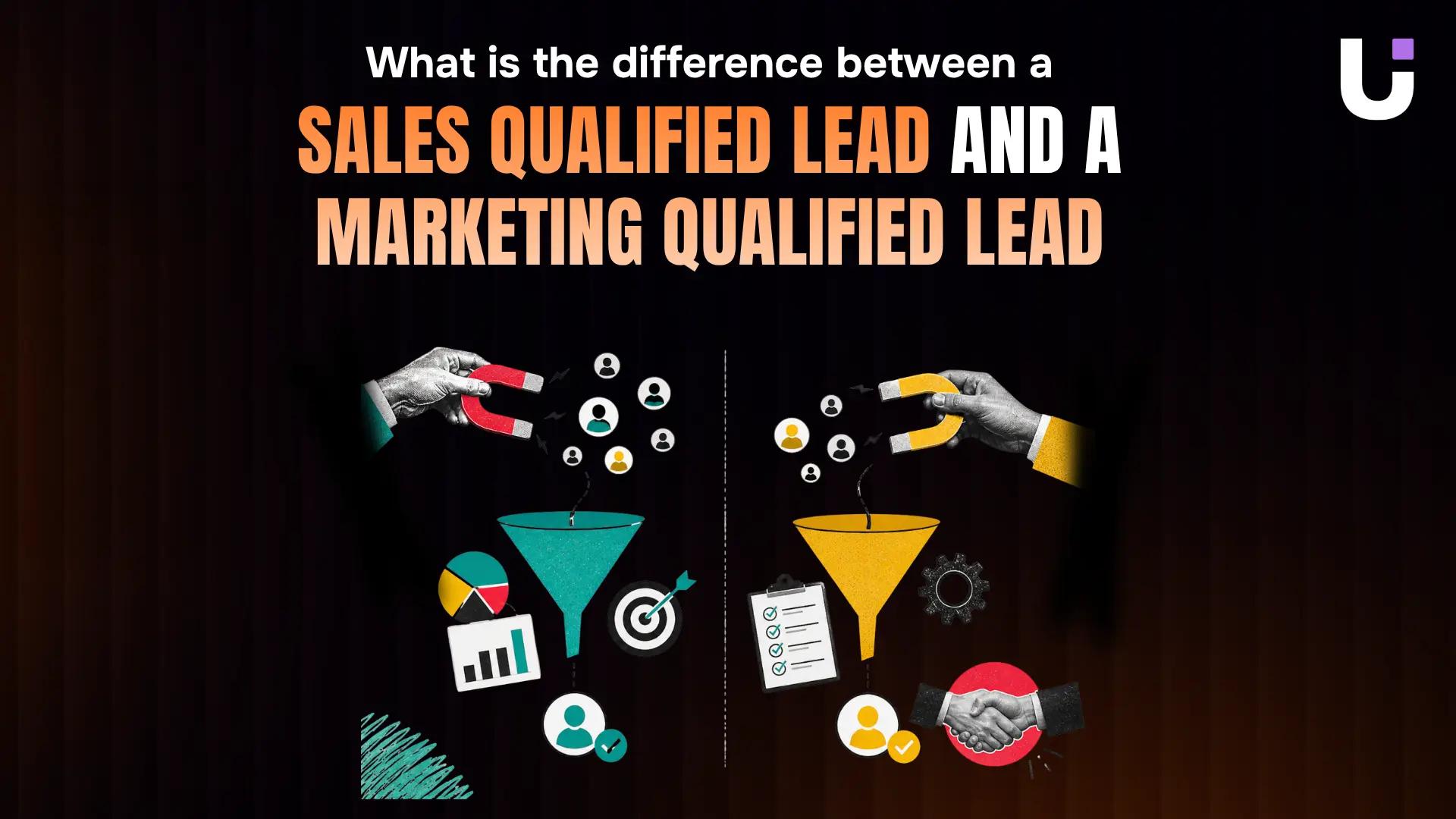
What is the difference between a sales qualified lead and a marketing qualified lead
The core difference is this: a marketing qualified lead (MQL) has shown interest, and a sales qualified lead (SQL) has shown intent.
An MQL is a prospect your marketing team has identified as a potential fit based on engagement signals. Think: someone who downloaded your security assessment guide, attended a webinar on IT infrastructure, or visited your pricing page twice in one week. They have raised their hand. That matters, but it is not the same as being ready to buy.
An SQL is a prospect your sales team has evaluated and confirmed is worth pursuing. They have the budget, the authority to make a purchase decision, a real and specific need, and a timeline that makes a deal possible in the near term.
For IT company owners, this distinction is practical, not academic. Marketing is responsible for generating MQLs at volume. Sales is responsible for converting the right subset of those MQLs into SQLs. When both teams share a clear, written definition of each stage, the handoff is clean and rep time goes to the leads most likely to close.
In B2B tech, the MQL-to-SQL conversion rate typically sits between 13% and 27% (HubSpot State of Marketing, 2023). That gap is not random. It reflects how many leads enter the funnel without meeting the criteria that actually predict a closed deal. When those criteria are vague or undocumented, leads go cold during the handoff, not because the prospect lost interest, but because no one confirmed fit before passing them over. Fixing that handoff gap is where most pipeline leaks start.
SQL vs MQL: what actually separates them
The simplest frame: marketing owns the MQL, sales owns the SQL. The moment a lead crosses that boundary is where most B2B funnels either run smoothly or quietly fall apart.
| Dimension |
Marketing qualified lead (MQL) |
Sales qualified lead (SQL) |
| Primary signal |
Content engagement, form fills |
Budget confirmed, timeline defined |
| Funnel stage |
Awareness / consideration |
Decision |
| Owner |
Marketing team |
Sales rep |
| Qualification basis |
Behavioral scoring |
BANT criteria confirmed |
| Next action |
Nurture sequence |
Discovery call or proposal |
The MQL-to-SQL distinction matters operationally, not just semantically. When handoff criteria are vague, reps spend time on leads that marketing considers warm but that sales would never close. That gap is where pipeline leaks. Tightening that handoff is one of the highest-leverage moves an IT company owner can make.
If your MQL-to-SQL conversion rate sits below 13%, the problem is usually one of two things: marketing is passing leads too early, or sales has no documented criteria for what "qualified" actually means.
Lead scoring sharpens that boundary by assigning numeric weight to the signals that actually predict conversion. Pair that with a clear ICP fit score and the handoff becomes a decision, not a debate.
Five characteristics that separate an SQL from an MQL
Not every lead that shows interest is worth a rep's time. These five signals, taken together, tell you whether a lead has crossed from "curious" into genuinely sales-ready, and why an MQL alone does not clear this bar.
Budget confirmed. The prospect has indicated they have money allocated, not just a vague interest in solving a problem. An MQL rarely clears this signal. An SQL has had someone on their side say a number out loud, or confirm a budget cycle is active.
Decision authority. You are talking to someone who can say yes, or who has direct access to the person who can. A lead who needs to "check with their boss" before any conversation progresses is still an MQL, not an SQL, until that authority is confirmed.
Clear, specific need. The prospect has named a problem your product actually solves. Vague dissatisfaction does not count. "We are losing track of leads between our CRM and project management tool" counts. Matching that stated need against your ICP fit criteria sharpens this signal considerably.
Defined timeline. They are evaluating solutions within a window you can work with, typically the next 30 to 90 days for most IT services deals. A lead with no timeline is a nurture candidate, which means they stay in MQL status until that changes.
Engagement depth. This is the signal most qualification criteria miss. A prospect who has attended a demo, replied to two follow-up emails, and downloaded a technical spec is behaving differently from one who opened a single email. Lead scoring models that weight engagement by action type, not just volume, catch this distinction automatically.
If a lead clears all five, it belongs in your SQL pipeline. If it clears three or four, it belongs in MQL nurture. Anything less is noise, and a leaking pipeline usually starts with ignoring that line.
How to move a lead from MQL to SQL in 5 steps
The MQL-to-SQL transition is not a gut call. It is a repeatable process. Here is how to run it.
Step 1: capture and enrich the lead record
Before any qualification can happen, you need complete data. Pull firmographic details (company size, industry, tech stack) and behavioral signals (pages visited, content downloaded) into one record. A lead who visited your pricing page three times and downloaded a case study is already signaling intent beyond standard MQL behavior. Incomplete records at this stage are the single biggest reason leads stall before a rep ever touches them.
Step 2: run initial lead scoring
Assign point values to actions and attributes before a human reviews anything. Job title, company revenue, and inbound behavior each carry weight. Most B2B teams use a 0-100 scale, with SQLs typically crossing a threshold around 60 to 70 points. Automated lead scoring removes the subjectivity that causes reps to cherry-pick familiar-looking prospects over genuinely ready ones.
Step 3: confirm ICP fit
Score alone does not make a lead sales-ready. A 75-point lead at a 10-person startup may be a worse use of time than a 55-point lead at a 200-person IT services firm, depending on your ICP. Check ICP fit explicitly against your defined criteria: industry, headcount, budget range, and existing tools. If the fit is not there, route the lead back to a marketing nurture track rather than a sales rep.
Step 4: validate BANT signals
This is where you confirm the four criteria that formally separate an MQL from an SQL: budget, authority, need, and timeline. A discovery call or a qualifying email sequence works here. The goal is a simple yes or no on each signal. A lead with confirmed budget, decision authority, a defined problem, and a purchase window inside 90 days is an SQL by any reasonable definition. Missing two or more signals means the lead needs more marketing development, not a closing pitch.
Step 5: document the handoff and set the next step
The MQL-to-SQL handoff is where most pipeline leaks happen. Before passing the lead to a closing rep, document what you know: confirmed signals, engagement history, and the specific problem the lead described. Attach a recommended next step, such as a demo, a proposal call, or a technical review, so the rep opens the conversation with context rather than starting from scratch.
A lead that clears all five steps is genuinely sales-ready. One that stalls at step three or four needs nurture, not pressure.
What MQL-to-SQL conversion rates look like in practice
In B2B tech, the MQL-to-SQL conversion rate typically runs between 13% and 27%, depending on how tightly your qualification criteria are defined. The SQL-to-closed-won rate sits closer to 20 to 30% for most IT services companies, though teams with a documented handoff process consistently land at the higher end (Demand Gen Report, 2023).
What drives the gap between a high-converting funnel and a leaking one? Usually one of three things: criteria that are too loose at the MQL stage, a slow handoff that lets intent signals go cold, or reps receiving leads without enough context to personalize the first call. Any one of those leaks your pipeline before the SQL even gets worked.
The diagnostic question worth asking: how many SQLs from last quarter were disqualified by the rep after the first call? If that number is above 15 to 20%, your qualification criteria need tightening before handoff, not after. That is a marketing-and-sales alignment problem, not a sales execution problem.
How to nurture an SQL into a customer
SQL status is not the finish line. It is the starting gun. Most MQL-to-customer conversion failures happen in the 48 hours after a lead qualifies, not before.
Three moves close the gap.
Follow up within one business day. Response time matters more than most teams admit. A lead that raised its hand yesterday is warmer than one you call next Tuesday. Set a hard SLA: SQL created, rep assigned, first contact attempted same day.
Make outreach specific to their signals. If they hit SQL status because they visited your pricing page twice and match your ICP on company size, say so. "I noticed you have been looking at pricing for a team your size" opens a conversation. "Just checking in" does not. Lio's ICP fit scoring surfaces exactly these signals so reps skip the guesswork.
Commit to a next step before you end the call. Every call or email should close with a specific action: a demo booked, a proposal date set, a decision-maker introduced. Vague closes let deals drift. If you are watching pipeline leaks compound, this is usually where they start.
SQL nurturing is a process, not a personality trait. Build the structure, and the conversion follows.
Running the 5-step framework manually works until it does not. A rep forgets to check budget signals. A lead sits unrouted for two days. By the time someone follows up, the prospect has moved on.
A lead management tool closes that gap by encoding your lead qualification criteria into the system itself. Lio's AI qualification scores each inbound lead against your ICP the moment it arrives, applying your lead scoring weights to signals like authority, need, and timing without waiting for a rep to log in. When a lead crosses your SQL threshold, Lio routes it to the right rep in real time. No manual triage. No handoff delay. That is the operational gap most teams ignore, and it is where pipelines leak most.
If you want to see how the scoring model works in practice, the prioritization logic is worth a look.
Closing Thoughts
The MQL-to-SQL distinction only creates value if your team acts on it consistently. A clear definition shared by both marketing and sales, a documented handoff process, and a response SLA measured in hours rather than days, those three things close more deals than any individual rep tactic.
Lio scores and routes leads automatically, so the moment a prospect crosses your SQL threshold, the right rep gets the assignment without anyone manually reviewing a queue. No delays, no dropped handoffs, no leads going cold because the timing was off.
Explore how Lio handles lead scoring and routing and see how quickly your team could be acting on every SQL the moment it appears.
FAQ
Q. What is the difference between a sales qualified lead and a marketing qualified lead?
An MQL has shown interest through behavioral signals like content downloads or page visits. An SQL has confirmed budget, authority, need, and a purchase timeline. The handoff criteria between the two must be written down and agreed on by both teams before either definition means anything operationally.
Q. Who is responsible for converting an MQL to an SQL?
Marketing qualifies interest and passes the lead at a defined scoring threshold. Sales then confirms budget, authority, and timeline before formally accepting it as an SQL. Both teams share responsibility for agreeing on where that line sits.
Q. How do I qualify a lead as sales-ready?
Run them through BANT: Budget, Authority, Need, Timeline. Only pass to sales when all four criteria are confirmed. A lead that clears three of four belongs in nurture, not in a closing rep's queue.
Q. What are the five characteristics of a sales qualified lead?
Confirmed budget, decision-making authority, a specific and real need, a defined purchase timeline, and high-intent engagement behavior such as requesting a demo or asking about implementation details.
Q. What is the typical MQL-to-SQL conversion rate?
Most B2B teams convert between 13% and 27% of MQLs into SQLs. If your rate sits below that range, marketing is likely passing leads too early or sales has no documented qualification criteria.
Q. What is the typical SQL-to-closed-won conversion rate?
Most B2B IT services companies close 20 to 30% of SQLs. Loose qualification criteria at the MQL stage pulls that number down fast because reps inherit leads that were never truly ready.
Q. What happens if my team skips the SQL qualification step?
Reps waste hours on contacts who were never going to buy, close rates drop, and sales cycles stretch. The fix is agreeing on qualification criteria before the handoff, not after a rep has already spent time on a dead lead.


 Elena Petrova15 September 2026


