


Know Your Project Completion Date
Before the Deadline Arrives
TARO predicts your real completion date from team velocity, blockers, and sprint history, with variance and confidence.

From project state to accurate prediction in four steps
TARO reads what your team is actually doing not what was planned and predicts the finish date that reflects reality.
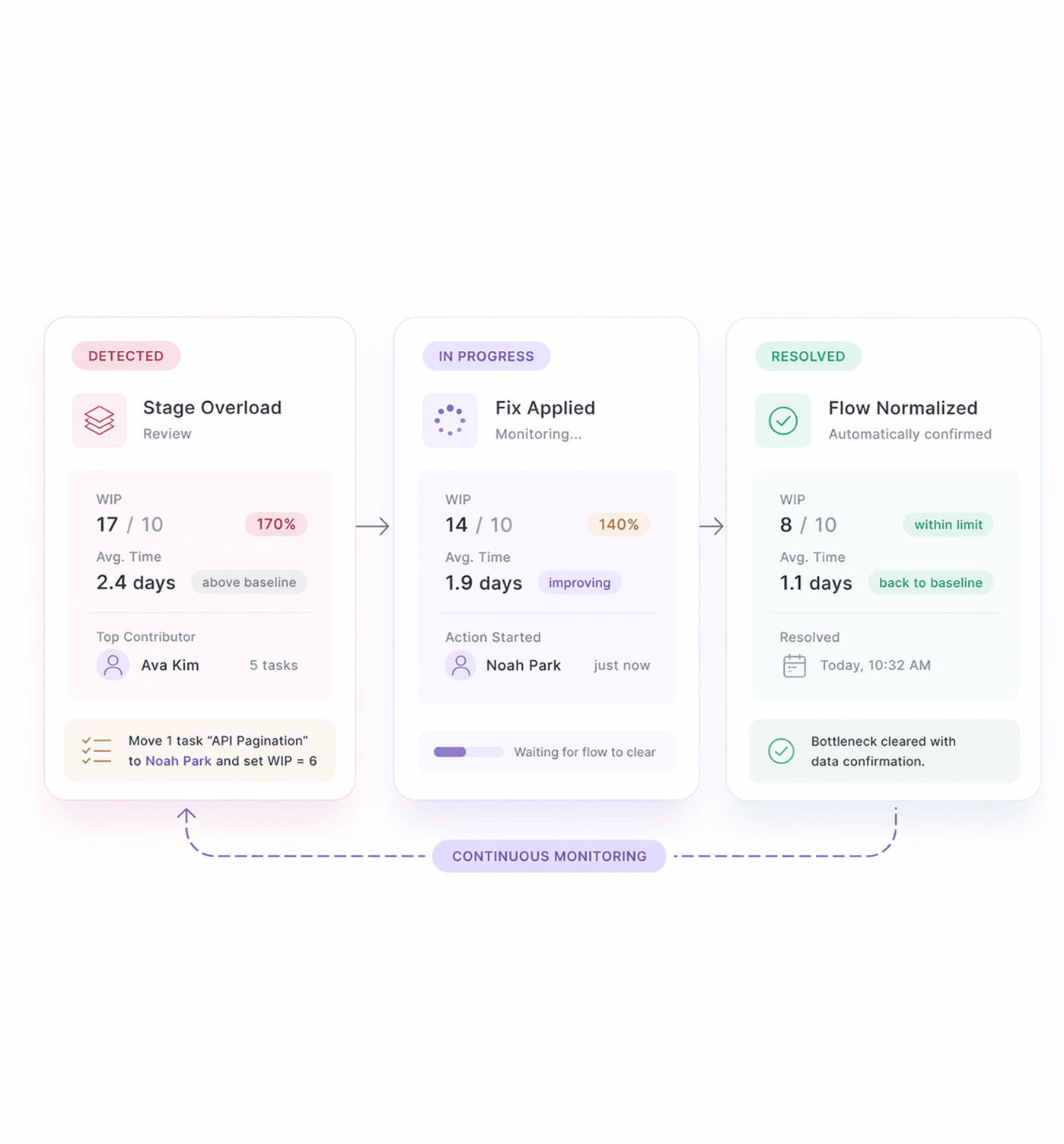
Velocity
TARO measures how fast your team actually moves
First, TARO reads your team's real throughput tasks completed per sprint over the last 30, 60, and 90 days, broken down by member and complexity. This baseline replaces the optimistic estimates that make deadlines wrong.
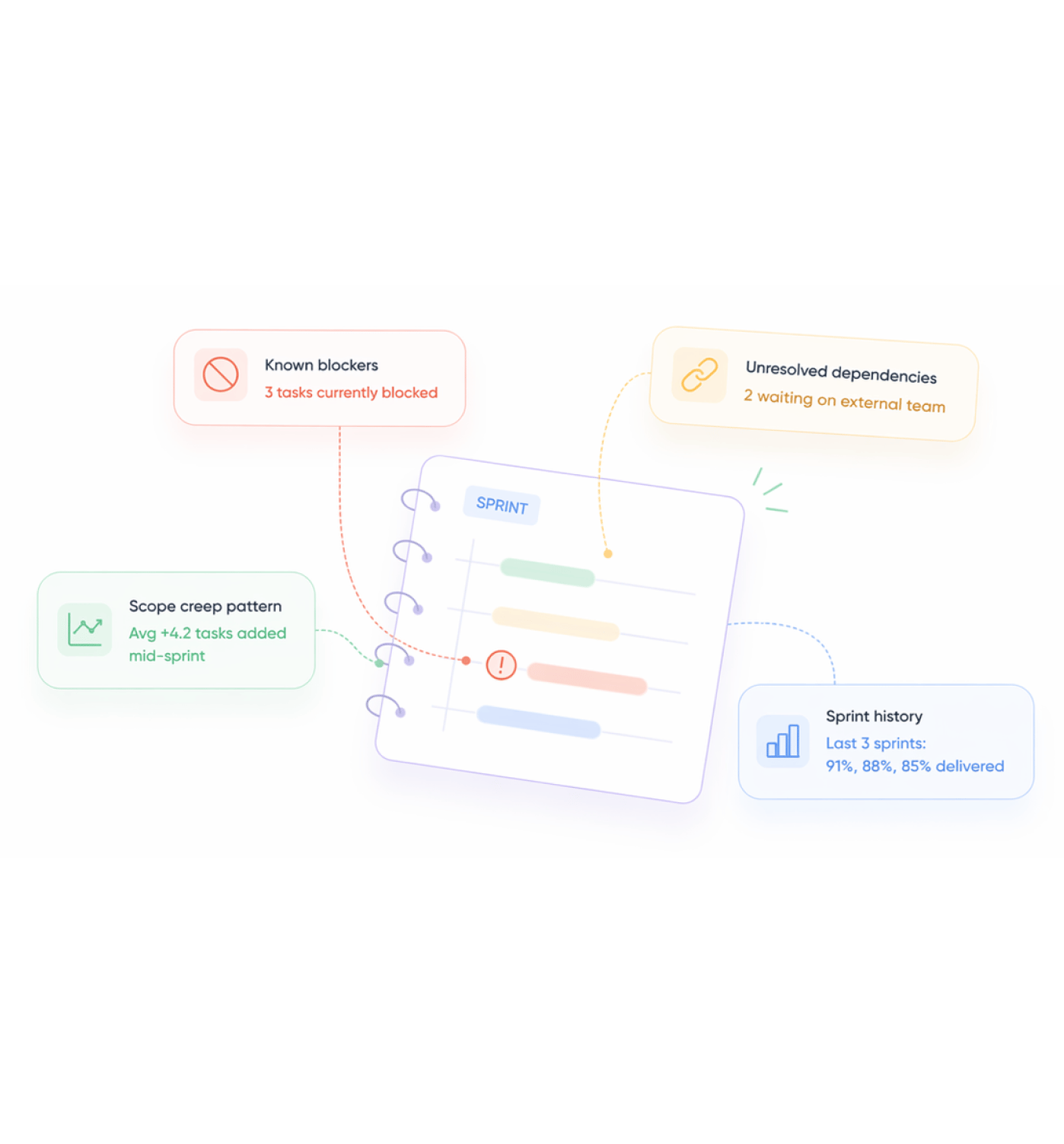
Blockers
Known blockers and sprint history factored in
Velocity isn't the full story. TARO also reads three signals history can't capture: tasks marked blocked, unresolved dependencies, and how many new tasks get added mid-sprint. Every risk that could push the date is counted.
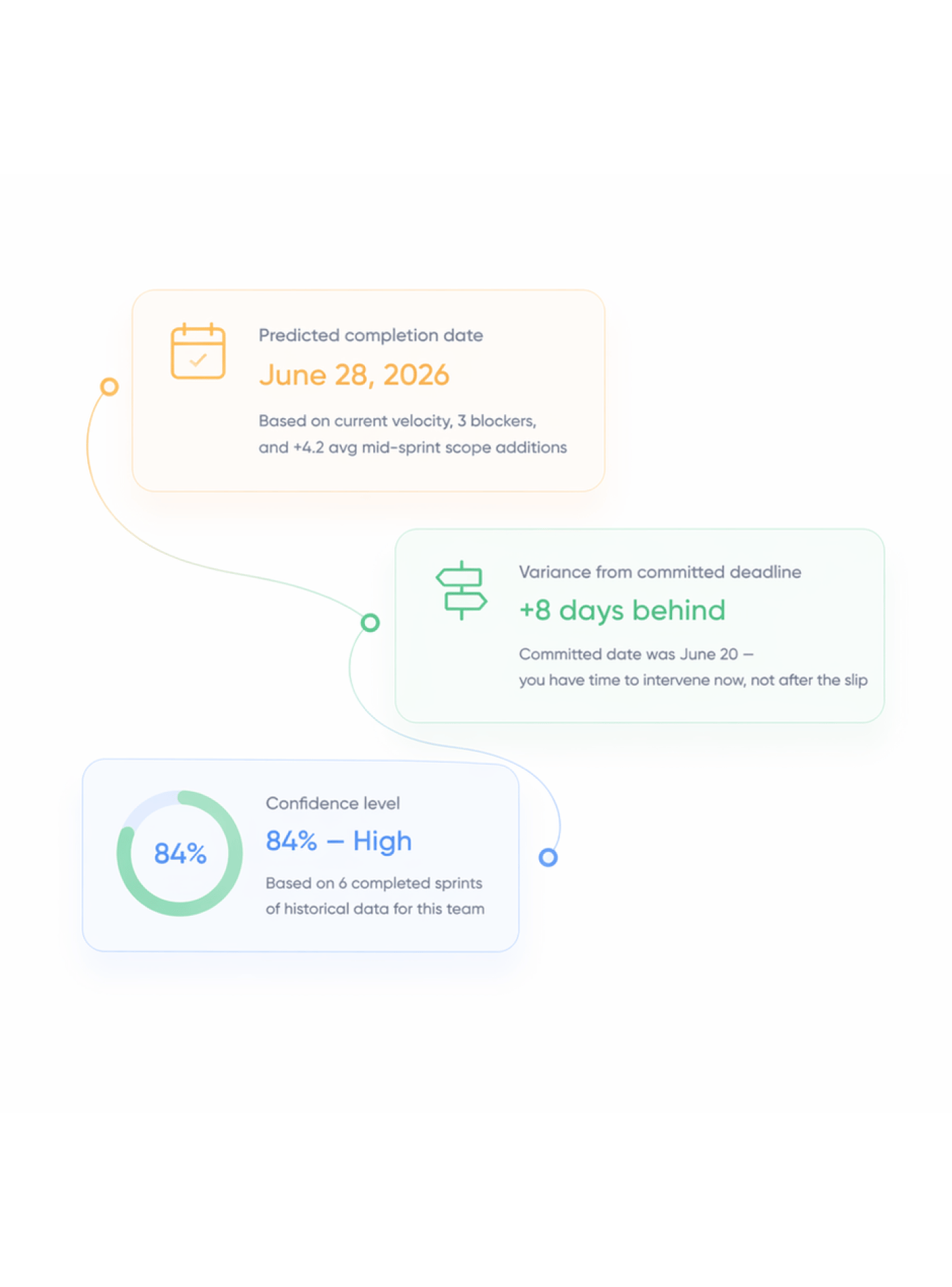
Prediction
Three numbers that tell you everything you need to know
TARO combines velocity, blockers, scope history, and sprint pattern into a single prediction with three actionable outputs. Not a Gantt chart, not a 40-slide forecast deck three numbers you can act on before committing to a stakeholder date.
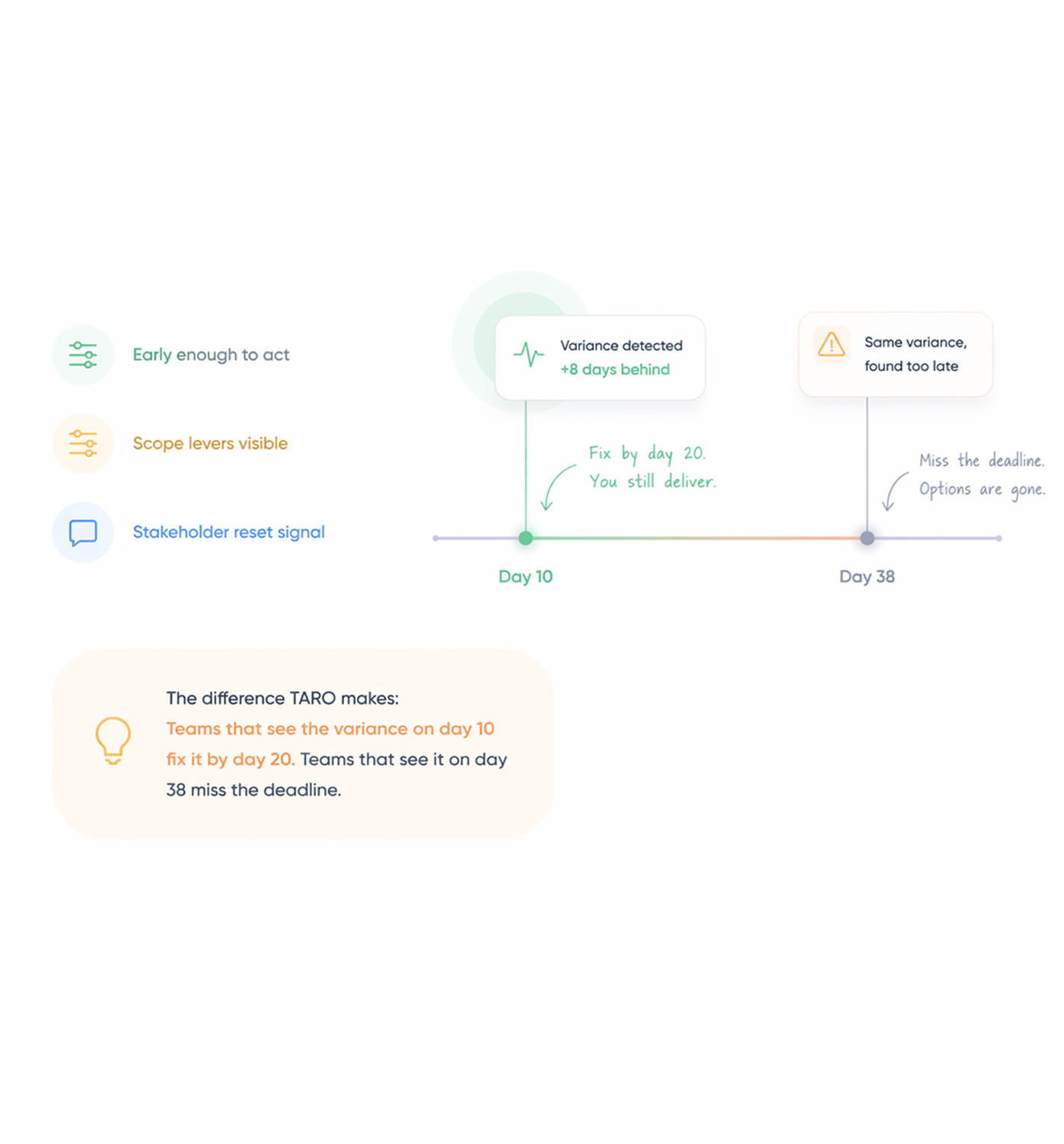
Variance
The variance is the signal. Not the headline.
An 8 day variance found in week 2 of a 6 week project is recoverable; the same variance the day before launch is not. TARO surfaces it the moment it's visible, with runway to cut scope, unblock tasks, or reset expectations before a crisis.
- Early enough to act
- Scope levers visible
- Stakeholder reset signal
- AI score applied
- Live table update
Six reasons teams never go back
Every team has shipped a project late that looked on track two weeks before the deadline. Completion Analysis exists to make that stop.

Predicted date based on what's actually happening
Not the date set at planning, or the one your most optimistic team member believes the date your current velocity, blockers, and sprint history say will actually happen.

Variance visible before it becomes a crisis
An 8 day slip found in week 2 is a planning adjustment; the same slip found the day before delivery is a crisis. TARO shows the gap while there's still time to close it.

Confidence level tells you how much to trust it
A prediction from 2 sprints deserves less trust than one from 12. TARO tells you exactly how confident the model is, so you know whether to act now or keep monitoring.

Blockers counted, not ignored
Most predictions ignore blocked tasks because they can't estimate the delay. TARO counts them, weights them by deadline proximity, and factors them into the completion date.

Sprint history beats sprint planning optimism
Sprint planning is optimistic; sprint history is honest. TARO uses what your team has actually delivered, not what they promised, as the baseline for every prediction.

Stakeholder conversations before the missed deadline
When TARO shows an 8 day variance in week 2, you reach stakeholders with a revised date, a plan, and credibility intact. Discover it on launch day and none of that is left.


800+ product teams
already using TARO
Built for every team that commits to a deadline
Engineering leads, PMs, scrum masters, and founders use Completion Analysis at different stages, but for the same reason. The committed date and the real date need to match, and TARO keeps them aligned before the gap shows.
Prediction accuracy
Earlier variance detection
Average prediction error
Fewer deadline surprises
Are we on track? stops being a feeling and becomes a number.
Before enrichment, a sales rep spends the first 5 minutes of a discovery call asking basics. With Lio, the rep arrives knowing the prospect's role, company size, tech stack, and more.
Completion analysis is just the start
TARO's intelligence runs across the full project lifecycle from the moment a task is created to the day the sprint closes.

Workload Distribution
TARO analyzes team capacity and suggests exact reassignments to balance overloaded members before a deadline slips with one click to apply.

Risk Analytics
Tracks overdue tasks, stalled dependencies, and sprint velocity trends, surfacing which tasks are most likely to slip before they do.

Sprint Planning
Create sprints, assign tasks, and track timelines in one unified view with TARO's velocity data baked into the capacity estimates from the start.

Smart Task Creation
Type one sentence. TARO generates a fully structured task title, description, priority, due date, and assignee in under 3 seconds. No forms, no clicks.
Everything you need to know about Completion Analysis
Common questions from engineering leads, PMs, and founders evaluating TARO's prediction model.
TARO builds the prediction from three layers. First, team velocity the average tasks per sprint over the last 30, 60, and 90 days, weighted toward recent sprints. Second, known blockers and dependencies each adds delay proportional to how deadline-critical it is and how long blockers stay open. Third, sprint history if this team adds 4–6 tasks mid-sprint, that creep is built in. The three signals combine into one finish date.