Every Ranko article is built in the exact shape answer engines prefer to cite a short summary at the top, question style headings with direct answers underneath, comparison tables where they actually help, and a frequently asked questions block with the right page data tags at the bottom. The structure does not get retrofitted onto a finished draft. It is the shape the article is written in from the first paragraph.
A short summary opens the article the paragraph an AI assistant could lift verbatim as a direct answer. The body uses question style headings that match the way real people ask things, with direct answers underneath. Comparison tables appear where they genuinely help. A frequently asked questions block closes the article, with the right page data tags applied automatically so the structure signals are picked up by both traditional search and modern answer engines.
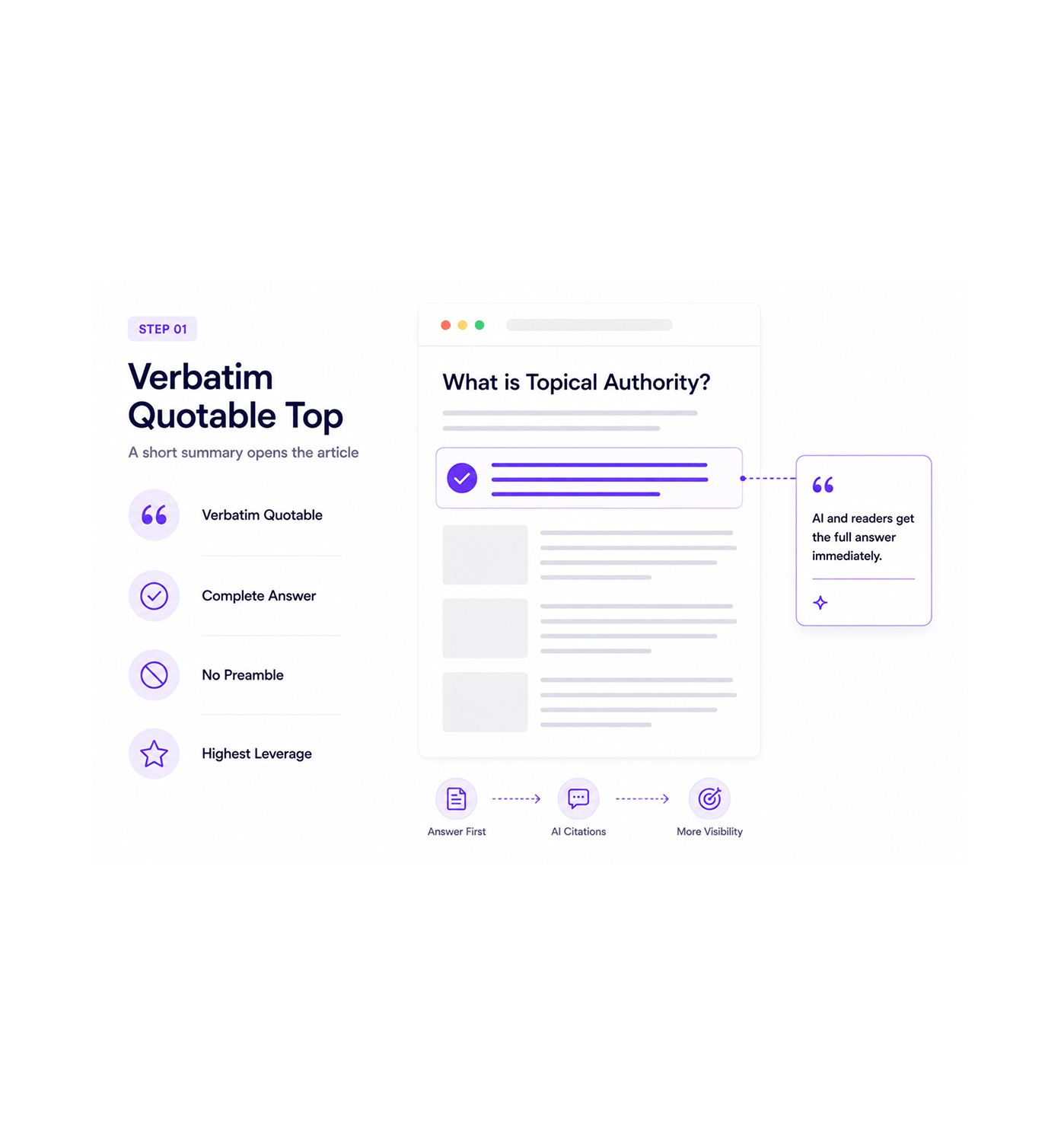
Verbatim Quotable Top
The opening paragraph delivers a complete, direct answer to the article's primary question in a shape an AI assistant could lift verbatim. Not a teaser. Not a "in this article we will explore" preamble. Not five hundred words of setup before the actual answer appears. The reader who reads only this paragraph still gets the answer. The AI engine that quotes only this paragraph still produces a useful citation. The summary is the single highest leverage paragraph on the page, and answer first structure puts it where the citation conversation actually looks for it.
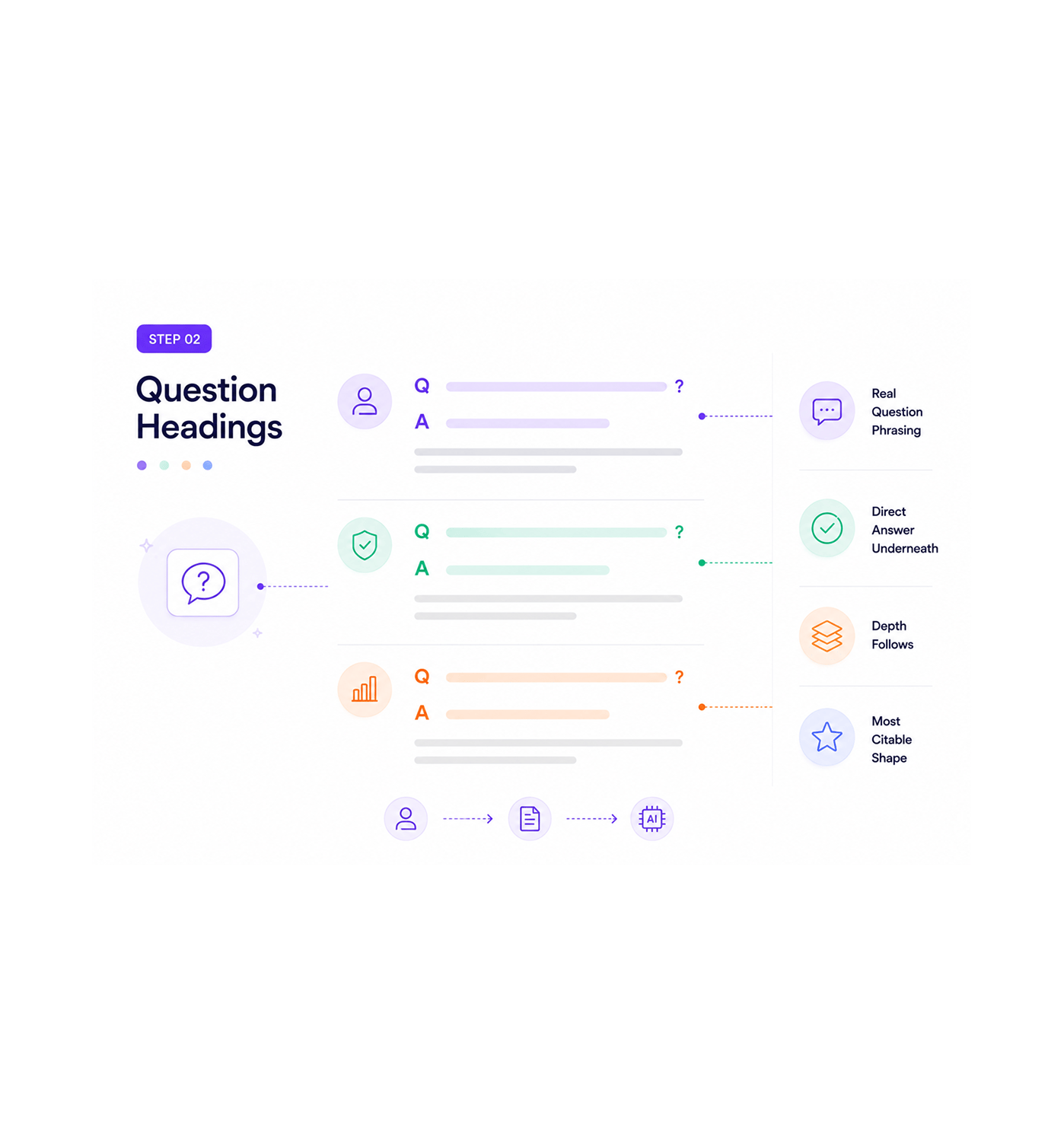
Question Headings
The body of the article is organised under headings phrased the way real people actually ask things "How do I choose a project management tool for a small team", "What is the difference between SOC 2 and ISO 27001", "Which CRM is best for a five person sales team". Directly under each heading sits the direct answer in the first sentence or two, with the supporting depth following. AI engines look for this exact shape because it matches the way their users phrase prompts, which makes question style headings with answers underneath the most consistently citable block in an article.
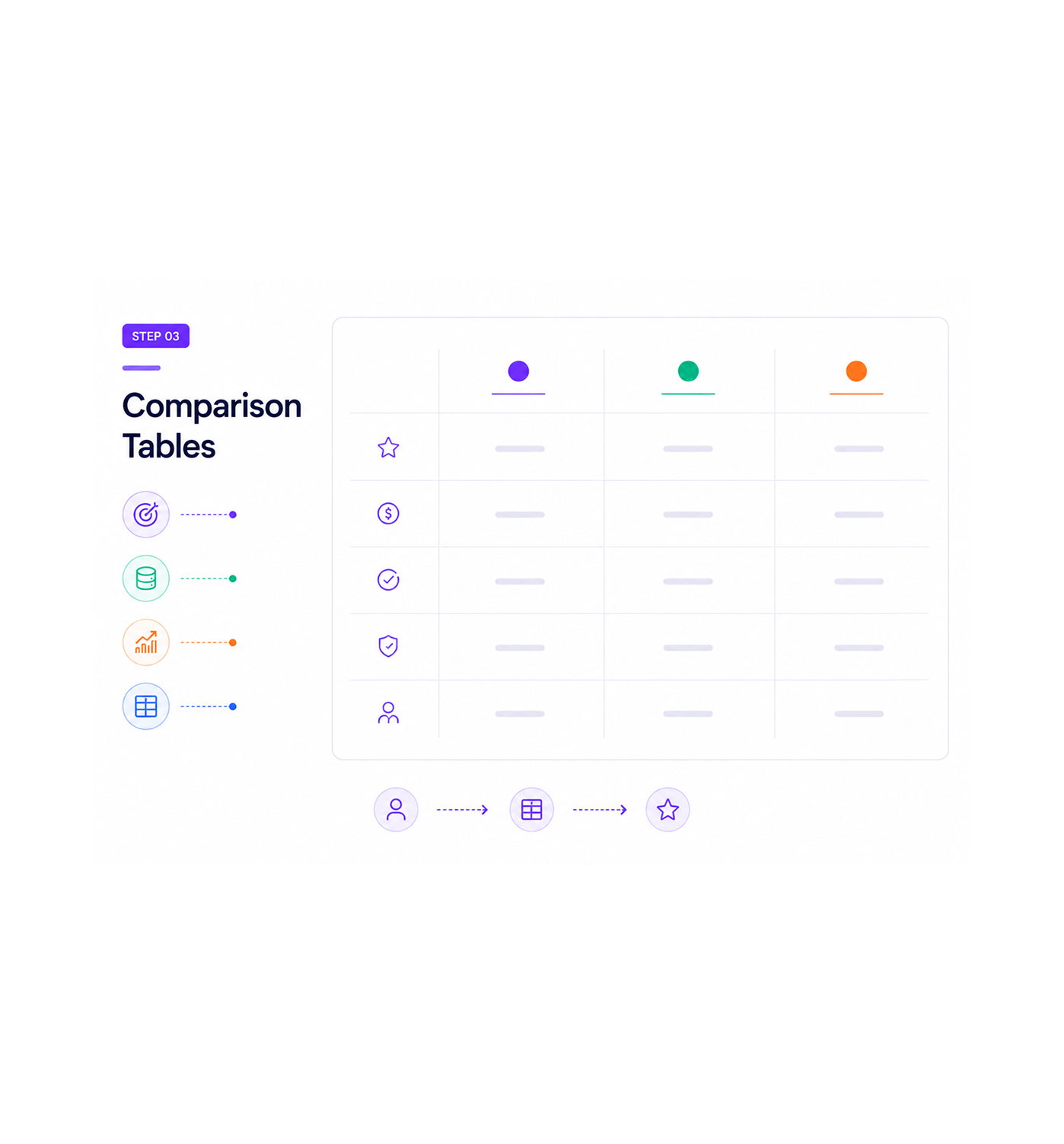
Comparison Tables
When the article needs to compare options tools, features, pricing tiers, plans, approaches a comparison table appears in the right section of the article. Not a wall of prose listing differences in paragraph form. A clean, structured table where each row is a dimension of comparison and each column is one of the options. Tables get cited at substantially higher rates than equivalent prose because they are structured data, and structured data is what answer engines reach for when a user asks "compare X and Y". Tables only appear when they genuinely help articles that do not need comparison do not get tables forced on them.
FAQ Block & Tags
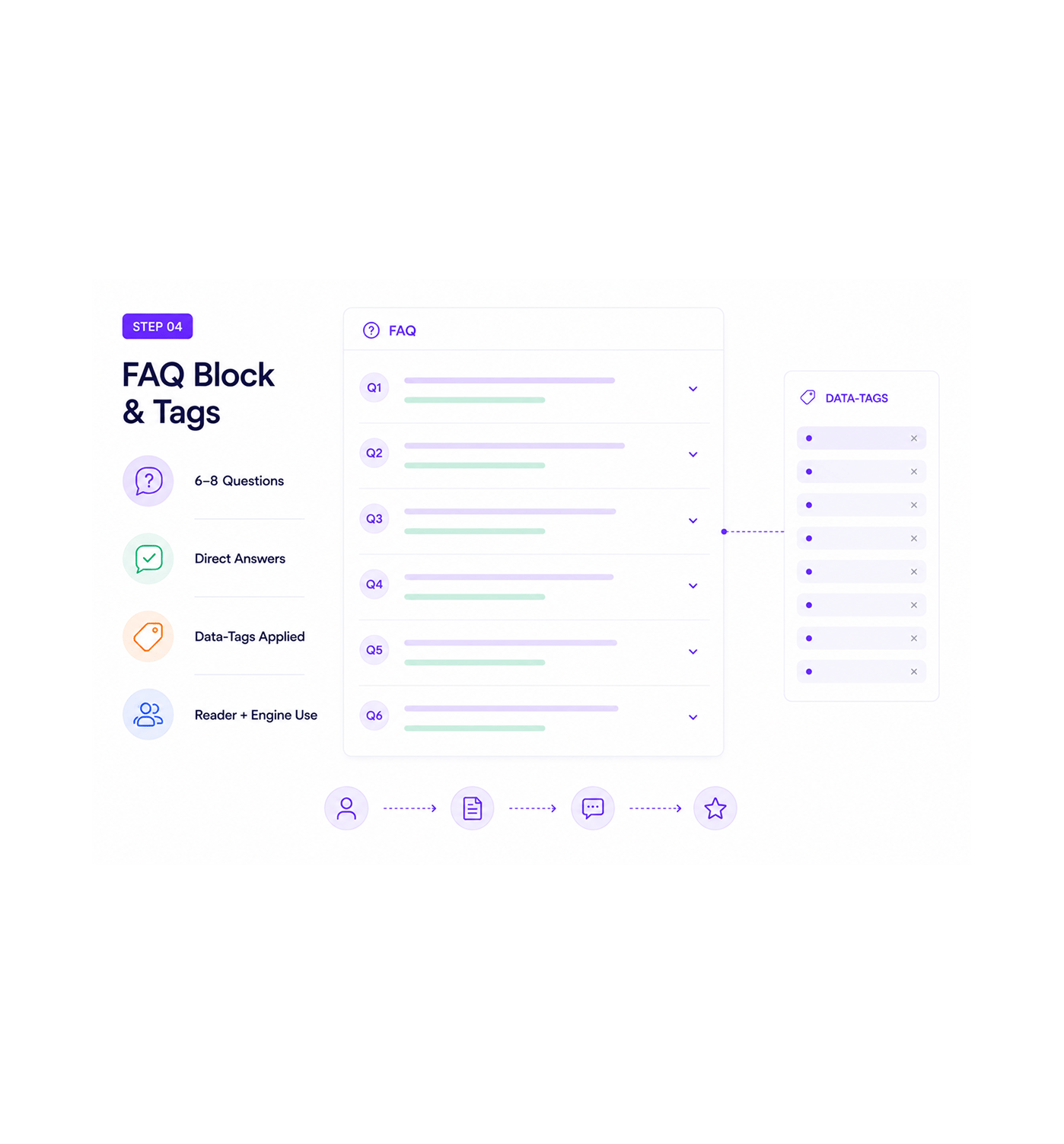
Every article closes with a frequently asked questions block six to eight questions the article has not fully answered in the body, with direct answers underneath. The FAQ block is genuinely useful for readers who arrive looking for a specific question and it also signals to search and answer engines exactly what structured questions and answers the page covers. The right page data tags are applied automatically, so the FAQ block becomes both a reader resource and a structured citation signal. Two purposes served by the same block, both of them serving the article's chance of being cited.
Once a team can ship articles in the exact shape answer engines prefer to cite short summary at the top, question headings with direct answers, comparison tables where useful, FAQ block with data tags at the bottom the old pattern of publishing prose that buries the answer five hundred words deep stops being acceptable. These are the changes that show up first.
The opening summary is the paragraph an answer engine can lift directly and produce a useful citation. Articles without a verbatim quotable summary force the engine to construct an answer from scattered sentences, which it can do but does badly and which gives the citation to whichever competitor wrote a cleaner summary. Putting the summary on top is the single highest leverage structural move available, and answer-first structure makes it the default.
"How do I choose a project management tool for a small team" is a question people ask AI assistants. "Project management software" is a keyword. Headings shaped like real questions match the way prompts are phrased, which is the way engines decide which content blocks to cite back. Articles built with question style headings get cited more often because the engine's matching becomes a one to one alignment rather than a fuzzy approximation.
The article that puts a direct answer in the first sentence under a heading gets cited. The article that leads with three paragraphs of context before the answer appears does not. Answer engines look for the cleanest answer at the top of a section, and they reward content that respects that pattern. Direct answer first, supporting depth after every heading, every time is the discipline that turns articles into citation magnets.
Comparison content in prose form makes the engine work to extract the structure. Comparison content in a clean table hands the structure over directly. Tables get pulled into citations at substantially higher rates because the engine does not have to interpret it can simply present what is already laid out cleanly. When the article needs to compare, a table is the format the citation conversation rewards.
The frequently asked questions block at the bottom of the article does two jobs at once it serves readers who arrive looking for a specific question and it signals to search and answer engines exactly what structured questions the page answers. With the right page data tags applied, the FAQ block becomes a citation signal that traditional SEO and AEO both reward. One block, two channels of value, zero extra work.
Most content teams discover the answer-first structure after they have already published five hundred articles in the old shape, then face the choice of rewriting everything or accepting the citation penalty. Articles produced through Ranko are written in the answer-first shape from the first paragraph, which means the citation friendly structure is the default rather than an afterthought. The team that adopts the structure on the next article skips the retrofitting problem entirely.
Verbatim quotable top summary. Question style headings with direct answers. Comparison tables where useful. FAQ block at the bottom with the right page data tags applied automatically. The citation friendly structure your content engine has always needed.
10800+
Teams optimising for the quote, not just the rank
Founders who care more about being cited by ChatGPT than about being on page two of Google, content marketing leads transitioning their teams from a ranking only mindset to a ranking plus citation mindset, search specialists who have learned that the structural mechanics of an article matter as much as the keyword density once did, agencies whose clients are increasingly asking why competitors are being quoted in AI answers when the agency's content is technically better written, growth teams at SaaS companies whose buyers now start product research inside an AI assistant rather than a search bar, ecommerce operators whose buying guides need to be cited when a shopper asks an AI engine "which X should I buy", and editors who have made the strategic decision that quotable beats clever as the editorial standard all use Ranko's Answer First Structure as the formatting discipline that ships citation friendly content from the first paragraph. Every team a small business publishing one article a week or a larger organisation orchestrating dozens of pieces across every content track gets the same verbatim quotable summaries, question style headings, structured tables, and FAQ blocks with the right page data tags applied automatically.
Summary
Headings
Tables
block
A verbatim quotable summary opens the article. Question style headings organise the body with direct answers directly underneath. Comparison tables appear where they genuinely help. A frequently asked questions block closes the article. Four structural moves, applied by default, in the same shape every time so the team's content earns the citations the structure makes available.
A complete citation friendly structure toolkit built into the same answer engine optimisation platform your team already uses. Verbatim quotable top summary, question style headings, direct answers under every heading, comparison tables where they help, FAQ block at the bottom, and structured data tags applied automatically come together so the team finally publishes articles in the exact shape the answer engines prefer to quote.
The opening paragraph delivers a complete, direct answer in a shape an AI assistant can lift verbatim and produce a useful citation. No preamble, no teaser, no five hundred words of setup before the answer appears. The single highest leverage paragraph on the page sits exactly where the citation conversation looks for it.
Body sections organised under headings phrased the way real people actually ask things full questions rather than keyword phrases. The heading matches the prompt the engine's user typed, which is the alignment that lets the engine pull the section directly into the cited answer instead of approximating from nearby content.
The first sentence under every heading delivers the direct answer to the heading's question. The supporting depth follows in the rest of the section. The engine that wants to cite the answer to a heading question finds the answer immediately rather than having to extract it from three paragraphs of buildup. Direct first, depth second, every section, every time.
When the article needs to compare options, a clean table appears in the right section rows for the dimensions, columns for the options, structured for both reader scanning and engine extraction. Tables get cited at substantially higher rates than equivalent prose because the structure is already laid out. The article only gets a table when one genuinely helps, never as forced formatting.
Every article closes with six to eight frequently asked questions and direct answers useful for readers arriving with specific questions, and a strong structural signal for both traditional search and answer engines. The block doubles as a reader resource and a citation signal, two jobs done by the same content, no extra work required from the team.
The right page data tags get applied automatically as the article is built FAQ tags on the FAQ block, article tags on the body, organisation tags on the publisher, comparison tags where tables appear. The structured signals search and answer engines look for are baked into every article from the moment it is written, not retrofitted in a separate workflow that gets skipped half the time.
The opening paragraph delivers a complete, direct answer in a shape an AI assistant can lift verbatim and produce a useful citation. No preamble, no teaser, no five hundred words of setup before the answer appears. The single highest leverage paragraph on the page sits exactly where the citation conversation looks for it.
Body sections organised under headings phrased the way real people actually ask things full questions rather than keyword phrases. The heading matches the prompt the engine's user typed, which is the alignment that lets the engine pull the section directly into the cited answer instead of approximating from nearby content.
The first sentence under every heading delivers the direct answer to the heading's question. The supporting depth follows in the rest of the section. The engine that wants to cite the answer to a heading question finds the answer immediately rather than having to extract it from three paragraphs of buildup. Direct first, depth second, every section, every time.
When the article needs to compare options, a clean table appears in the right section rows for the dimensions, columns for the options, structured for both reader scanning and engine extraction. Tables get cited at substantially higher rates than equivalent prose because the structure is already laid out. The article only gets a table when one genuinely helps, never as forced formatting.
Every article closes with six to eight frequently asked questions and direct answers useful for readers arriving with specific questions, and a strong structural signal for both traditional search and answer engines. The block doubles as a reader resource and a citation signal, two jobs done by the same content, no extra work required from the team.
The right page data tags get applied automatically as the article is built FAQ tags on the FAQ block, article tags on the body, organisation tags on the publisher, comparison tags where tables appear. The structured signals search and answer engines look for are baked into every article from the moment it is written, not retrofitted in a separate workflow that gets skipped half the time.
Common questions about what makes the top summary verbatim quotable, how the question heading shapes are chosen, when comparison tables actually get used, what page data tags get applied automatically, how the answer first structure works alongside traditional SEO, and how the structure adapts to different article types.
A summary is verbatim quotable when an AI assistant can lift the paragraph directly and produce a useful, complete answer without needing to add context or reshape the prose. That means the paragraph stands on its own it does not start with "in this article" or "as we will see", it does not assume the reader has already read something earlier, it does not depend on a heading above it to make sense. The paragraph answers the article's primary question completely in a way the engine can attribute as the source. Ranko writes the top summary in this shape by default and flags drafts where the summary is not complete enough to stand alone, so every article ships with the highest leverage paragraph already optimised for citation.
Verbatim quotable top summary. Question style headings with direct answers. Comparison tables where useful. FAQ block at the bottom with the right page data tags applied automatically. The citation friendly structure your content engine has always deserved.