One number per topic. The size of your open door.

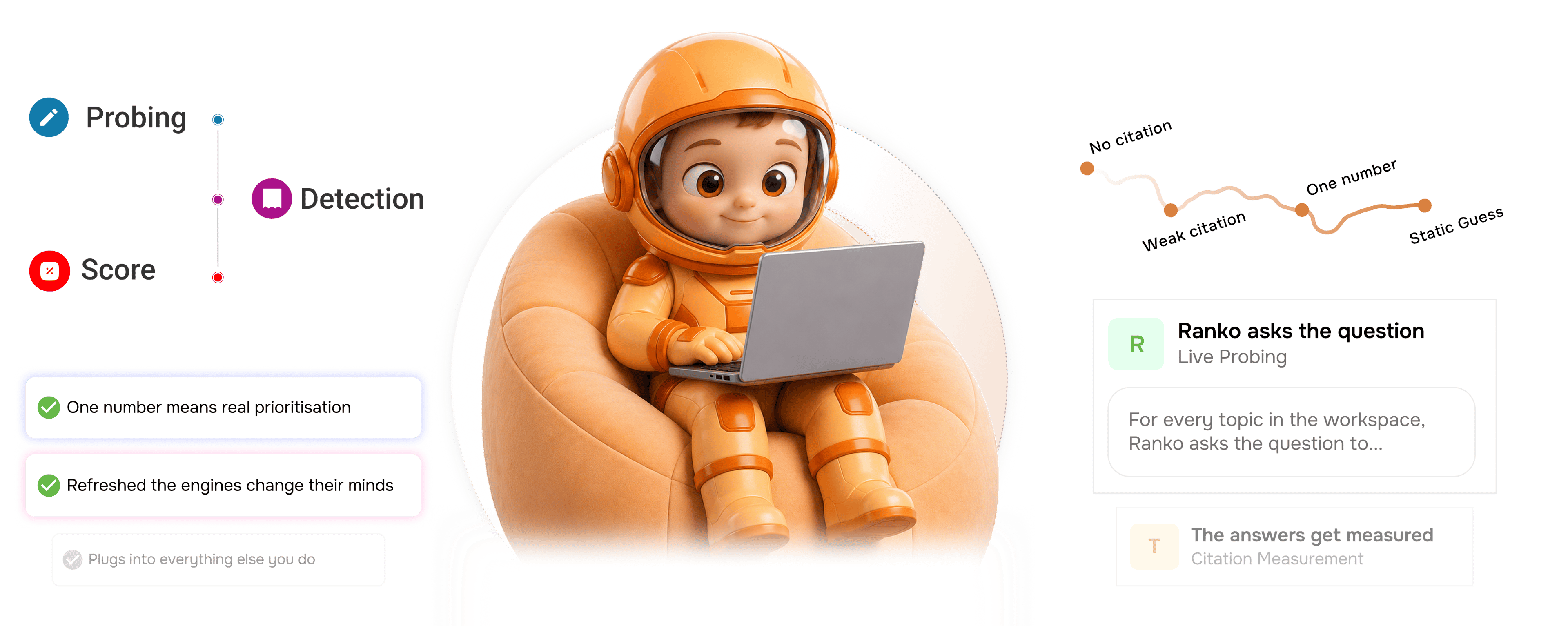
For every topic that matters, Ranko asks all four AI assistants the question and watches what happens. How often do they answer without citing anyone? How often do they only cite weak competitors you could clearly out write? That signal becomes a single number from zero to one hundred the Opportunity Score. Higher means the door is wider open. The prioritisation currency your content strategy has always wanted, finally pointed at the half of search no traditional tool can see.

One number
How it works

From topic to a single score in 4 steps

Ranko asks the question across ChatGPT, Claude, Perplexity, and Gemini and measures what comes back. Answers that arrive without any citations get counted as wide open. Answers that cite only weak competitors get counted as doors you can push through. The signal compresses into a single score from zero to one hundred per topic, ready to drive every prioritisation decision your team makes after that.

1
2
3
4

Live Probing

Ranko asks the question, for real

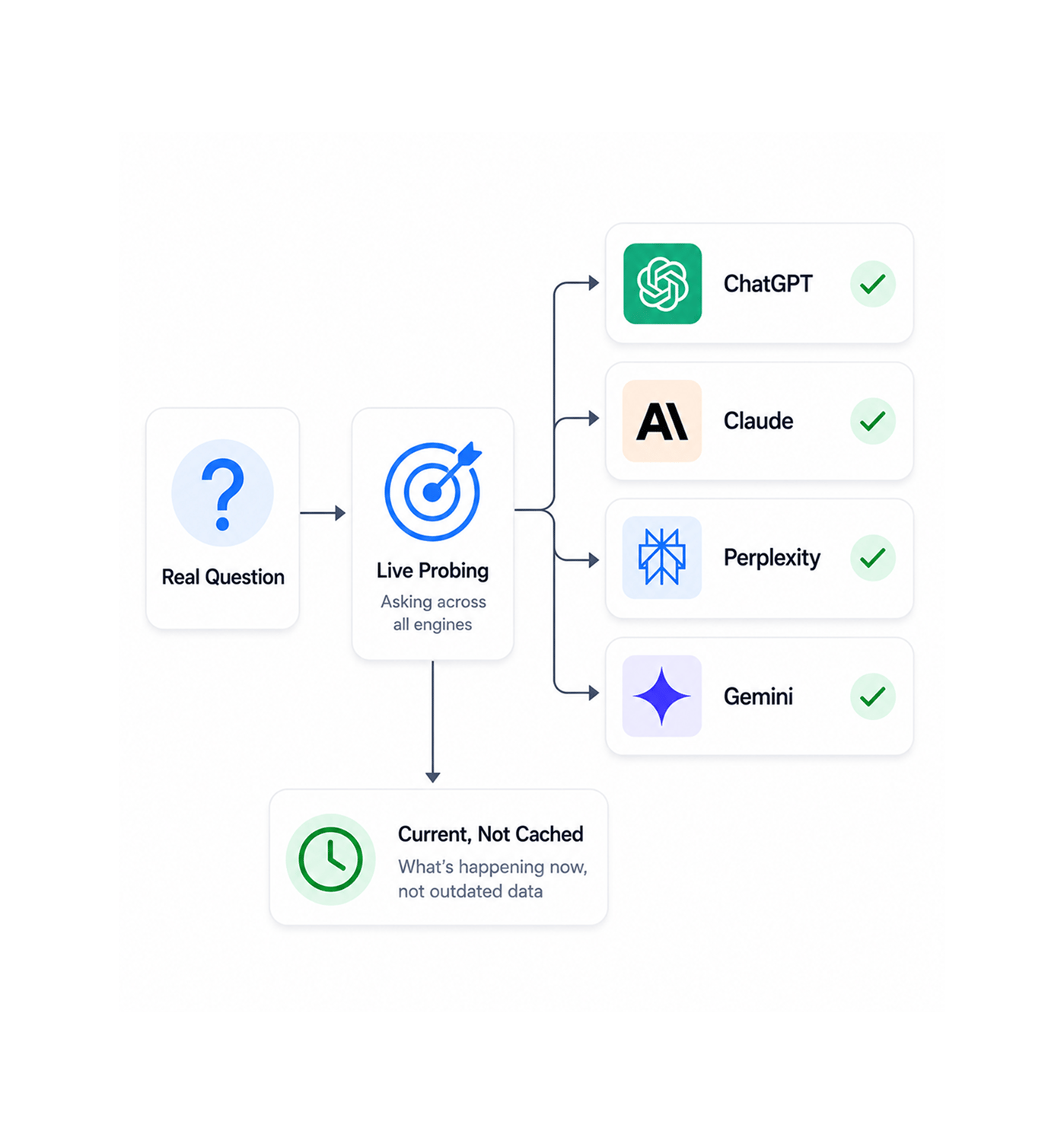
For every topic in the workspace, Ranko asks the question to ChatGPT, Claude, Perplexity, and Gemini as a real user would. Not a static keyword volume from a database that has not been refreshed since the last algorithm update. Not a synthetic estimate based on what the engines used to do six months ago. A live probe across all four engines, asking the actual question, capturing what each one currently says, in the moment. The score is grounded in what is genuinely happening on the engines right now, not in what a spreadsheet thinks should be happening.

Live ProbingReal Questions AskedAll 4 EnginesCurrent, Not Cached

Citation Measurement

The answers get measured carefully

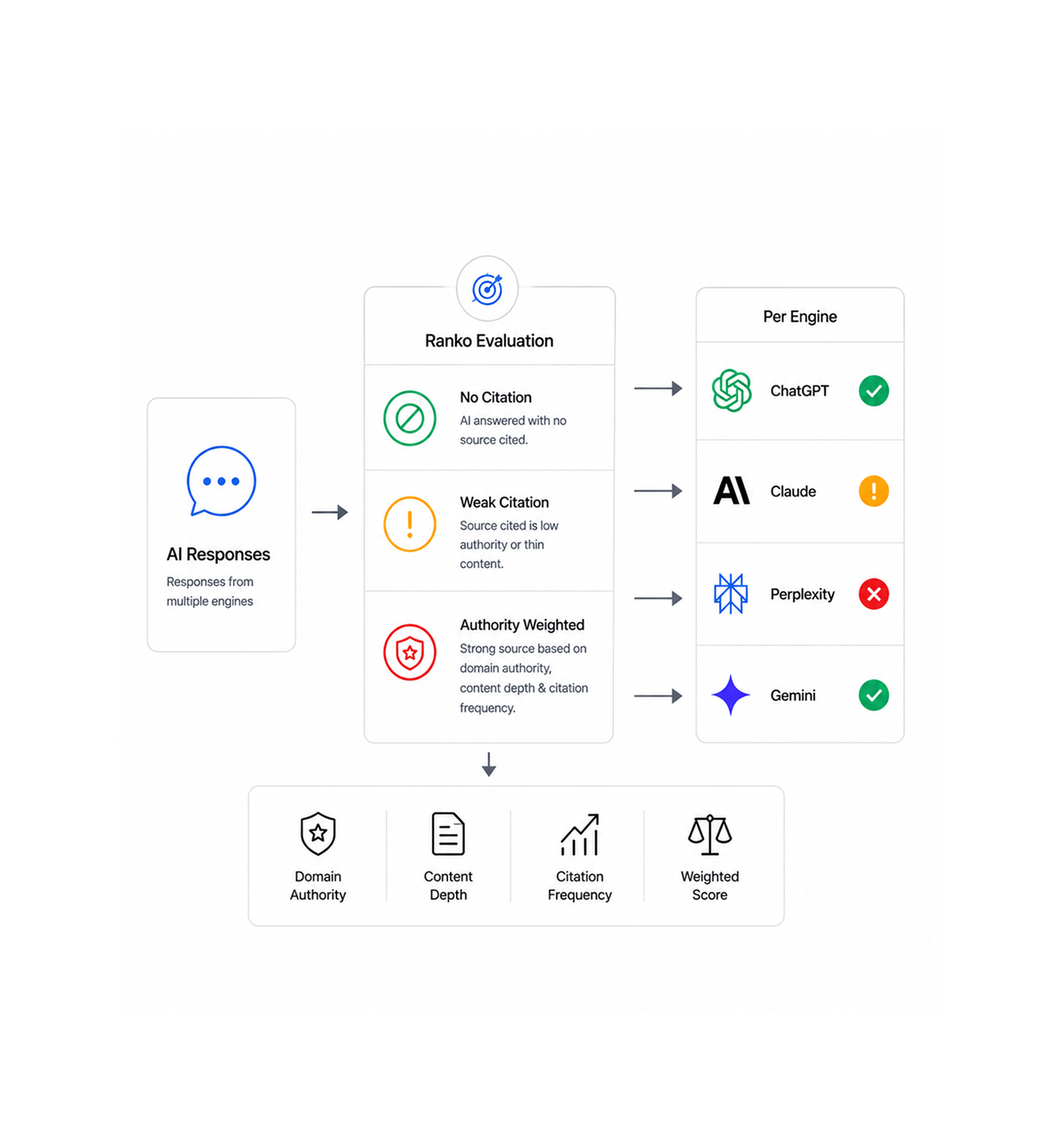
For every response, Ranko checks two things. First, did the AI assistant cite anyone at all or did it just answer the question from its own knowledge with no source attached. Second, when it did cite somebody, was the cited source a strong authority or a weak one. A no citation answer is a wide open door. A weak citation answer is a door you can push through with a better answer. A strong citation answer is a closed door for now. Each engine's response gets categorised cleanly, with the citation strength weighed by domain authority, content depth, and how often that source is being cited across the rest of your tracked topics.

No Citation DetectionWeak Citation DetectionAuthority WeightedPer Engine

The 0–100 Score

One number per topic, zero to one hundred

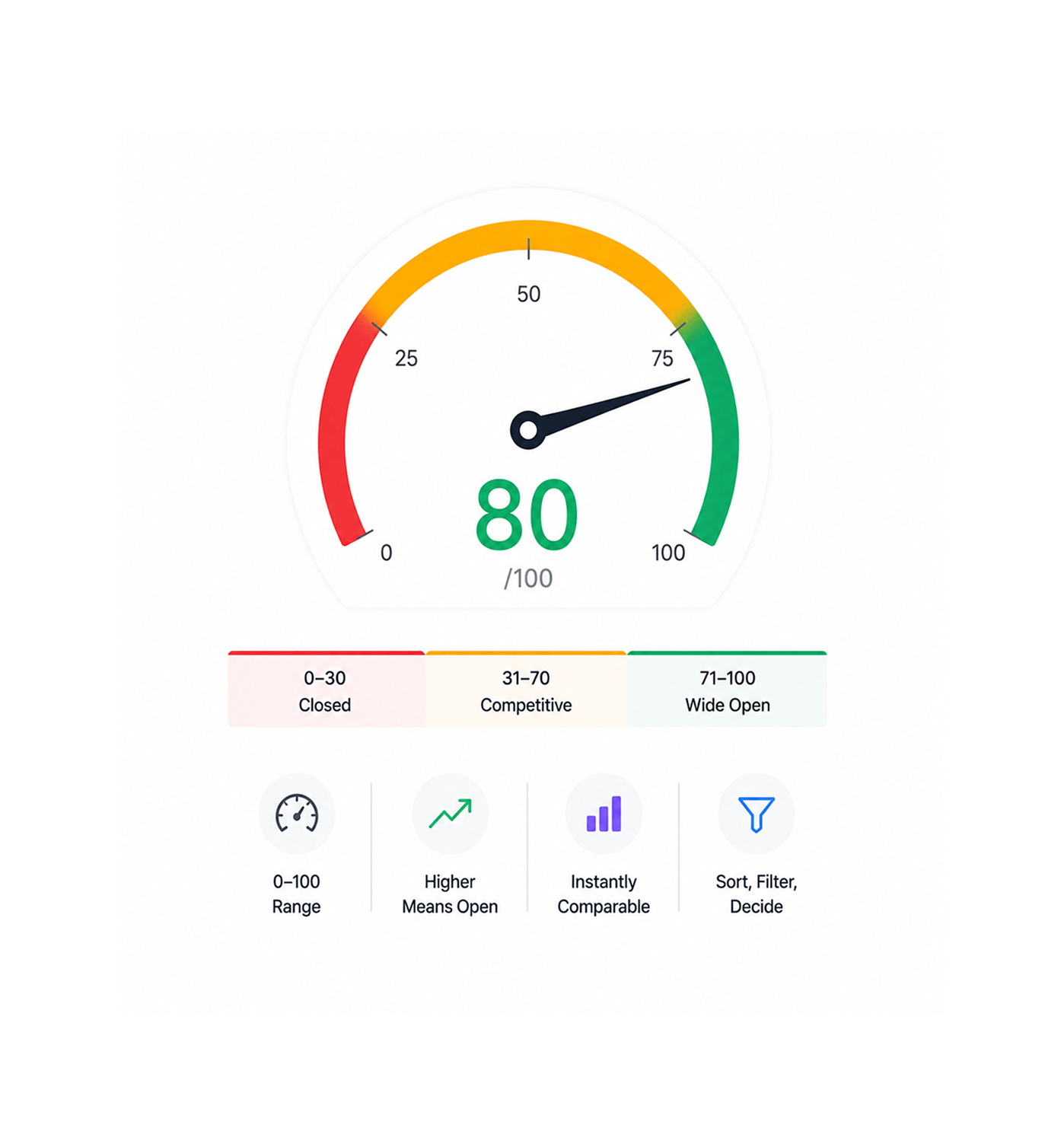
The measurements from all four engines compress into a single number from zero to one hundred. Eighty means the door is wide open most engines either answered without citations or only cited weak sources, and a strong new answer would almost certainly take the citation. Twenty means the door is mostly closed strong authorities own the question across most engines and the team would be fighting uphill. The middle range tells you where there is genuine room to compete with good content. One number, instantly comparable, easy to sort by, ready to drive a decision.

0–100 RangeHigher Means OpenInstantly ComparableSort, Filter, Decide

Prioritisation Currency

Score the list, pick the winners

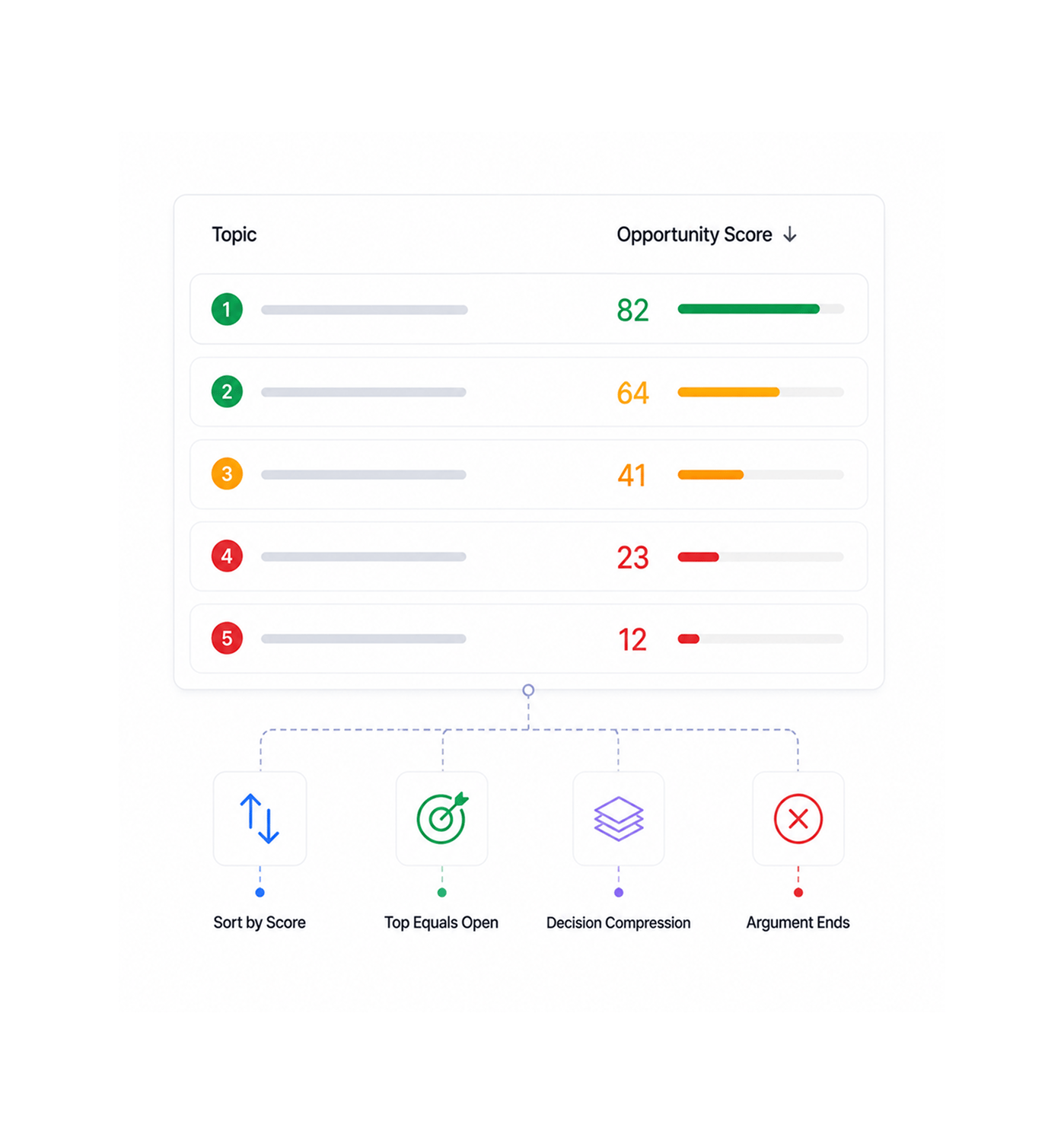
Sort the topic list by Opportunity Score and the prioritisation problem genuinely solves itself. The topics at the top of the list are the ones where the door is widest open right now where a strong piece of content has the highest chance of taking the citation back. The team that used to argue for half a meeting about which topic to publish next can now point to the score and move on, which is exactly the kind of decision compression that changes the throughput of a content team.

Sort by ScoreTop Equals OpenDecision CompressionArgument Ends
Why Teams Choose RANKO

Six reasons the open door is the only thing worth chasing

Once a team has a single score per topic that tells them how open the door genuinely is right now, the old pattern of arguing about which topic to publish next based on whoever in the room sounds most confident stops being acceptable. These are the changes that show up first.

A live measurement, not a static guess

A live measurement, not a static guess

The score reflects what the AI engines are actually doing right now, not what a keyword database thought was true six months ago. Live probing means the team always works from the current state of the citation landscape which is the only state that matters when the team is about to commit budget and time to a piece of content that is supposed to win citations next week, not last year.

No citation means an open door

No citation means an open door

When an AI assistant answers a question without citing anyone, the slot is genuinely available the engine is not yet committed to a source, which means a strong new answer has every chance of becoming the source. These are the topics where the team's work compounds fastest, because the engines are still actively looking for someone trustworthy to cite. The Opportunity Score surfaces these slots without the team having to dig.

Weak citations mean a door you can push through

Weak citations mean a door you can push through

When the engines cite only weak competitors sources with shallow content, thin authority, tangential relevance the situation is almost as good as no citation at all. The incumbent is not really an incumbent, just the first thing the engine could find. A genuinely strong piece of content from a serious authority can displace that placeholder citation quickly, which is the kind of high leverage move every content team is looking for and rarely knows where to point at.

One number means real prioritisation

One number means real prioritisation

The what should we publish first argument used to take half a meeting because everyone in the room had a different frame for ranking topics search volume, strategic importance, gut instinct, the one customer who complained last week. A single comparable score across all topics collapses the argument to we are doing the top three this week and the team can move on to the work. Decision compression at the meta level is one of the highest leverage outputs the score produces.

Refreshed as the engines change their minds

Refreshed as the engines change their minds

AI engines do not hold their citation preferences forever. A topic that scored eighty last month might score forty next month because a competitor finally published a serious answer and the engine has shifted. The Opportunity Score refreshes regularly so the team always works from the current state of the door open today is open today, closed tomorrow is closed tomorrow, and the strategy stays aligned with reality rather than with last quarter's snapshot.

Plugs into everything else you do

Plugs into everything else you do

The Opportunity Score becomes the currency the rest of the suite uses to make decisions. Topic Planner ranks publishing order by Opportunity Score. Topic Clusters elevate the supporting topics with the highest scores. Competitor Tracking flags when a competitor is starting to lower your score on a question. The single number does not sit in isolation it becomes the connecting metric that turns the whole engine into a coordinated decision machine rather than five separate tools.

Stop ranking by guesswork. Start ranking by real opportunity.

Live question probing across all four AI engines. No citation detection. Weak citation detection. A single zero to one hundred score per topic. The prioritisation currency your content engine has always needed.

Who uses RANKO opportunity score
Deepak MehrotraDeepak MehrotraDeepak MehrotraDeepak Mehrotra

8200+

Teams prioritising with real scores, not guesses.

Built for teams who publish when the door is open

Founders, content marketers, SEO specialists, agencies, SaaS growth teams, and ecommerce operators use Ranko's Opportunity Score to identify topics where AI engines are still looking for authoritative sources to cite. By providing live analysis across all four engines with a clear zero to one hundred score, Ranko helps teams prioritise content based on opportunity instead of assumptions, making publishing decisions faster, clearer, and data-driven.

0 to 100

Score

4 AI

Engines

Live

Measurement

Per Topic

Number

Measurement Layer

Asks every engine, measures the answer

For every topic, Ranko asks the question to ChatGPT, Claude, Perplexity, and Gemini as a real user would, then measures the answer carefully was anyone cited at all, and if so was the source strong or weak. The signal is live, grounded in what the engines are actually doing right now, not in a static estimate from a stale database.

Asks every engine, measures the answer
Features

Everything the scoring engine ships with

A complete opportunity measurement toolkit built into the same answer engine optimisation platform your team already uses. Live question probing across all four AI engines, no citation detection, weak competitor citation detection, a zero to one hundred score per topic, regular score refresh as the engines evolve, and score driven prioritisation across the rest of the suite come together so the team always knows exactly where the open doors are and which ones to push on next.

Live Question Probing

Live Question Probing

For every topic, Ranko asks the question to ChatGPT, Claude, Perplexity, and Gemini as a real user would and records what each engine actually answers. The probing is live and ongoing, so the score reflects the current state of the citation landscape rather than a static snapshot from a database that has not been refreshed in months.

No Citation Detection

No Citation Detection

When an engine answers a question without citing anyone pulling the answer from its own knowledge with no source attached the slot is genuinely available for a strong new answer to take. Ranko identifies these wide open doors across all four engines and weights them heavily in the Opportunity Score, because no citation answers are the highest leverage slots in the entire citation landscape.

Weak Citation Detection

Weak Citation Detection

When the engines cite only weak sources shallow content, thin authority, tangential relevance the door is still pushable. Ranko evaluates citation strength based on domain authority, content depth, and how often the cited source appears across the rest of your tracked topics, then flags weak citations as doors a genuinely strong answer could push through quickly.

0 to 100 Opportunity Score

0 to 100 Opportunity Score

All the measurements compress into a single number from zero to one hundred per topic. Higher means the door is wider open. The score is instantly comparable across topics, easy to sort by, and gives the team a single currency for prioritisation that ends the which one should we do next argument before it starts.

Score Refresh as Engines Evolve

Score Refresh as Engines Evolve

AI engines change their citation preferences over time. A topic that scored eighty last month might score forty next month because a competitor finally published a serious answer the engine now prefers. The Opportunity Score refreshes regularly so the team always works from the current state of the door, not a stale snapshot of how things used to be.

Suite Wide Prioritisation

Suite Wide Prioritisation

The Opportunity Score is the currency the rest of Ranko uses to make decisions. Topic Planner ranks publishing order by score. Topic Clusters elevate high scoring supports. Competitor Tracking flags when a rival is lowering your score on a question. The single number becomes the connecting metric across the whole engine, turning five separate tools into one coordinated decision system.

Live Question Probing

Live Question Probing

For every topic, Ranko asks the question to ChatGPT, Claude, Perplexity, and Gemini as a real user would and records what each engine actually answers. The probing is live and ongoing, so the score reflects the current state of the citation landscape rather than a static snapshot from a database that has not been refreshed in months.

No Citation Detection

No Citation Detection

When an engine answers a question without citing anyone pulling the answer from its own knowledge with no source attached the slot is genuinely available for a strong new answer to take. Ranko identifies these wide open doors across all four engines and weights them heavily in the Opportunity Score, because no citation answers are the highest leverage slots in the entire citation landscape.

Weak Citation Detection

Weak Citation Detection

When the engines cite only weak sources shallow content, thin authority, tangential relevance the door is still pushable. Ranko evaluates citation strength based on domain authority, content depth, and how often the cited source appears across the rest of your tracked topics, then flags weak citations as doors a genuinely strong answer could push through quickly.

0 to 100 Opportunity Score

0 to 100 Opportunity Score

All the measurements compress into a single number from zero to one hundred per topic. Higher means the door is wider open. The score is instantly comparable across topics, easy to sort by, and gives the team a single currency for prioritisation that ends the which one should we do next argument before it starts.

Score Refresh as Engines Evolve

Score Refresh as Engines Evolve

AI engines change their citation preferences over time. A topic that scored eighty last month might score forty next month because a competitor finally published a serious answer the engine now prefers. The Opportunity Score refreshes regularly so the team always works from the current state of the door, not a stale snapshot of how things used to be.

Suite Wide Prioritisation

Suite Wide Prioritisation

The Opportunity Score is the currency the rest of Ranko uses to make decisions. Topic Planner ranks publishing order by score. Topic Clusters elevate high scoring supports. Competitor Tracking flags when a rival is lowering your score on a question. The single number becomes the connecting metric across the whole engine, turning five separate tools into one coordinated decision system.

Questions & answers

Everything you need to know

Common questions about exactly how the score is calculated, what counts as no citation versus weak citation, why one single number instead of a richer dashboard, how often the score refreshes, whether the team can see the breakdown behind any score, and how Opportunity Score relates to the gap scoring inside Topic Planner.

The score is built from three measurements per engine, averaged across all four engines, then normalised to a zero to one hundred range. The first measurement is whether the engine answered without any citation at all the highest possible signal for an open door. The second measurement is whether the citations that did appear came from weak sources flagged as doors the team could push through with stronger content. The third measurement is the relative authority of the cited sources compared to the team's own domain closer matches signal more accessible competition than vastly stronger incumbents. The three measurements combine into a per engine score, the four engines average into a topic score, and the result is the single zero to one hundred number the team sees.

Network background
RANKO · Opportunity Score

Stop publishing into closed doors.
Start publishing where the door is wide open.

Live question probing across all four AI engines. No citation detection. Weak citation detection. One zero to one hundred score per topic. Refreshed as the engines evolve. The prioritisation currency your content engine has always deserved.