Build authority on subjects, not scattered one off pages

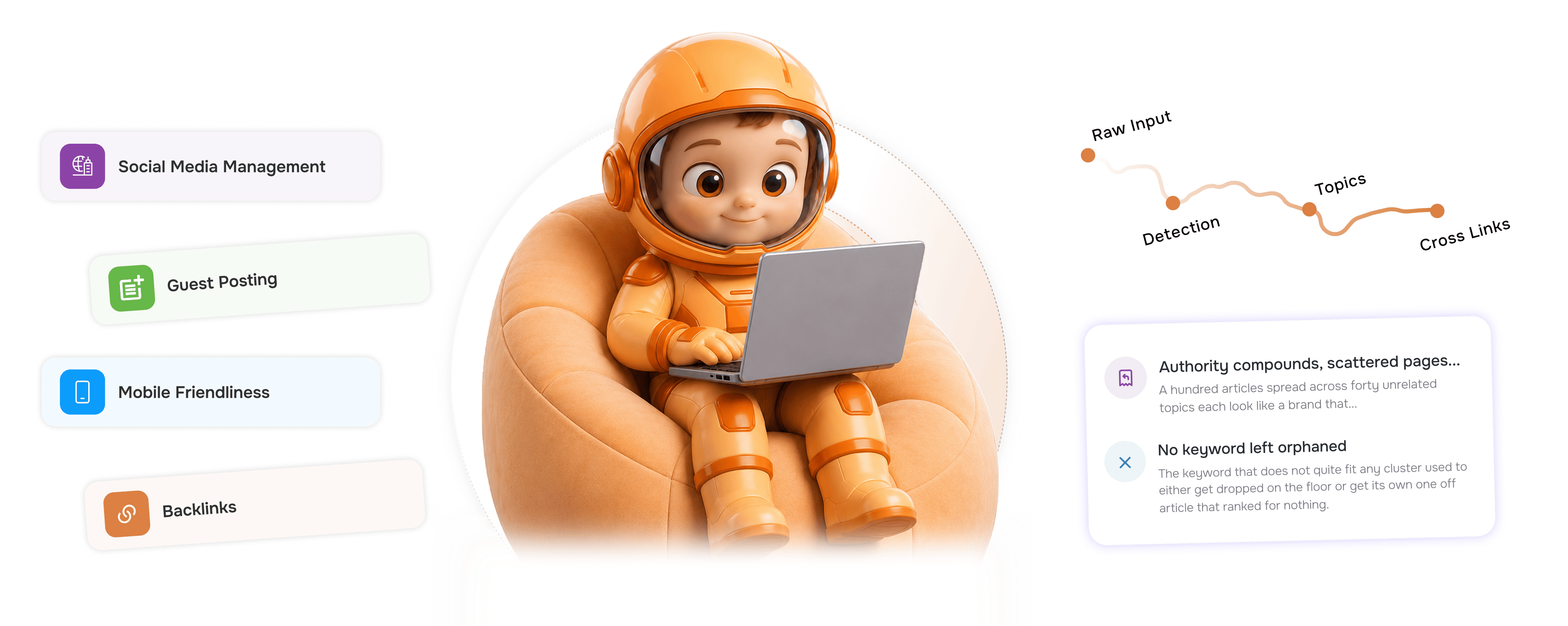
Ranko groups raw keywords into clusters around a central idea one main pillar topic plus five to fifteen supporting topics around it. Your content stops being a pile of disconnected articles and starts being a topical authority on the subjects your brand actually wants to be known for. The shape both Google and the answer engines now use to decide which sites genuinely deserve to be cited as the authority on a subject.

Build authority
How it works

From raw keywords to real authority in 4 steps

Drop in your raw keywords your own list, the questions mined by Ranko, the search terms exported from another tool, anything. The platform identifies the central pillar topic each group belongs to, attaches the five to fifteen supporting topics around it that a real authority would also cover, and wires cross links so the cluster compounds into genuine topical authority instead of a pile of disconnected pages.

1
2
3
4

Raw Keyword Input

Drop in your raw keywords

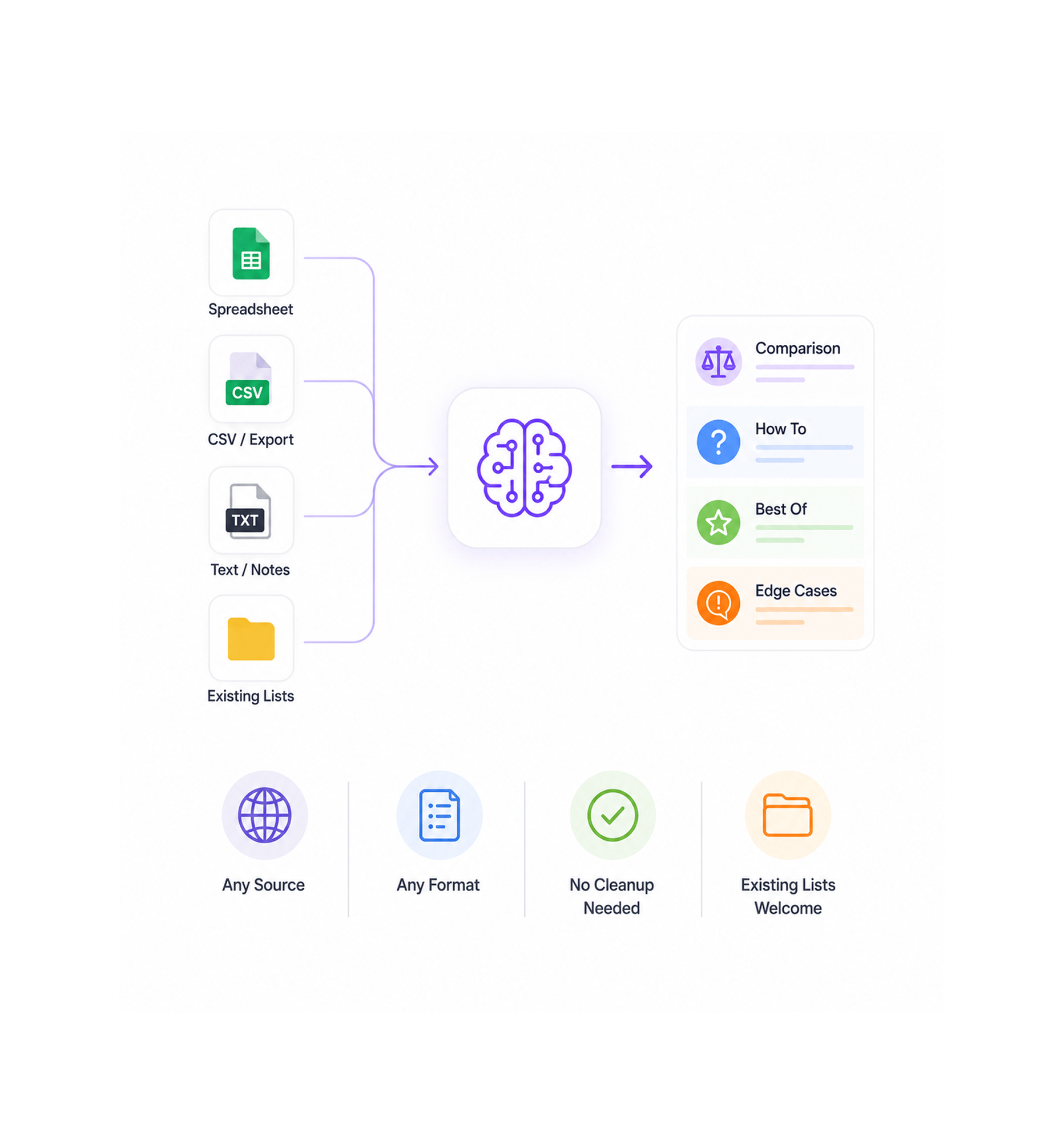
Bring whatever you have. The keyword list from a discovery session, the questions Ranko has been mining from ChatGPT, Claude, Perplexity and Gemini, the export from another tool the team used last year, the spreadsheet your agency handed over, the brain dump from a strategy meeting. The clustering brain takes raw input in whatever shape it arrives, which means the team can finally do something useful with the keyword lists that have been sitting in shared drives for years.

Any SourceAny FormatNo Cleanup NeededExisting Lists Welcome

Pillar Detection

The pillar topic emerges

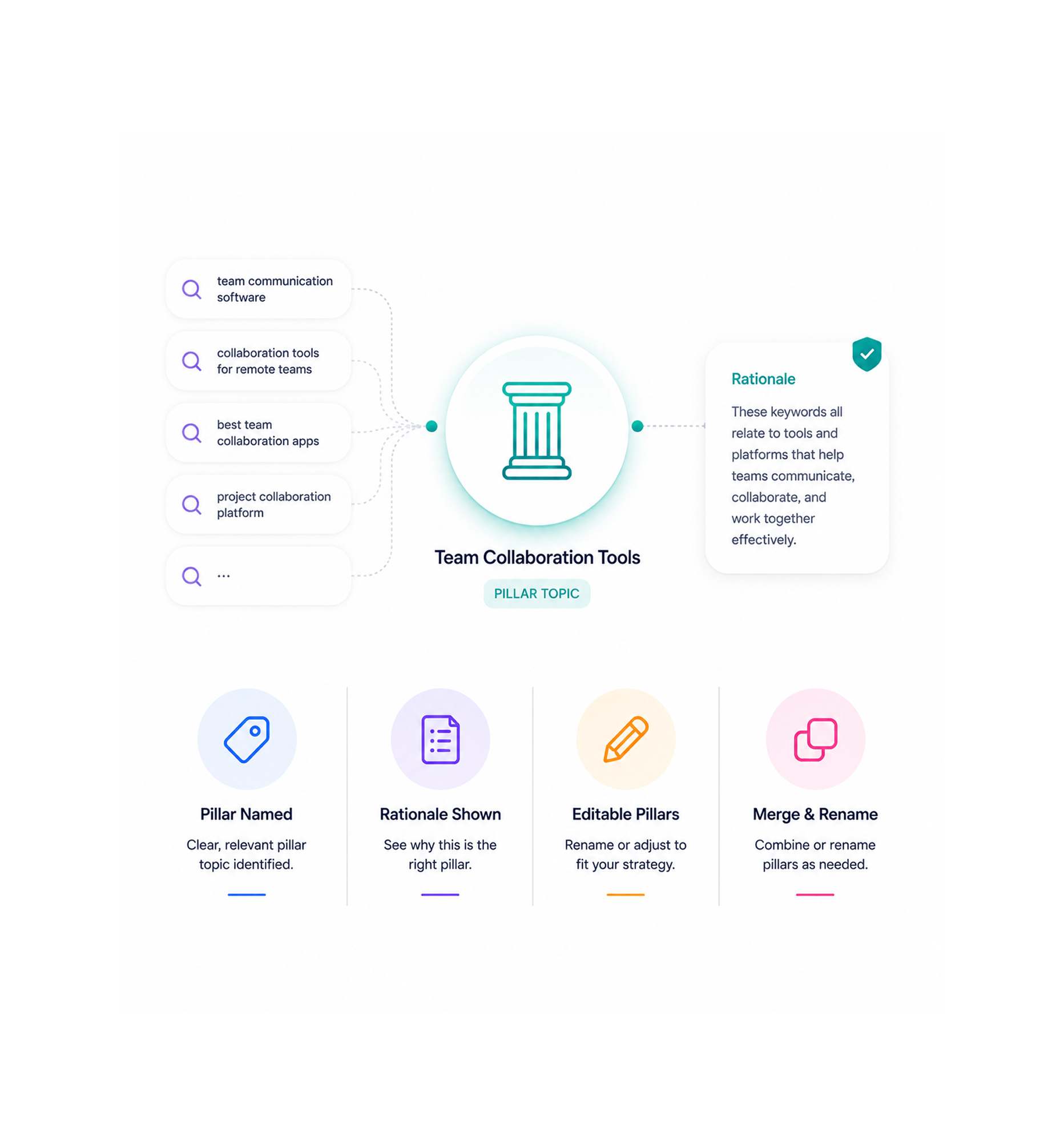
Ranko identifies the central pillar topic that a natural group of keywords belongs to the broader subject the team would genuinely want to be known for. Project management software, team collaboration tools, remote work productivity, agile methodology for startups each pillar is the kind of subject a real authority would write a major reference page about. The pillar is named, the rationale is shown, and the team can rename or merge pillars if the suggested shape does not quite match the brand's strategy.

Pillar NamedRationale ShownEditable PillarsMerge & Rename

Supporting Topics

5–15 supports attach to each pillar

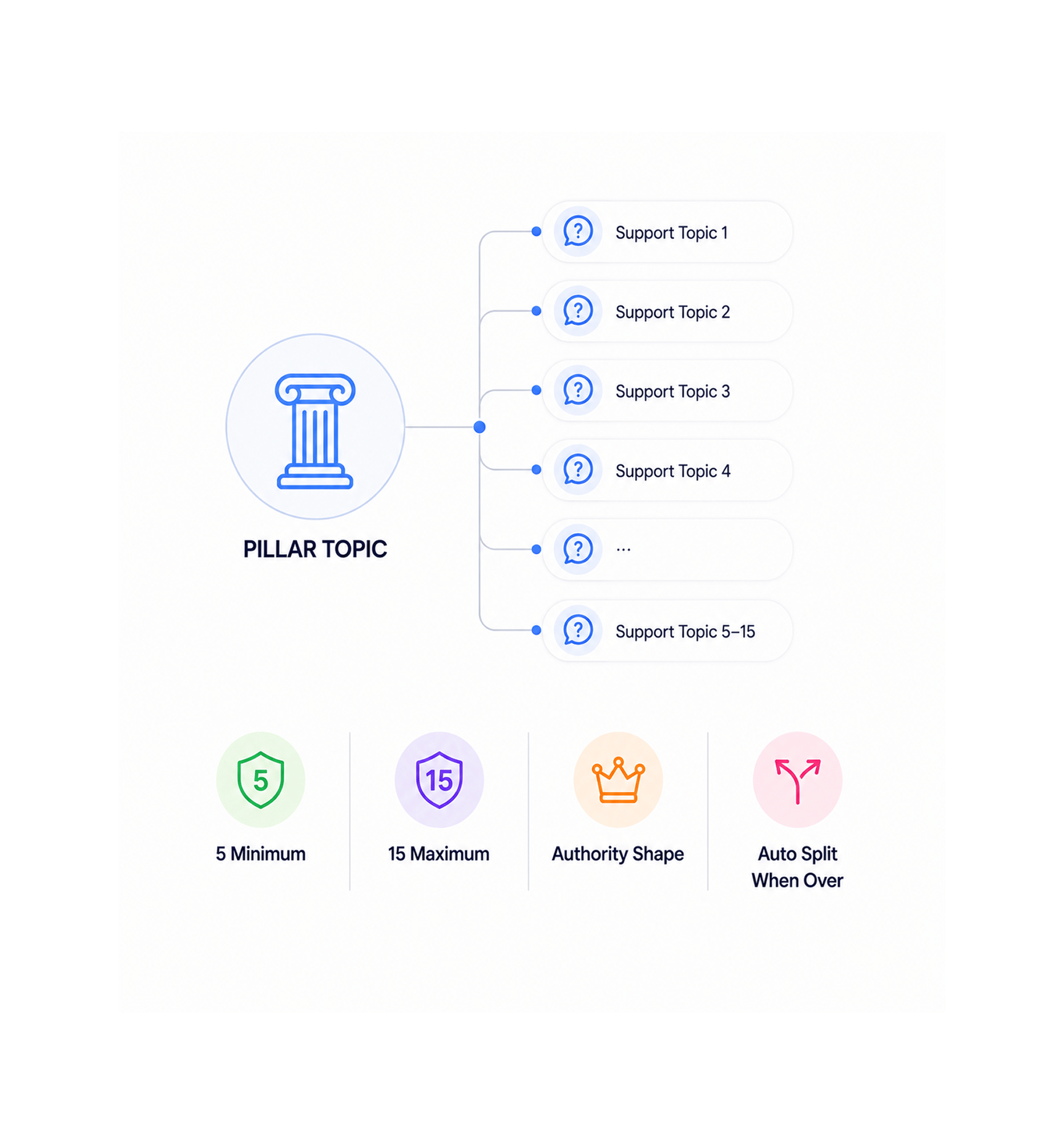
Five to fifteen supporting topics attach to every pillar the questions a real authority on the subject would naturally cover. Around a pillar like project management software, the supports might include how to choose a project management tool, project management for small teams, project management versus task management, the best free project management software, project management certifications, and the other questions that genuinely belong in the same neighbourhood. Five is the floor for credibility. Fifteen is the ceiling for focus. Anything beyond fifteen splits into a related pillar of its own.

5 Minimum15 MaximumAuthority ShapeAuto Split When Over

Cross Links

Cross links wire the cluster together

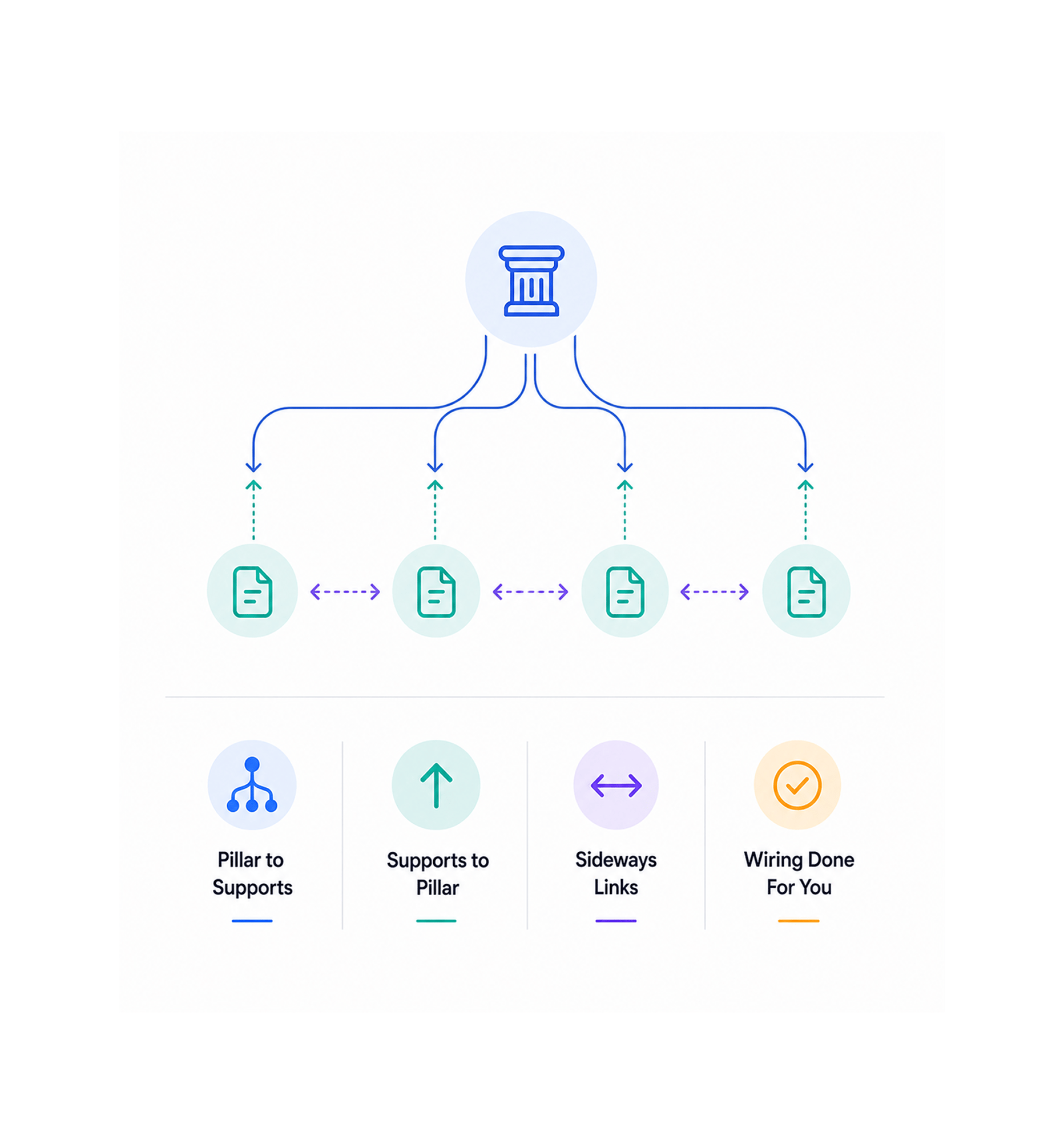
Once the pillar and the supports are settled, Ranko maps the internal linking structure that turns the cluster into actual topical authority. The pillar page links down to every support. Every support links back up to the pillar. Supports that share natural overlap link sideways to each other. The linking map is generated automatically as the cluster is built, so the team finally publishes content with the wiring already done which is the property both Google and the answer engines reward when they decide which sites deserve the citation.

Pillar to SupportsSupports to PillarSideways LinksWiring Done For You
Why Teams Choose RANKO

Six reasons authority compounds instead of scattering

Once a team can group raw keywords into clusters around a single pillar idea with five to fifteen supporting topics and the internal linking already mapped the old pattern of publishing one off articles that share nothing in common stops being acceptable. These are the changes that show up first.

Authority compounds, scattered pages don't

Authority compounds, scattered pages don't

A hundred articles spread across forty unrelated topics each look like a brand that publishes about everything and is the authority on nothing. Five clusters of twenty articles each look like a brand that has gone deep on five subjects worth caring about. Search engines and answer engines both reward depth over breadth clusters give the team depth on purpose rather than breadth by accident.

Pillar plus supports is how both Google and AI engines rank now

Pillar plus supports is how both Google and AI engines rank now

Modern search is no longer keyword by keyword. Google ranks the site that demonstrates topical authority across a subject. Answer engines cite the source that covers the subject most completely. Both reward the pillar plus support structure because it signals genuine depth. Ranko makes the structure automatic, so the team is on the right side of both algorithms without having to design it manually every time.

No keyword left orphaned

No keyword left orphaned

The keyword that does not quite fit any cluster used to either get dropped on the floor or get its own one off article that ranked for nothing. Ranko handles edge cases by either fitting them into the closest related cluster, holding them for a future cluster that has not formed yet, or recognising them as the seed of a new pillar that needs more supporting topics before it earns a place in the plan. Every keyword in the input gets a useful destination.

Internal linking that's actually right

Internal linking that's actually right

Internal linking is one of the highest leverage signals in content strategy and one of the most neglected because doing it manually across hundreds of pages is exhausting. Ranko generates the linking map as part of every cluster, so the wiring between pillar and supports and between supporting articles is correct by default. The team ships content already wired for authority instead of publishing first and going back to fix the links never.

Briefs that practically write themselves

Briefs that practically write themselves

A cluster is not just a structure it is a writing plan. The pillar becomes the brief for a major reference page. Each support becomes the brief for a focused article that covers one specific question deeply and links back to the pillar. The writer opens the cluster and finds the scope, the angle, the linking targets and the pillar context all already settled, which means the brief itself stops being the bottleneck.

The team finally publishes around a strategy

The team finally publishes around a strategy

The shift from what should we write about this week to we are working through this cluster this quarter changes the entire culture of a content team. Every published piece moves the brand visibly closer to owning a subject. The compounding builds, the authority grows, the citations follow and the team that used to scramble for next week's idea finally has a roadmap they can defend in front of leadership.

Stop publishing a hundred disconnected articles. Start owning the subjects you care about.

One pillar plus five to fifteen supports per cluster. Automatic internal linking. Briefs that practically write themselves. The topical authority engine your content team has always needed.

Who uses RANKO topic clusters
Deepak MehrotraDeepak MehrotraDeepak MehrotraDeepak Mehrotra

7400+

Teams building subject authority instead of publishing scattered pages

Built for teams who want to own subjects, not chase keywords

Founders building content as a durable growth channel that compounds over years rather than spikes from a single viral post, content marketers who refuse to publish disconnected articles their leadership cannot defend, search specialists shifting their work from keyword chasing to topic ownership, agencies running content programmes for clients who want a defensible content strategy rather than a list of posts, growth teams at SaaS companies building programmatic libraries where every page reinforces the others, ecommerce operators creating buying guides organised by product category rather than by spreadsheet row, and consultants who need to demonstrate genuine subject matter authority through their published work all use Ranko's topic clusters as the engine that turns keyword lists into compounding subject authority. Every team a small business focused on owning two or three subjects deeply or a larger organisation managing dozens of clusters across every product line gets the same pillar detection, the same supporting topic discovery, and the same automatic internal linking.

1

Pillar

5–15

Supports

Auto

Linked

Topical

Authority

Clustering Layer

Groups raw keywords into pillar plus supports

Ranko takes raw keyword input from any source your own list, the Mining stream, an export from another tool, a brain dump from a strategy meeting and identifies the pillar topics naturally living inside it. Each pillar gets between five and fifteen supporting topics that a real authority on the subject would also cover, with the rationale visible so the team can edit, merge, or rename anything that does not match the brand's strategy.

Groups raw keywords into pillar plus supports
Features

Everything the cluster engine ships with

A complete topical authority toolkit built into the same answer engine optimisation platform your team already uses. Raw keyword grouping, pillar topic detection, supporting topic discovery within the five to fifteen range, cross cluster internal linking, authority depth scoring, and a cluster to brief pipeline come together so the team finally publishes around a strategy rather than chasing one keyword at a time.

Pillar Topic Detection

Pillar Topic Detection

Ranko identifies the central pillar topic that a natural group of keywords belongs to the broader subject the brand would genuinely want to be known for. Each pillar is named with the rationale shown, so the team can confirm the suggested shape fits their strategy or edit, merge, and rename until it does.

Supporting Topic Discovery

Supporting Topic Discovery

Five to fifteen supporting topics attach to every pillar the questions a real authority on the subject would naturally cover. Five is the minimum for credibility. Fifteen is the maximum for focus. Anything beyond fifteen splits into a related pillar of its own, so clusters never sprawl past the point where they genuinely signal depth.

Raw Keyword Grouping

Raw Keyword Grouping

Bring any keyword list from any source the export from another tool, the brain dump from a workshop, the questions mined continuously by Ranko, the spreadsheet from the agency. The clustering brain takes raw input in whatever shape it arrives and turns it into a coherent structure of pillars and supports, which means existing lists finally become usable instead of forgotten.

Cross Cluster Internal Linking

Cross Cluster Internal Linking

Ranko generates the internal linking map for every cluster automatically pillar down to supports, supports back to pillar, sideways links between related supports, and even cross cluster links where two clusters share genuine adjacency. The wiring that used to require spreadsheets and a quiet afternoon is part of the cluster from the moment it is built.

Authority Depth Scoring

Authority Depth Scoring

Every cluster gets an authority depth score showing how complete the coverage is across the subject how many supports exist, how well they cover the questions a real authority would address, how the cluster compares to the depth of competitors who already rank for the pillar topic. The team sees exactly where the cluster needs more work before it can credibly compete.

Cluster to Brief Pipeline

Cluster to Brief Pipeline

Every cluster turns into a writing pipeline ready for Content Forge. The pillar becomes the brief for a major reference page. Each support becomes the brief for a focused article. The linking targets and the pillar context are already settled, so the writer opens the cluster and finds the scope, the angle, and the structure waiting rather than starting from zero.

Pillar Topic Detection

Pillar Topic Detection

Ranko identifies the central pillar topic that a natural group of keywords belongs to the broader subject the brand would genuinely want to be known for. Each pillar is named with the rationale shown, so the team can confirm the suggested shape fits their strategy or edit, merge, and rename until it does.

Supporting Topic Discovery

Supporting Topic Discovery

Five to fifteen supporting topics attach to every pillar the questions a real authority on the subject would naturally cover. Five is the minimum for credibility. Fifteen is the maximum for focus. Anything beyond fifteen splits into a related pillar of its own, so clusters never sprawl past the point where they genuinely signal depth.

Raw Keyword Grouping

Raw Keyword Grouping

Bring any keyword list from any source the export from another tool, the brain dump from a workshop, the questions mined continuously by Ranko, the spreadsheet from the agency. The clustering brain takes raw input in whatever shape it arrives and turns it into a coherent structure of pillars and supports, which means existing lists finally become usable instead of forgotten.

Cross Cluster Internal Linking

Cross Cluster Internal Linking

Ranko generates the internal linking map for every cluster automatically pillar down to supports, supports back to pillar, sideways links between related supports, and even cross cluster links where two clusters share genuine adjacency. The wiring that used to require spreadsheets and a quiet afternoon is part of the cluster from the moment it is built.

Authority Depth Scoring

Authority Depth Scoring

Every cluster gets an authority depth score showing how complete the coverage is across the subject how many supports exist, how well they cover the questions a real authority would address, how the cluster compares to the depth of competitors who already rank for the pillar topic. The team sees exactly where the cluster needs more work before it can credibly compete.

Cluster to Brief Pipeline

Cluster to Brief Pipeline

Every cluster turns into a writing pipeline ready for Content Forge. The pillar becomes the brief for a major reference page. Each support becomes the brief for a focused article. The linking targets and the pillar context are already settled, so the writer opens the cluster and finds the scope, the angle, and the structure waiting rather than starting from zero.

Questions & answers

Everything you need to know

Common questions about what makes a pillar different from a supporting topic, where the raw keywords can come from, why the support range is five to fifteen and not twenty plus, how clusters become article briefs, what happens when a keyword fits more than one cluster, and how Topic Clusters differs from Topic Planner.

A pillar is the broader subject a brand wants to be known for. A support is a specific question that belongs inside that subject. Project management software is a pillar it is the kind of subject a real authority writes a major reference page about. How to choose a project management tool for a five person team is a support it is a specific question that lives naturally inside the pillar. The pillar page is the deep reference. The supports are the focused articles that link back to it. Both Google and the answer engines reward the structure because it signals genuine depth rather than shallow keyword chasing.

Network background
RANKO · Topic Clusters

Stop chasing one keyword at a time. Start owning the subject around it.

Raw keyword grouping. Pillar topic detection. Five to fifteen supports per cluster. Automatic cross linking. Authority depth scoring. Briefs ready for Content Forge. The topical authority engine your content team has always deserved.