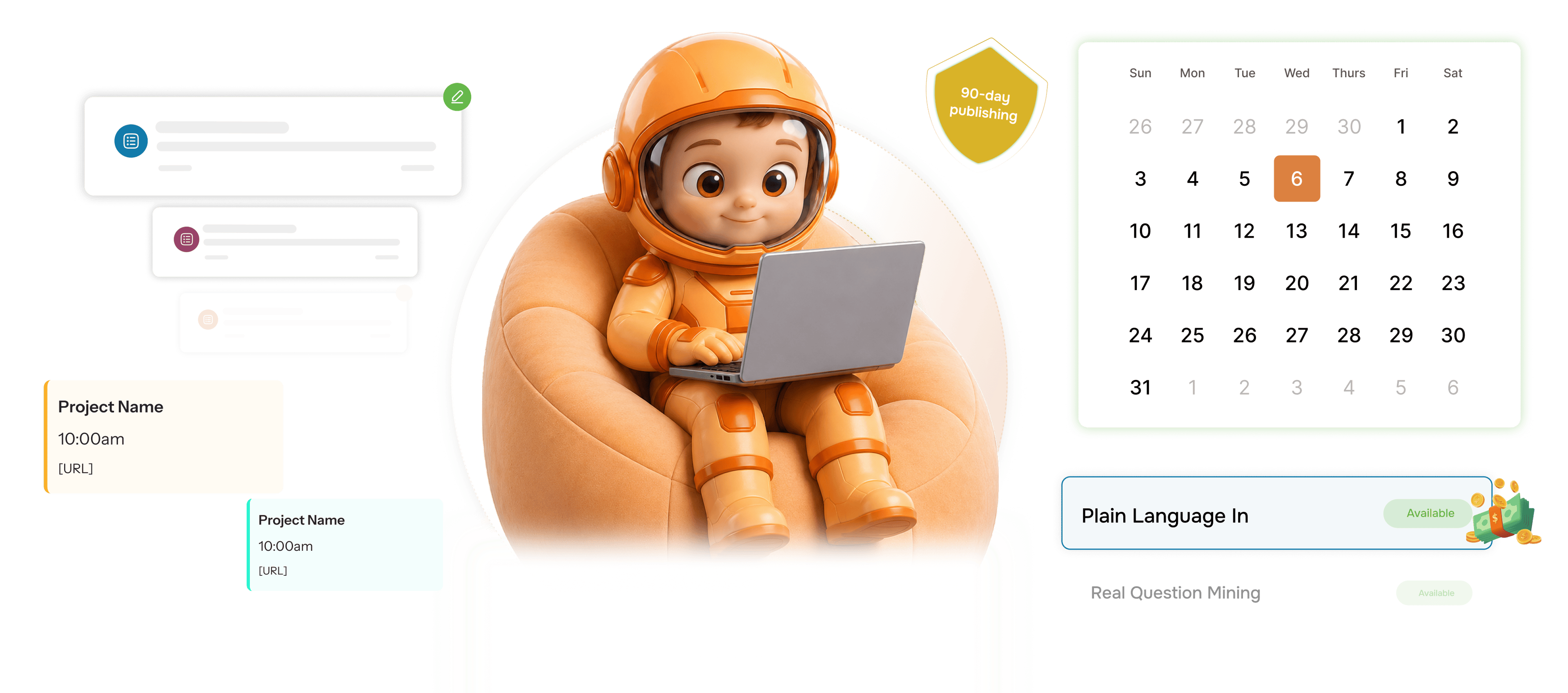
One topic in. A 90 day publishing plan out.

Plug in a single topic and get back a ranked ninety day publishing plan in about a minute. Ranko mines real searches across Google and the real questions people are asking ChatGPT, Claude, Perplexity, and Gemini, groups everything into topic clusters, and ranks the clusters by the opportunity gap your competitors have left wide open. An answer engine optimisation planning brain that turns a single line of input into a quarter of content your team can actually ship.

One
How It Works

From one topic to a quarter of content in 4 steps

Drop in a single topic in plain language. Ranko mines what real people are searching on Google and what real people are asking ChatGPT, Claude, Perplexity and Gemini. The platform groups everything into intent based clusters, scores each cluster against the opportunity gap your competitors have left open, and returns a ranked ninety day publishing plan ready for your team to ship.

1
2
3
4

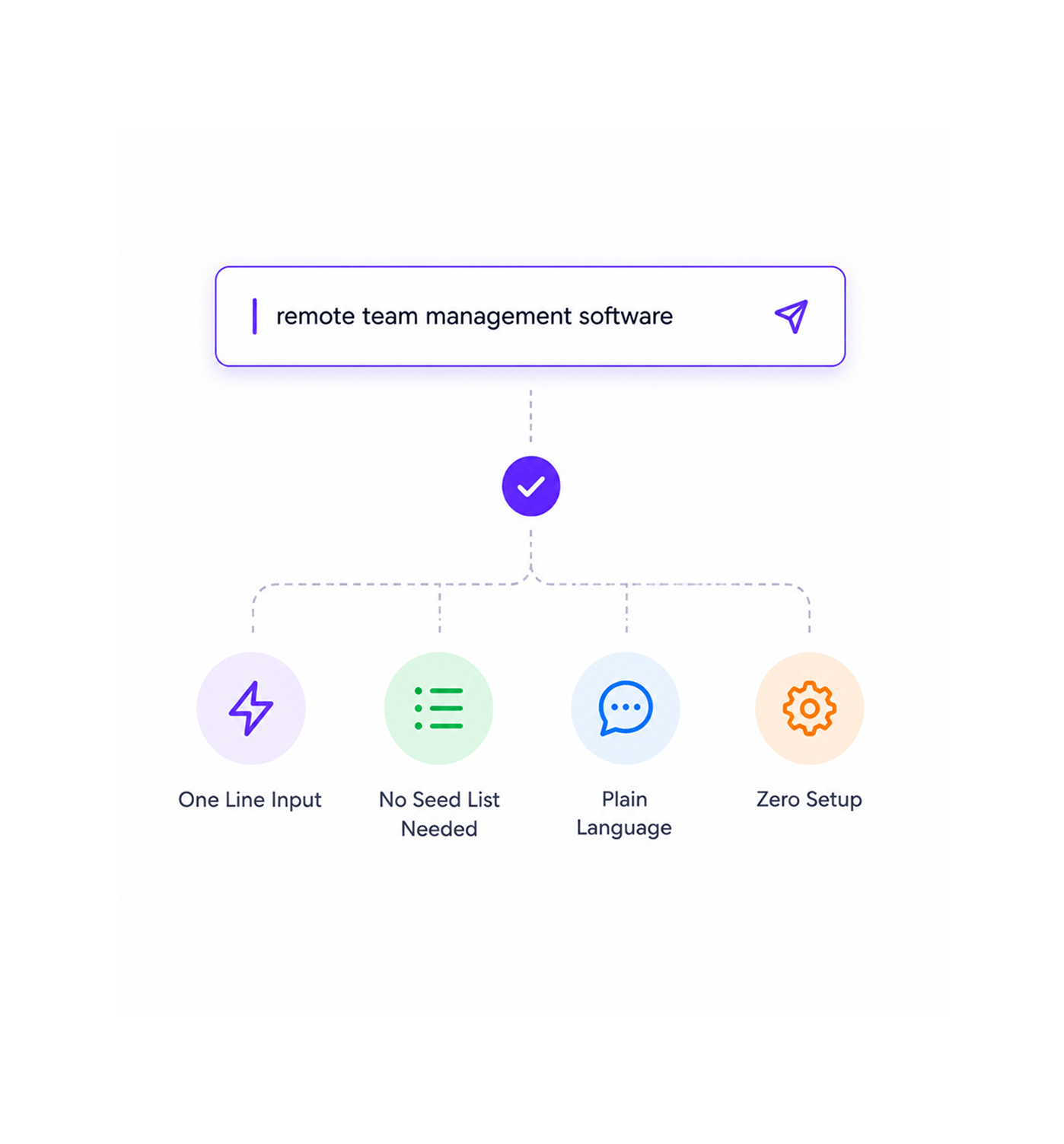
Plain Language In

Drop in a single topic

No keyword research up front. No comma separated seed list. No three day workshop with five stakeholders. Type one line "remote team management software", "freelance tax in the United Kingdom", "indoor plants for low light apartments" and Ranko takes it from there. The friction that traditionally lives between "we should publish about this" and "we have a plan" finally disappears, which means the content meeting that used to end in vague intentions ends in a ranked roadmap instead.

One Line InputNo Seed List NeededPlain LanguageZero Setup

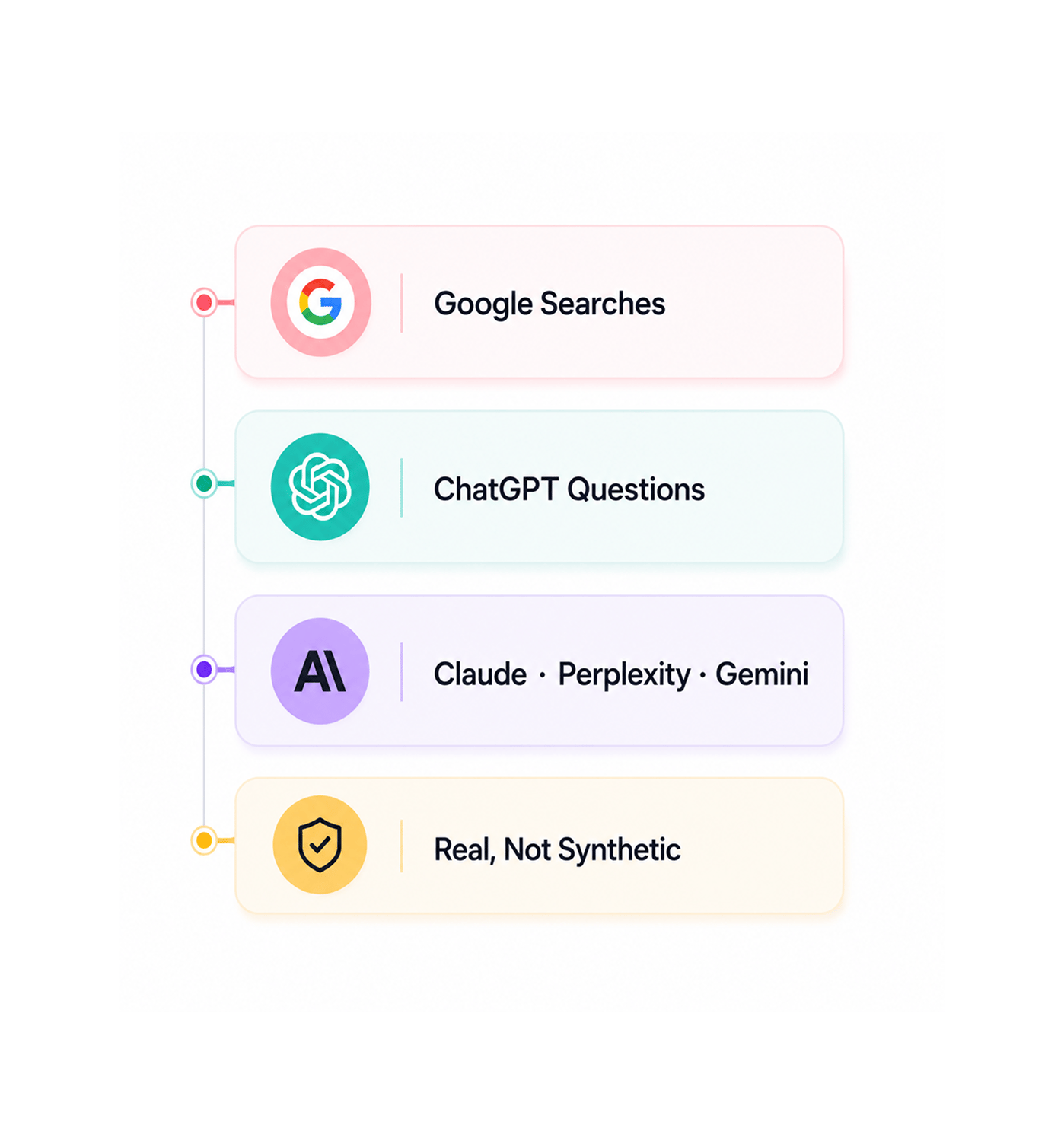
Real Question Mining

Ranko mines real questions, not made up ones

Ranko pulls the actual searches people type into Google and the actual questions they ask ChatGPT, Claude, Perplexity and Gemini around your topic. Not the synthetic keyword lists every legacy tool surfaces, not the volume estimates that have not been right since the last algorithm update, not the same recycled long tail every competitor is already chasing. Real questions, asked by real people, sourced from where they actually search today both halves of the modern search world covered in one pass.

Google SearchesChatGPT QuestionsClaude · Perplexity · GeminiReal, Not Synthetic

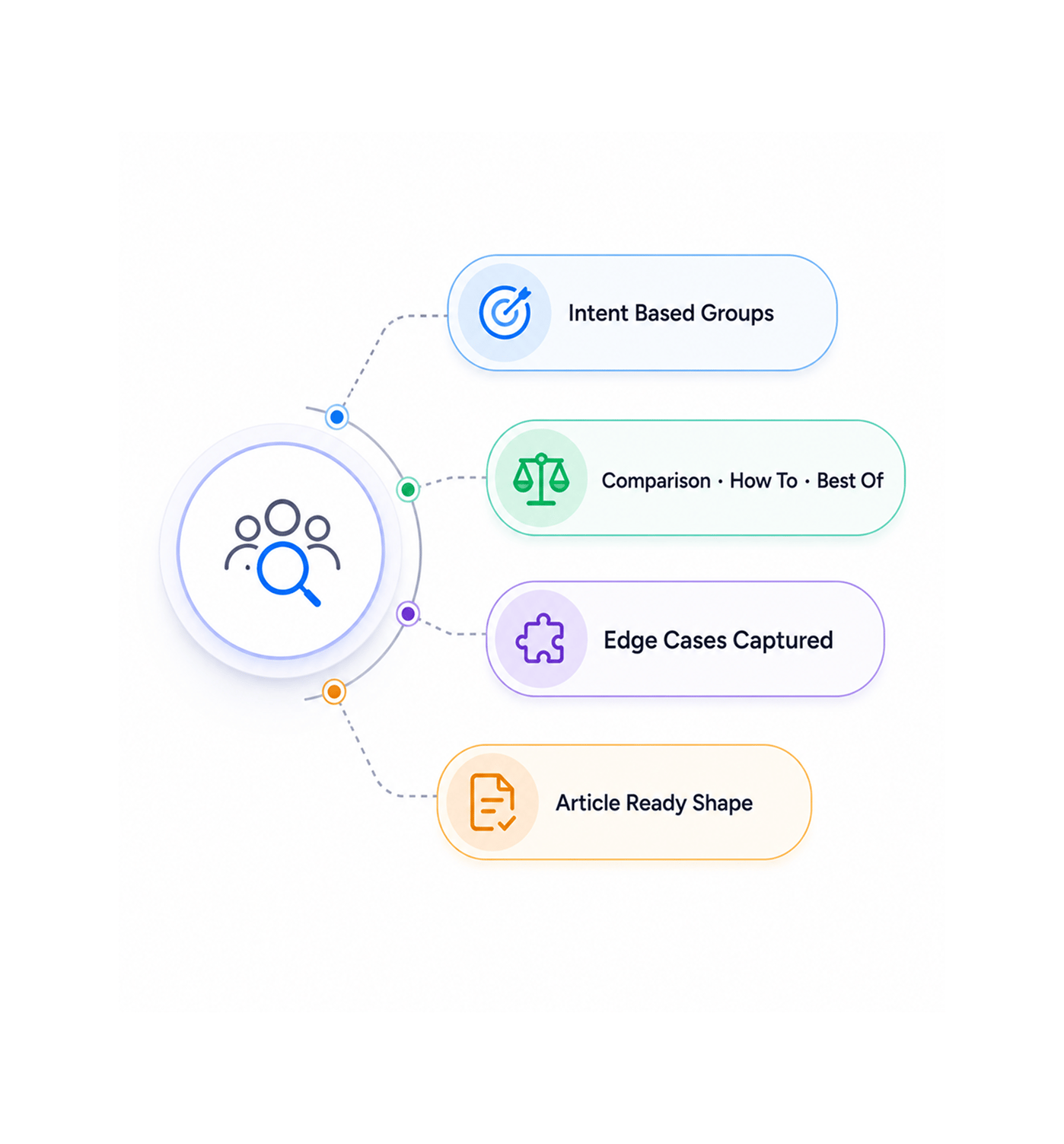
Intent Clusters

Clusters that match how people actually think

Ranko groups every mined question into clusters by the intent behind them what each group of searchers actually wants. Comparison questions sit in a comparison cluster. How to do something sits in a how to cluster. Best of category questions sit in a recommendations cluster. Edge case scenarios get their own cluster instead of being lost as noise. The grouping reflects the way readers approach the topic, which means every cluster is a real article waiting to be written rather than a keyword soup waiting to be untangled.

Intent Based GroupsComparison · How To · Best OfEdge Cases CapturedArticle Ready Shape

90 Day Ranked Plan

A ranked 90 day plan appears

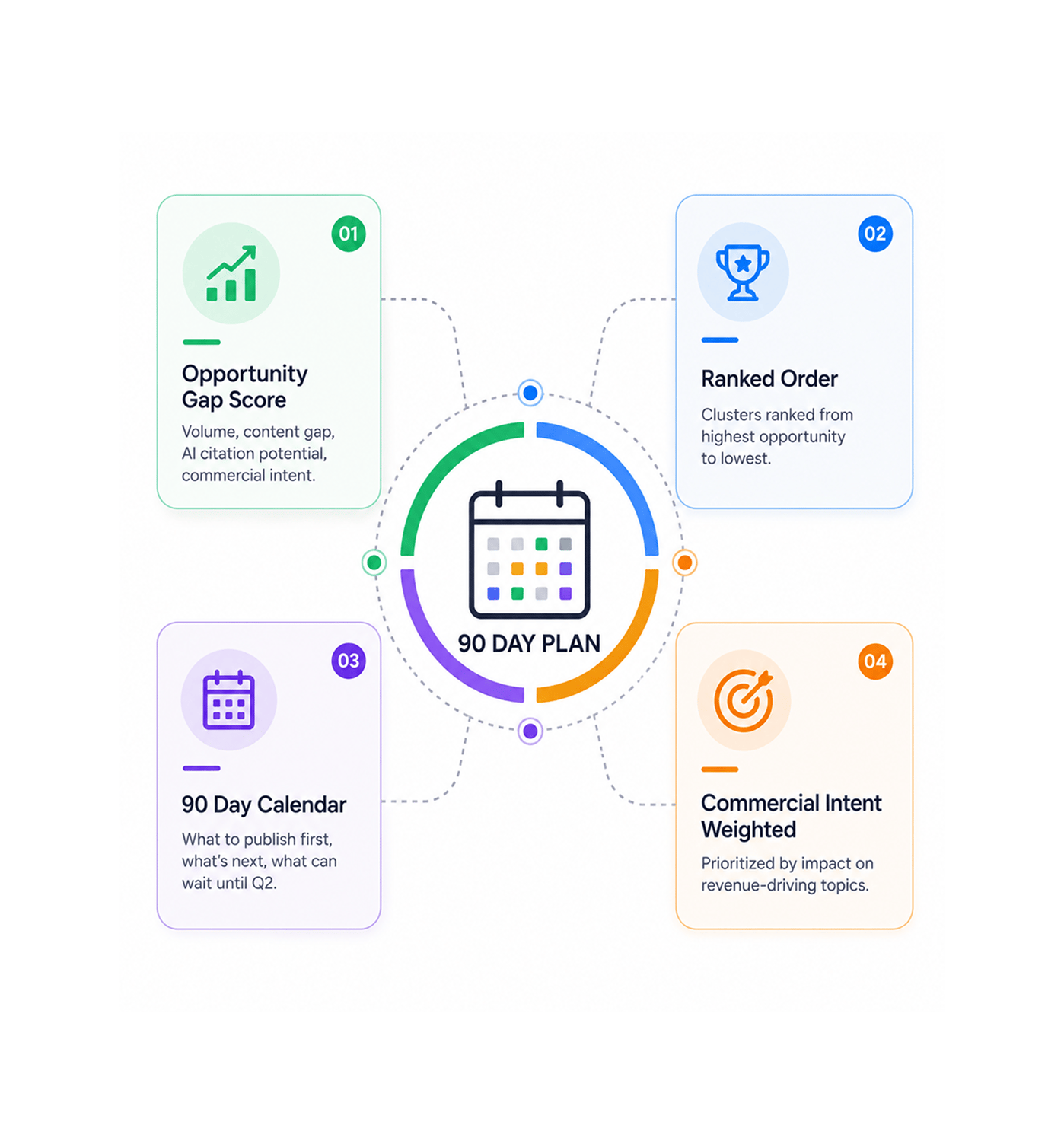
Every cluster gets scored against the opportunity gap how often the question is asked, how thinly the existing answers cover it, how citable a strong answer would be in AI engines, how directly the topic connects to commercial intent. The clusters are then ranked from highest opportunity to lowest and spread across a ninety day publishing calendar. The plan tells you what to publish first, what to publish next, and what can wait until quarter two based on what is actually moveable rather than what is theoretically possible.

Opportunity Gap ScoreRanked Order90 Day CalendarCommercial Intent Weighted
Why Teams Choose RANKO

Six reasons your content calendar stops being a guess

Once a team has a ranked publishing plan built from real Google searches and real AI assistant questions grouped by intent and ordered by opportunity gap the old pattern of brainstorming topics in a meeting and shipping whatever feels right that week stops being acceptable. These are the changes that show up first.

Real questions, not guessed ones

Real questions, not guessed ones

The questions in your plan are questions people actually asked this week pulled from Google search behaviour and the prompts being typed into the answer engines that drive a growing share of search. No more publishing posts that answer questions nobody is asking, no more chasing keyword volumes that have not been accurate in years. The plan reflects demand that genuinely exists rather than demand somebody guessed might exist.

AI assistants mined, not ignored

AI assistants mined, not ignored

Most planning tools still pretend the answer engine era did not arrive. Ranko mines the questions being asked of ChatGPT, Claude, Perplexity and Gemini alongside Google searches, because that is where roughly a third of search now happens. The team plans content that gets cited in AI answers instead of content that only ranks on the page nobody reads anymore. The future channel and the present channel get the same attention.

Opportunity gap ranking, not volume blindness

Opportunity gap ranking, not volume blindness

A question searched ten thousand times a month that fifty competitors already answer well is a worse opportunity than a question searched three hundred times a month that nobody covers properly. Ranko ranks by the gap, not the raw number which means the team publishes against the openings where their work can actually win rather than the openings everyone else is already crowding into.

Clusters that match how people think

Clusters that match how people think

The mined questions are grouped by the underlying intent comparison questions together, how to questions together, best of recommendations together, edge case scenarios together. Each cluster is the shape of a real article rather than a pile of keywords waiting to be sorted, which means the brief writes itself from the cluster and the writer knows exactly which questions a single piece is supposed to answer.

Ninety days planned, not one post

Ninety days planned, not one post

One blog post is a moment. Ninety days of ranked publishing is a campaign. Ranko delivers the full quarter laid out in priority order, which means the team can finally commit to a publishing rhythm and trust that every week's piece is the highest leverage piece available at that point in the calendar. The content function shifts from reactive scheduling to deliberate compounding.

From topic to plan in about a minute

From topic to plan in about a minute

The planning work that used to take three days of keyword research, two spreadsheets, and an afternoon meeting collapses to about a minute of Ranko time. The team that used to feel stuck before the calendar even started now opens every quarter with a ranked plan in hand. The unit economics of content planning genuinely change, which means more time for the writing and editing that actually moves the needle.

From a topic to a quarter of content.
In a single click.

Real Google searches. Real questions from four AI assistants. Intent based clusters. Opportunity gap ranking. A ninety day publishing plan in about a minute. The planning brain your content engine has always needed.

Who uses RANKO topic planner
Deepak MehrotraDeepak MehrotraDeepak MehrotraDeepak Mehrotra

9400+

Teams planning content that earns citations across Google and AI engines

Built for teams who refuse to publish without knowing why

Founders running content as a growth channel and refusing to spend cycles on posts that will not earn citations, content marketers shaping ninety day calendars they can defend in front of leadership, search specialists adjusting to a world where Google and the answer engines split the traffic, agencies running content programmes for multiple clients who all want the same level of rigour, growth teams at SaaS companies building programmatic content libraries, and ecommerce operators who need a steady drumbeat of buying guides and category content all use Ranko's topic planner as the brain that turns a topic into a quarter of work worth doing. Every team a small business running a single content engine or a larger organisation orchestrating dozens of content tracks across every product line gets the same real question mining, the same intent based clustering, and the same opportunity gap ranking.

1 Min

Plan

4 AI

Engines

90 Day

Roadmap

Gap

Scoring

Discovery Layer

Mines real questions across every engine

Ranko pulls real searches from Google and real questions from ChatGPT, Claude, Perplexity, and Gemini both halves of the modern search world covered in a single pass. No synthetic keyword lists, no stale volume estimates, no recycled long tail. The questions in your plan are questions people are actually asking right now, sourced from where they are actually asking them.

Mines real questions across every engine
Features

Everything the topic planning brain ships with

A complete topic planning toolkit built into the same answer engine optimisation platform your team already uses. Plain language input, Google search mining, AI assistant question mining across four engines, intent based clustering, opportunity gap scoring, and a ranked ninety day plan come together so every quarter starts with a roadmap the team can ship instead of a meeting that ends in vague intentions.

Plain Language Topic Input

Plain Language Topic Input

One line in plain language is all Ranko needs to get started. No keyword seed lists, no comma separated inputs, no required taxonomy. Type the topic the way you would say it in conversation and the planner takes it from there, which means the team can start planning at the speed of thinking instead of the speed of spreadsheet wrangling.

Google Search Mining

Google Search Mining

Real searches from real people on Google get pulled into every plan not stale keyword volume estimates and not the same recycled long tail every competitor is already chasing. The Google half of the modern search world is covered with the actual question patterns that drive traffic right now, not the patterns that drove traffic three years ago.

AI Assistant Question Mining

AI Assistant Question Mining

The questions people are actually asking ChatGPT, Claude, Perplexity, and Gemini get mined alongside Google searches because thirty percent of search now happens inside answer engines, and the team that plans for both is the team that wins both. Four major AI assistants covered in one pass, which is something no legacy keyword tool can match.

Intent Based Clustering

Intent Based Clustering

Every mined question gets grouped with the other questions that share the same intent comparison together, how to together, best of together, edge cases captured rather than lost as noise. Each cluster is the shape of a real article rather than a pile of keywords waiting to be sorted, which means the brief practically writes itself from the cluster.

Opportunity Gap Scoring

Opportunity Gap Scoring

Every cluster is scored against the opportunity gap your competitors have left open how often the questions are asked, how thinly existing answers cover them, how citable a strong answer would be in answer engines, and how directly the topic connects to commercial intent. The team publishes against openings rather than into crowded ground.

90 Day Ranked Publishing Plan

90 Day Ranked Publishing Plan

Clusters get ranked from highest leverage to lowest and spread across a ninety day publishing calendar. The plan tells the team exactly what to publish first, what to publish next, and what can wait until quarter two which means content planning shifts from reactive scheduling to a deliberate compounding rhythm.

Plain Language Topic Input

Plain Language Topic Input

One line in plain language is all Ranko needs to get started. No keyword seed lists, no comma separated inputs, no required taxonomy. Type the topic the way you would say it in conversation and the planner takes it from there, which means the team can start planning at the speed of thinking instead of the speed of spreadsheet wrangling.

Google Search Mining

Google Search Mining

Real searches from real people on Google get pulled into every plan not stale keyword volume estimates and not the same recycled long tail every competitor is already chasing. The Google half of the modern search world is covered with the actual question patterns that drive traffic right now, not the patterns that drove traffic three years ago.

AI Assistant Question Mining

AI Assistant Question Mining

The questions people are actually asking ChatGPT, Claude, Perplexity, and Gemini get mined alongside Google searches because thirty percent of search now happens inside answer engines, and the team that plans for both is the team that wins both. Four major AI assistants covered in one pass, which is something no legacy keyword tool can match.

Intent Based Clustering

Intent Based Clustering

Every mined question gets grouped with the other questions that share the same intent comparison together, how to together, best of together, edge cases captured rather than lost as noise. Each cluster is the shape of a real article rather than a pile of keywords waiting to be sorted, which means the brief practically writes itself from the cluster.

Opportunity Gap Scoring

Opportunity Gap Scoring

Every cluster is scored against the opportunity gap your competitors have left open how often the questions are asked, how thinly existing answers cover them, how citable a strong answer would be in answer engines, and how directly the topic connects to commercial intent. The team publishes against openings rather than into crowded ground.

90 Day Ranked Publishing Plan

90 Day Ranked Publishing Plan

Clusters get ranked from highest leverage to lowest and spread across a ninety day publishing calendar. The plan tells the team exactly what to publish first, what to publish next, and what can wait until quarter two which means content planning shifts from reactive scheduling to a deliberate compounding rhythm.

Questions & Answers

Everything you need to know

Common questions about what counts as a usable topic, where Ranko sources the real questions it mines, how clusters get built, what opportunity gap really means, how the planner handles highly competitive topics, and what happens after the plan is generated.

Almost anything you would say out loud as a topic the brand cares about. "Remote team management software" works. "Freelance tax in the United Kingdom" works. "Indoor plants for low light apartments" works. "Carbon accounting for small manufacturers" works. The planner handles broad topics by drilling down into the specific clusters within them, and handles narrow topics by mapping the adjacent clusters that share the same audience. The only topics that struggle are ones with genuinely zero search demand on either side of the world which is itself a useful answer to receive.

Network background
RANKO · Topic Planner

Stop guessing what to publish.
Start publishing what AI is already asking for.

Plain language topic input. Google search mining. AI assistant question mining across four engines. Intent based clusters. Opportunity gap scoring. A ranked ninety day publishing plan in about a minute. The planning brain your content engine has always deserved.