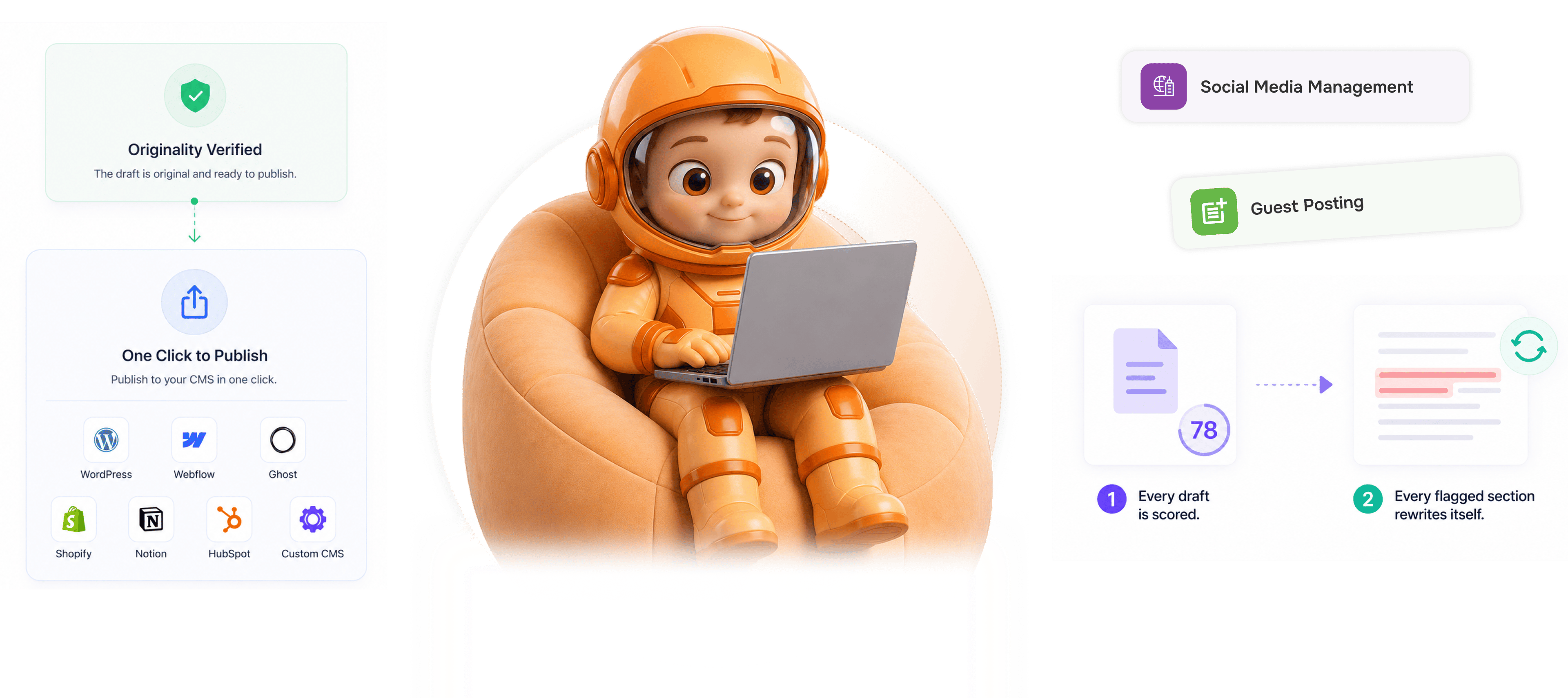
Every draft Ranko writes is scored against the top fifty web results and the platform's full internal library. If a section's similarity score crosses the threshold, the section automatically rewrites itself not flagged for the team to fix later, not surfaced as a warning to maybe address, but genuinely rewritten until the score passes. Your content never reads like everyone else's, because the originality check does not stop until that is actually true.
The top fifty web results for the article's primary topic get pulled in for comparison. Ranko's full internal library is checked alongside so the article does not accidentally overlap with content other Ranko teams have produced. Every section is scored individually for similarity, and any section that crosses the threshold automatically rewrites itself until the score passes. The article ships verified original not assumed, not hoped, verified.
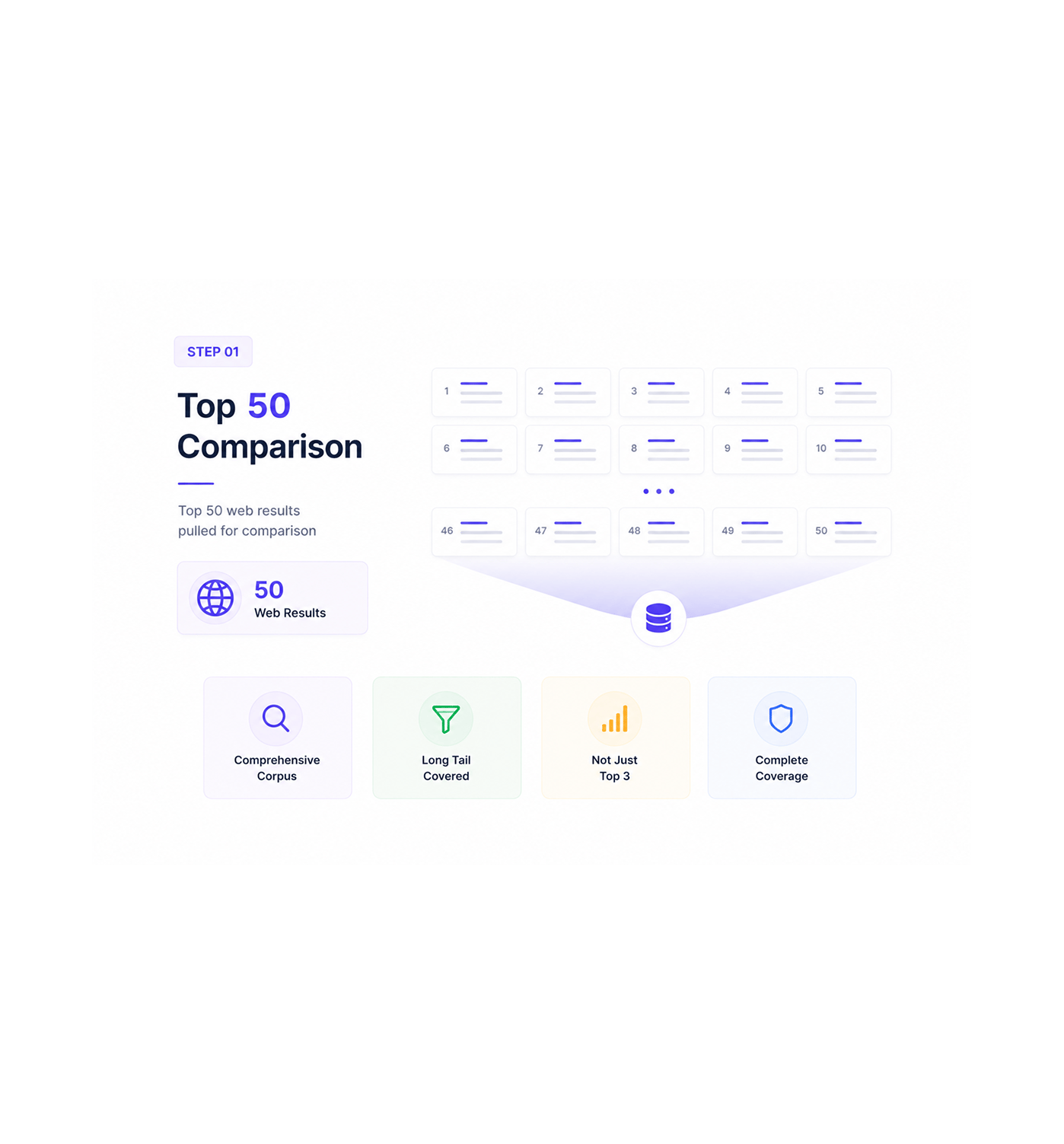
Top 50 Comparison
Not the top three. Not just the page one results. The full top fifty web results for the article's primary topic, pulled in as the comparison corpus. Fifty is the number where the comparison is genuinely comprehensive wide enough to catch overlap with sources the team has never read, deep enough to find the long tail competitors who happen to phrase things suspiciously similarly. Comparing against only the top few sources is how content teams accidentally ship near matches of articles ranking five pages deep that nobody noticed, which is exactly the kind of failure that becomes a problem the moment somebody else does notice.
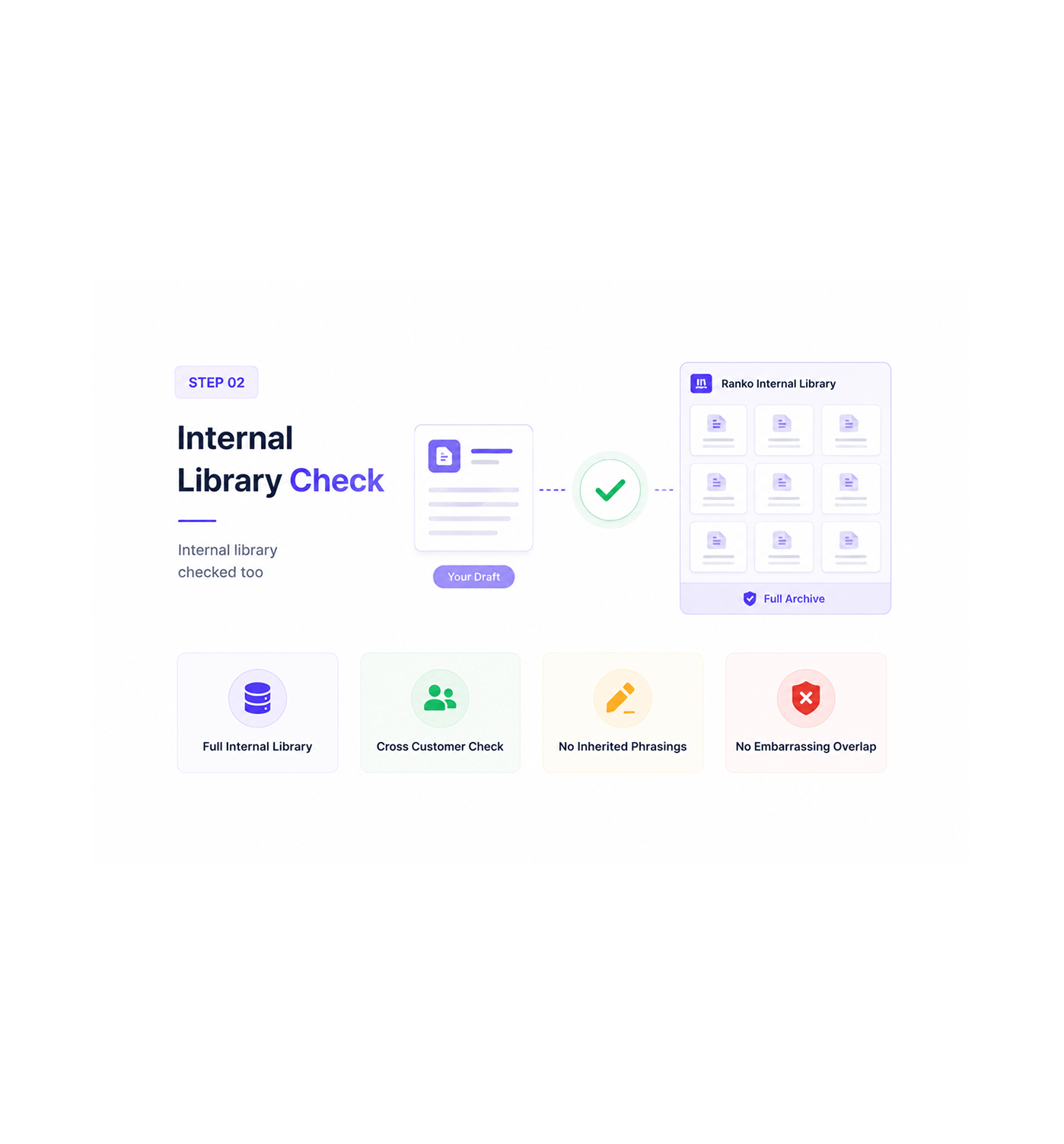
Internal Library Check
Most originality checkers only look at the open web, which means they miss the most embarrassing overlap of all two different Ranko customers in the same category accidentally producing the same article. Ranko's internal library check compares every draft against the platform's full archive of articles produced for other teams, so the team's content does not inherit any phrasings, structures, or patterns that another customer's content already has. The cross customer originality problem that everyone in the AI content category quietly faces simply does not exist in Ranko.
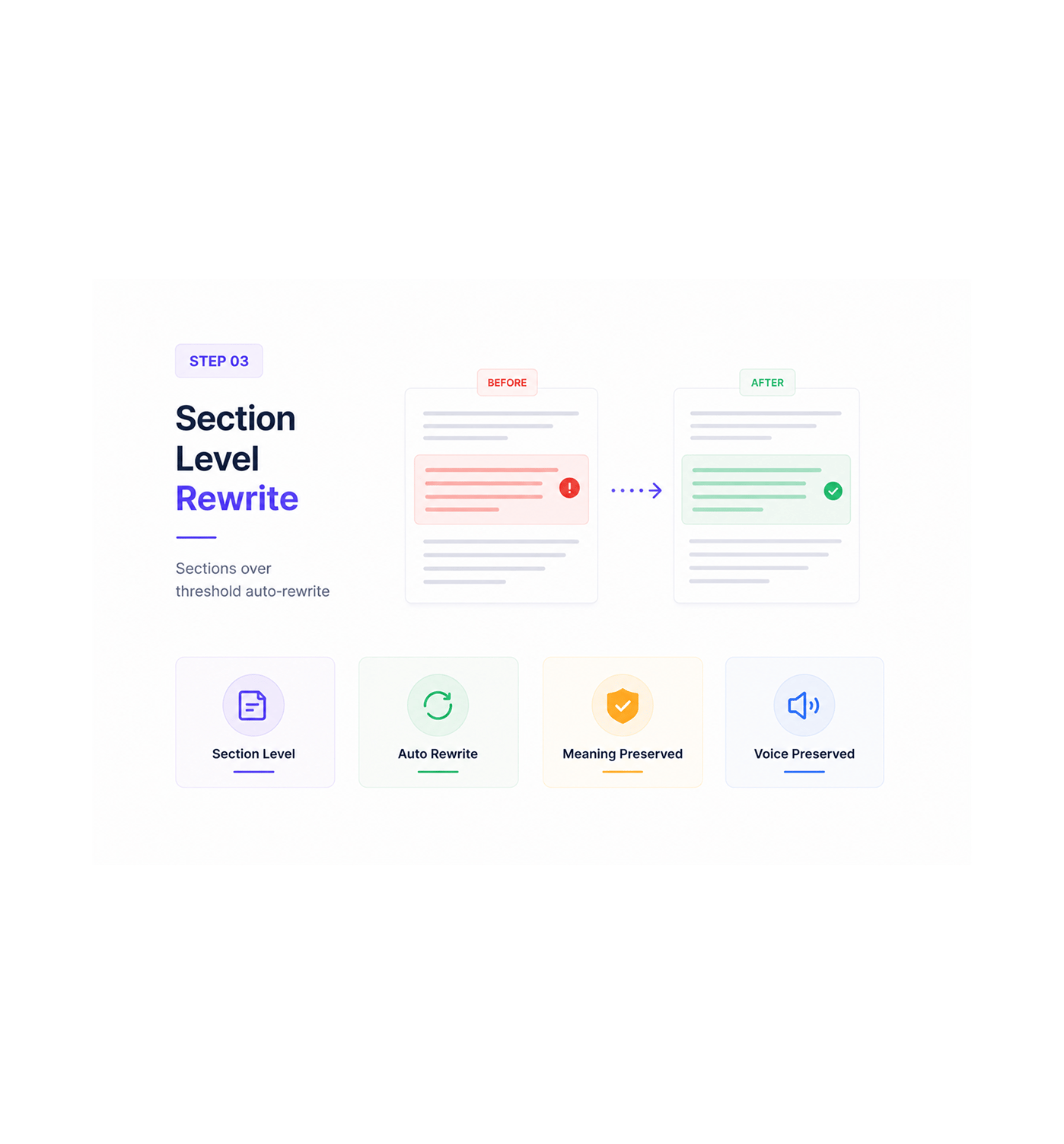
Section Level Rewrite
Most originality checkers flag a problem and stop. Ranko flags the problem and fixes it. When a specific section of the draft crosses the similarity threshold, that section automatically rewrites itself not the whole article, not a flag in a sidebar, not a warning the team has to action manually, but a genuine rewrite of the offending block. The new version preserves the meaning, the brand voice, and the research the section was grounded in, while shifting the phrasing far enough away from the matched source to clear the threshold. The team is never asked to fix originality problems by hand.
Iterative Recheck
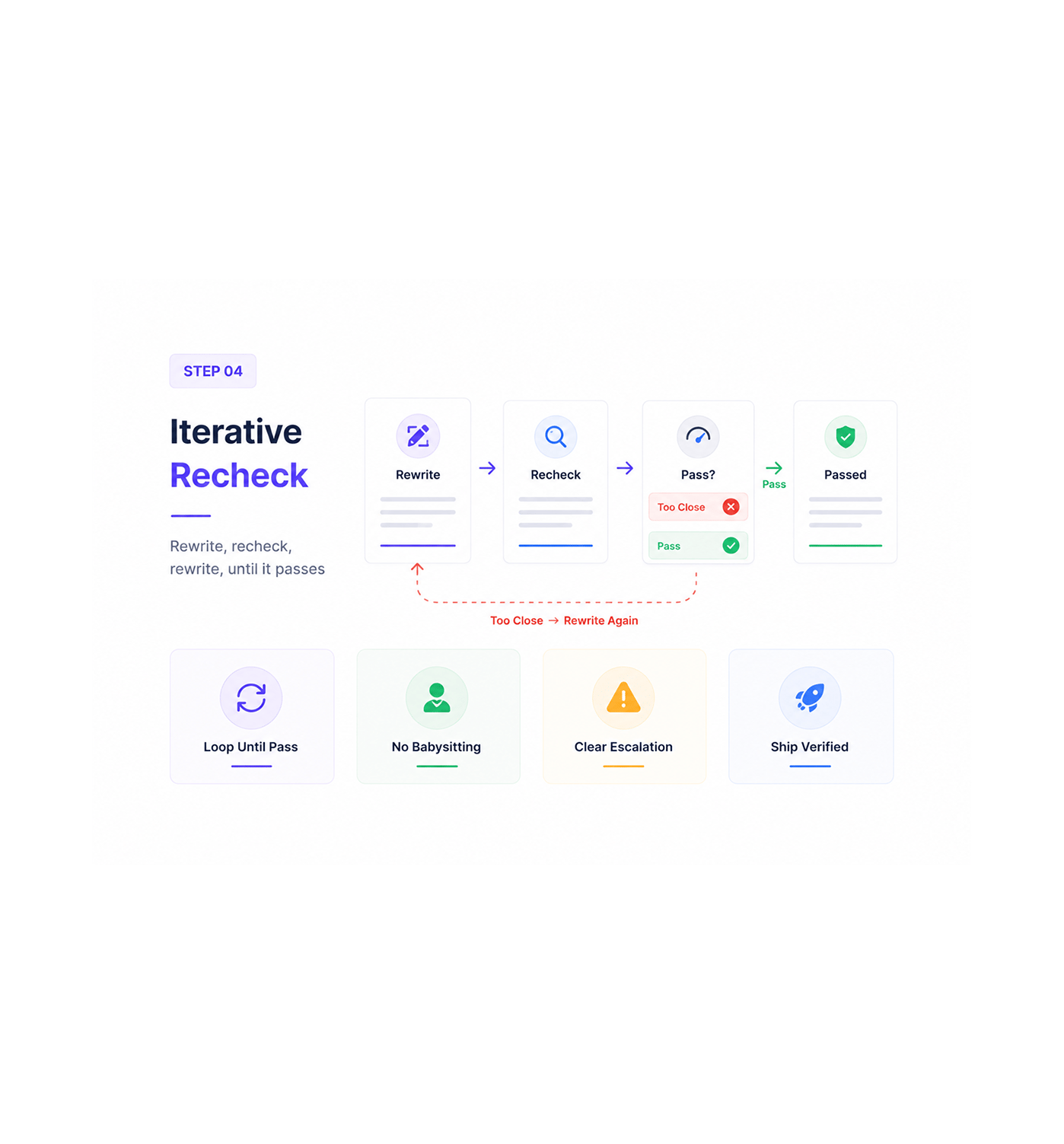
A single rewrite is not always enough to clear the threshold the first time, especially on dense topics where the consensus phrasing is hard to escape on the first attempt. Ranko's check loops rewrite the section, rescore against the top fifty plus the internal library, rewrite again if still too close, rescore again, until the section passes. The team does not have to babysit the loop or check whether the rewrite succeeded. Either the section eventually passes and the article ships, or the loop terminates with a clear escalation to the team if a passing version genuinely cannot be produced, which is rare.
Once a team can ship articles that have been scored against the top fifty web results and the platform's full internal library with offending sections automatically rewritten until they pass the old pattern of hoping the AI did not accidentally plagiarise something stops being acceptable. These are the changes that show up first.
Most originality checks compare against a small handful of obvious results and miss the long tail competitors whose articles happen to phrase things suspiciously similarly. Top fifty is the number where the comparison is genuinely comprehensive wide enough to catch overlap with sources the team has never read, deep enough to find the obscure matches that turn into embarrassing flags when somebody else spots them first.
Other tools flag a similarity problem and leave the rewrite to the team, which is how originality flags pile up unaddressed and articles get shipped with the warnings ignored. Ranko fixes what it flags. The offending section rewrites itself until the score passes, so the gap between detection and resolution stops being a place where originality problems quietly accumulate.
The most embarrassing originality failure of the AI content era is two different teams using the same AI tool ending up with nearly identical articles. Ranko's internal library check compares against the platform's full archive of customer articles, so the team's content does not inherit phrasings or structures that another Ranko team has already published. The cross-customer originality problem the rest of the AI content category quietly has, Ranko does not.
An article can pass an overall originality average while one specific paragraph is a near match of a competitor's. Scoring at the section level catches the local problems that whole article averages hide. The team never has the experience of an article passing the headline score while a specific section quietly resembles a competitor's piece word for word because the section level check would have caught and rewritten that specific section before the article ever reached the team.
The originality of an AI generated article used to be a hope the team assumed the model had produced something fresh and shipped on that assumption. Ranko replaces the assumption with verification. Every article that ships has been scored, every flagged section has been rewritten, every rewrite has been rescored, and the article only leaves Ranko when the originality has actually been confirmed. The team can stand behind every article because the originality is provable rather than assumed.
Editors who used to spend half their time scanning AI drafts for accidental near matches with competitor articles finally get those hours back. The originality check has already verified the article is genuinely fresh, so the editor's attention shifts from defensive review to substantive improvement sharpening arguments, tightening structure, deepening the parts that matter. The editorial function gets to be about quality rather than about catching problems the AI should not have created in the first place.
Top fifty web result comparison. Full internal library cross check. Section level similarity scoring. Automatic rewriting until every section passes. The verification layer your content engine has always needed.
12100+
Teams shipping content with verified originality, not assumed originality
Founders who refuse to publish anything the brand would have to defend if a competitor's content turned up word for word in the search results, content marketing leads whose editorial standards refuse to lower just because the volume needs to go up, editors who are tired of acting as last line of defence for AI hallucinations and want originality to be solved before the draft reaches them, search specialists who know that Google and the answer engines both filter out content that looks like recycled material, agencies whose clients would notice and care if a single paragraph in a published article turned up on a competitor's site, compliance focused teams in finance, healthcare, and legal who need provably original work for regulatory and risk reasons, and growth teams at SaaS companies who want their content moat to be defensible all use Ranko's Originality Check as the verification layer that turns originality from a hope into a confirmed property of every article that ships. Every team a small business worried about reputation on twelve articles a quarter or a larger organisation publishing hundreds gets the same fifty result web comparison, the same internal library cross check, and the same section level auto rewrite loop.
Compared
Rewrite
Level
It Passes
Every draft is scored against the top fifty web results for the article's primary topic comprehensive enough to catch the long tail competitors that smaller comparison samples miss. The platform's full internal library is checked alongside, so the team's article does not accidentally inherit phrasings or structures from articles other Ranko customers have produced. Two parallel checks, one verification.
A complete verified originality toolkit built into the same answer engine optimisation platform your team already uses. Top fifty web result comparison, internal library cross check, section level similarity scoring, automatic section rewriting, iterative recheck until every section passes, and a full originality audit trail come together so the team finally publishes articles whose originality is verified rather than assumed.
Every draft is scored against the top fifty web results for the article's primary topic comprehensive enough to catch overlap with sources the team has never read and the long tail competitors that smaller comparison samples miss. Fifty is the number where the comparison genuinely tells the team whether the article is fresh, not just whether it differs from the obvious top three.
Every draft is also scored against Ranko's full internal library of customer articles, so the team's content does not accidentally overlap with content another Ranko team has produced. The cross customer originality problem the rest of the AI content category quietly has is solved by construction in Ranko, not just managed by best effort.
Scoring happens at the section level, not just the whole article level so an article cannot pass an overall average while one specific paragraph is a near match of a competitor's. Local originality problems get caught locally, which is the only check granular enough to actually catch the real risks that whole article scores hide.
When a section crosses the similarity threshold, it rewrites itself automatically meaning preserved, brand voice preserved, research preserved, phrasing shifted enough to clear the threshold. The team is never asked to fix originality problems by hand, and the friction that turns flagged warnings into ignored warnings simply does not exist in the workflow.
A single rewrite is not always enough on the first attempt. Ranko's check loops rewrite, rescore, rewrite, rescore until the section actually passes. The team does not babysit the loop, the article does not ship until the originality has been verified, and the friction between "we flagged it" and "we fixed it" simply does not exist as a separate step.
Every article ships with a full originality audit trail the sections that were checked, the scores they received, the rewrites that happened, the final passing scores. The team can defend any article that ships by pointing at the audit trail, and the editorial workflow has a clean paper trail for compliance, procurement, or any other situation where verified originality matters.
Every draft is scored against the top fifty web results for the article's primary topic comprehensive enough to catch overlap with sources the team has never read and the long tail competitors that smaller comparison samples miss. Fifty is the number where the comparison genuinely tells the team whether the article is fresh, not just whether it differs from the obvious top three.
Every draft is also scored against Ranko's full internal library of customer articles, so the team's content does not accidentally overlap with content another Ranko team has produced. The cross customer originality problem the rest of the AI content category quietly has is solved by construction in Ranko, not just managed by best effort.
Scoring happens at the section level, not just the whole article level so an article cannot pass an overall average while one specific paragraph is a near match of a competitor's. Local originality problems get caught locally, which is the only check granular enough to actually catch the real risks that whole article scores hide.
When a section crosses the similarity threshold, it rewrites itself automatically meaning preserved, brand voice preserved, research preserved, phrasing shifted enough to clear the threshold. The team is never asked to fix originality problems by hand, and the friction that turns flagged warnings into ignored warnings simply does not exist in the workflow.
A single rewrite is not always enough on the first attempt. Ranko's check loops rewrite, rescore, rewrite, rescore until the section actually passes. The team does not babysit the loop, the article does not ship until the originality has been verified, and the friction between "we flagged it" and "we fixed it" simply does not exist as a separate step.
Every article ships with a full originality audit trail the sections that were checked, the scores they received, the rewrites that happened, the final passing scores. The team can defend any article that ships by pointing at the audit trail, and the editorial workflow has a clean paper trail for compliance, procurement, or any other situation where verified originality matters.
Common questions about what counts as too similar, why fifty web results specifically, how the rewrite loop actually works, what happens if rewrites keep failing, whether the team can see what changed between rewrites, and how this differs from passive plagiarism checkers.
A section crosses the threshold when its phrasing, structure, and substantive overlap with a single source exceed the configurable similarity ceiling. The default threshold is set conservatively well below the level where any reader would notice resemblance, and far below the level where an algorithmic check would flag the content as derivative. Teams in higher risk categories legal, healthcare, finance, agencies handling brand sensitive clients can tighten the threshold further. Teams writing on topics where some consensus phrasing is genuinely unavoidable can loosen it slightly. Either way, the threshold is visible in the workspace and the team controls it rather than the platform managing it silently.
Top fifty web result comparison. Full internal library cross check. Section level similarity scoring. Automatic section rewriting until every section passes. The verification layer your content engine has always deserved.