Worksbuddy Logo

Sign off chains, automated. Every approval logged.

Sequential or parallel approval workflows with field assignment per approver. Time limited approval tokens remove the login friction, and denial requires a reason so the audit trail captures the why. Full approval history with IP and geolocation captured on every approval action creates audit grade sign-off chains.

Sign off
How it works

From approval chain to audit trail in 4 steps

Configure the approval chain, approvers receive token links, approve or deny with required reason, full history with IP and geolocation captured.

1
2
3
4

Configure The Chain

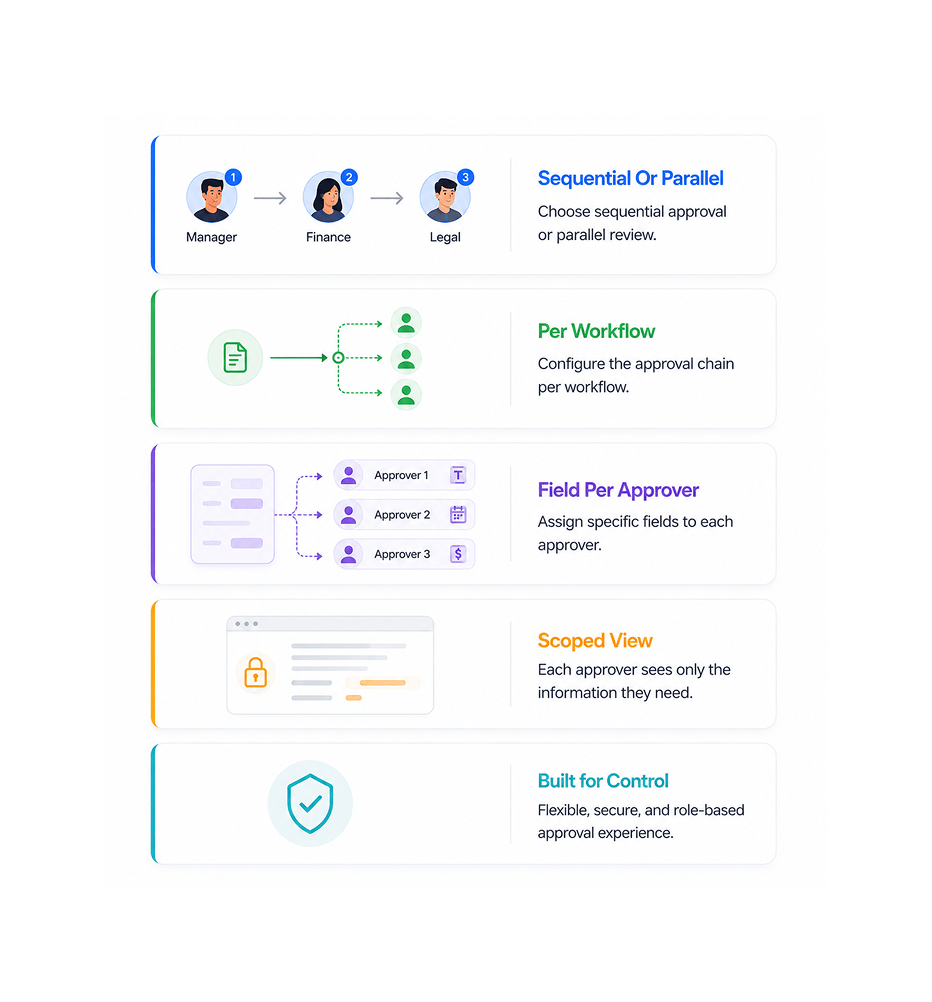
Configure approval chain sequential or parallel

Build the approval chain that matches the actual sign-off pattern. Sequential when each approver must complete before the next. Parallel when all approvers can review at the same time. Field assignment per approver means each approver only sees the fields they need to act on, not the full document if their role doesn't require it.

Sequential Or ParallelPer WorkflowField Per ApproverScoped View

Token Links

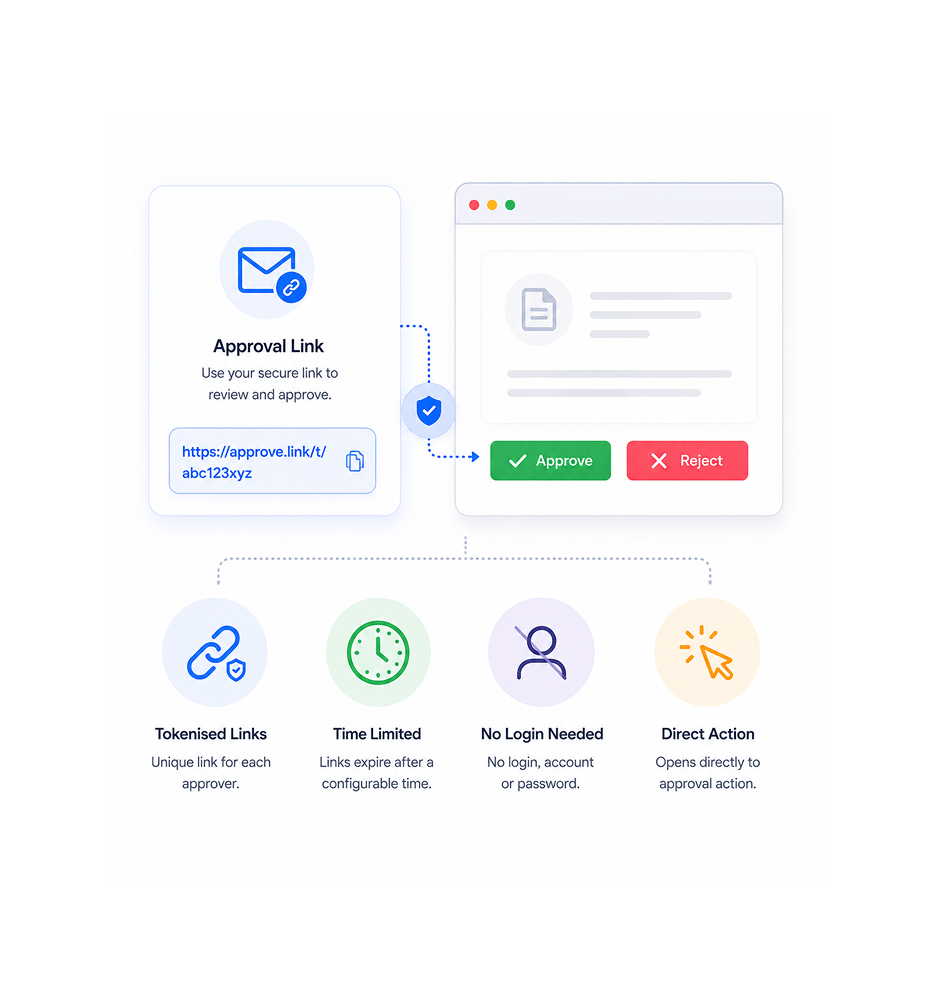
Approvers receive time limited token links

Each approver gets a tokenised link that opens directly to their approval action. No login required, no account creation, no password reset. Tokens expire after a configurable window, so an approval link that sits in an inbox for weeks cannot be acted on indefinitely. Approvers respond in the moment without friction.

Tokenised LinksTime LimitedNo Login NeededDirect Action

Approve Or Deny

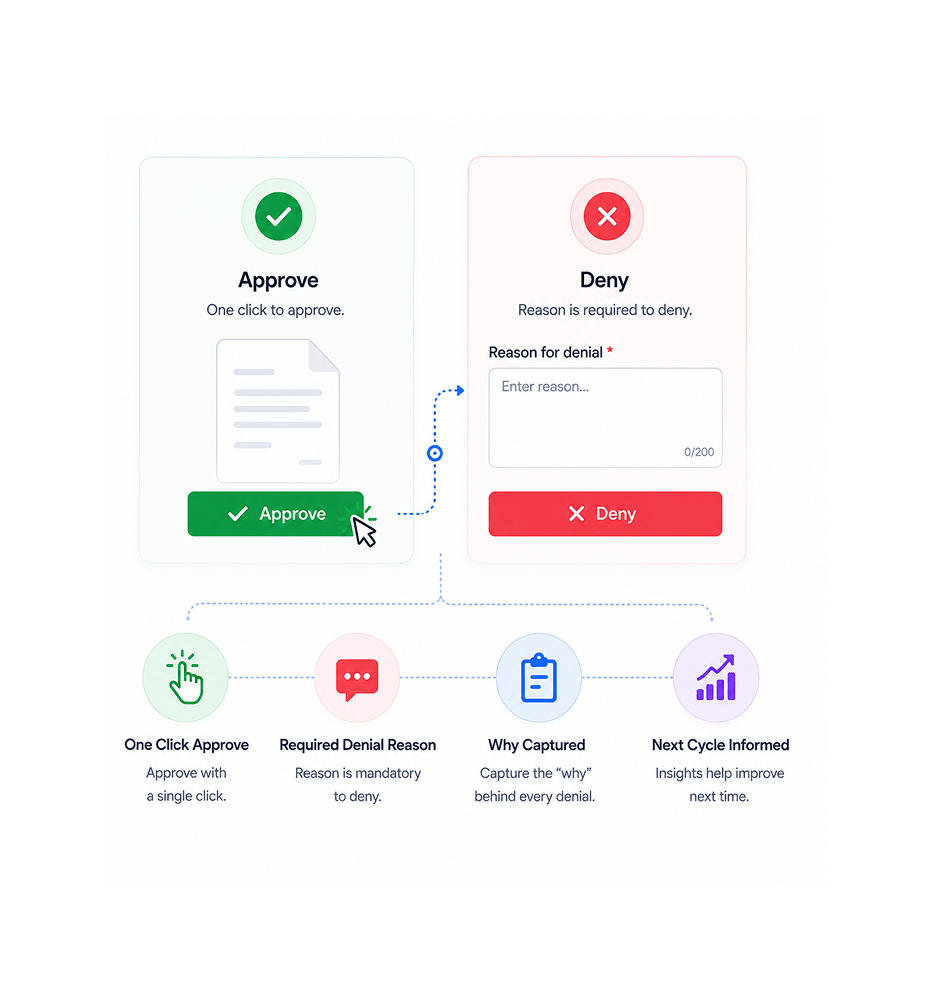
Approve or deny with required reason

Approval requires a single click on the approve action. Denial requires the approver to enter a reason before submitting. The required reason captures the why behind every rejection, so the team understands what blocked the approval rather than guessing. The next time the contract comes around, the team knows what to change first.

One Click ApproveRequired Denial ReasonWhy CapturedNext Cycle Informed

Full Audit Trail

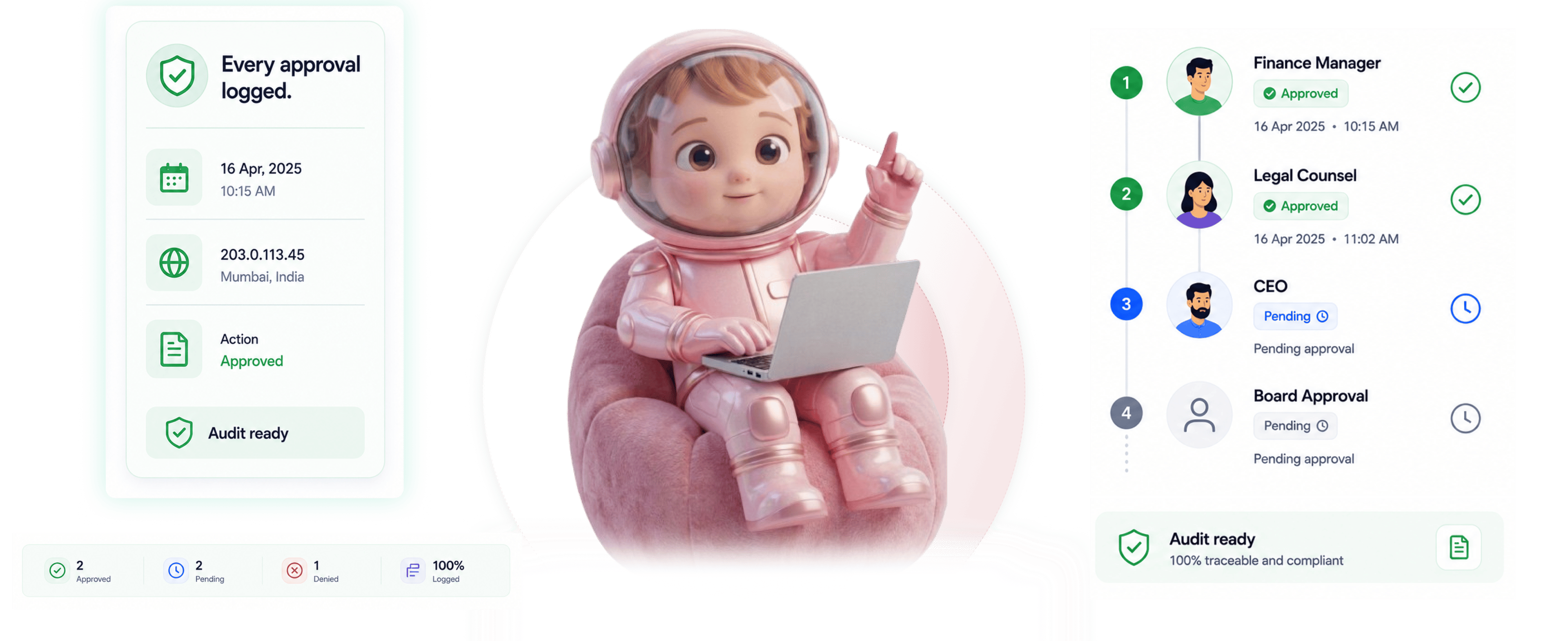
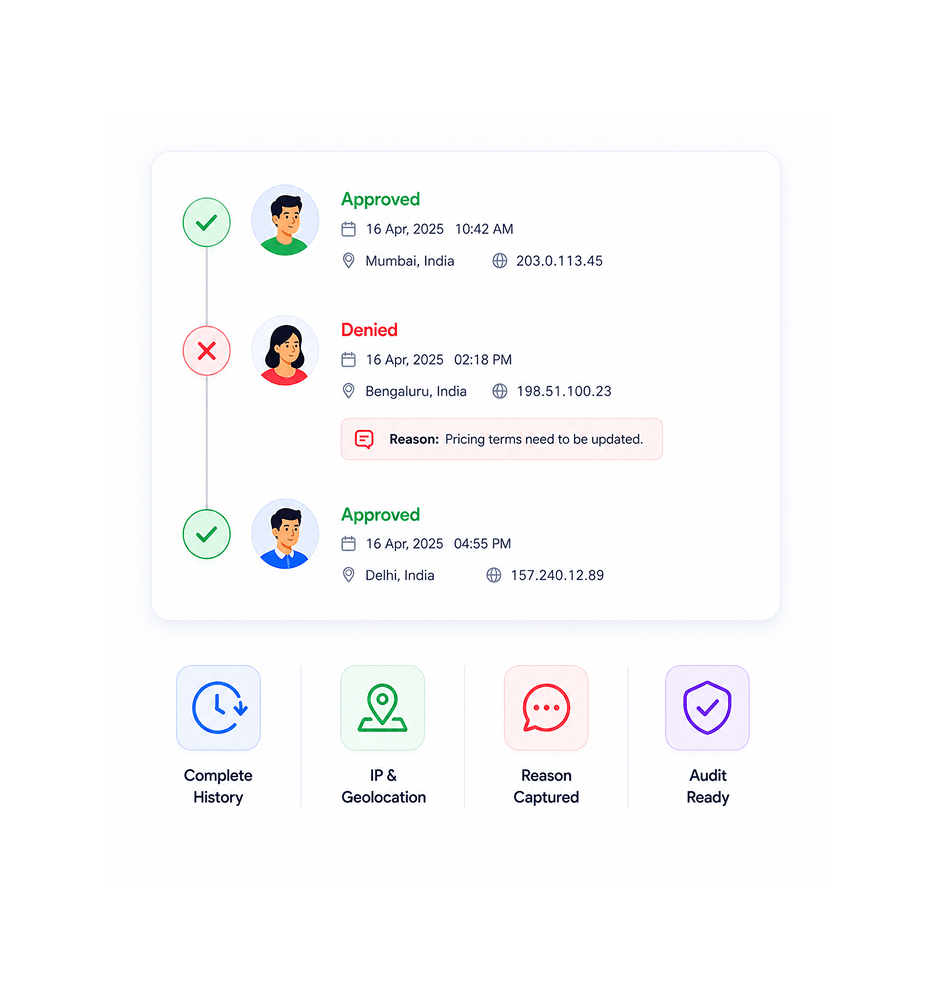
Full history with IP and geolocation

Every approval action logs to the contract's audit trail. Who approved, when, from where, with what IP and geolocation. Denials log the same data plus the required reason. The complete chain history makes compliance reviews a single lookup rather than reconstructing approval activity from scattered email threads.

Complete HistoryIP GeolocationReason CapturedAudit Ready
Why it matters

Six reasons teams never go back

Sequential and parallel routing, time limited tokens, denial reasons captured, field assignment per approver, full history, IP and geolocation per action. The approval layer real audit trails require.

Sequential and parallel both supported

Sequential and parallel both supported

Some chains need ordered approval. Manager before director before VP. Others run in parallel where every approver can act at the same time. Both patterns are supported, picked per workflow, with the right pattern always available rather than forcing every chain into one rigid structure.

Time limited tokens remove login friction

Time limited tokens remove login friction

An approver who needs to log in just to click approve will defer the task to later, and later means slower close. Time limited token links open directly to the approval action. The approver responds in the moment rather than queuing it as another login task they'll get to eventually.

Denial with required reasons captures the why

Denial with required reasons captures the why

An approval that just says 'rejected' is operationally useless. The team has no idea what to change. Required reasons capture the why behind every denial, so the team knows what to fix on the next cycle rather than guessing or hunting down the approver for an explanation that may have been forgotten.

Field assignment per approver locks the right inputs

Field assignment per approver locks the right inputs

An approver who needs to see a deal value should not also see internal legal commentary. Field assignment per approver scopes each approver's view to only what their role requires. Sensitive fields stay hidden, irrelevant fields are not shown, the approver sees exactly what they need to act on.

Full approval history makes chains reviewable

Full approval history makes chains reviewable

Email approvals scatter across inboxes and chat threads. Compliance reviews become archaeological digs. Full approval history in one place means every chain is reviewable end to end. Who approved what, when, from where, why anybody denied. Reviews take minutes rather than days.

IP and geolocation create legal proof on every action

IP and geolocation create legal proof on every action

Approvals captured over email don't include IP or geolocation. If somebody later disputes whether they actually approved, the email evidence is thin. Every Sigi approval logs IP and geolocation at the moment of action, creating the same legal proof of identity that signatures get.

Stop chasing approvals over email. Start running real sign-off chains with full audit trails.

Sequential or parallel routing with field assignment per approver. Time limited tokens, denial reasons required, full history with IP and geolocation. The approval system your sign-off chains have always needed.

Who uses SIGI approvals system
Deepak MehrotraDeepak MehrotraDeepak MehrotraDeepak Mehrotra

10500+

Teams running audit grade approval chains in one system

Built for teams whose sign-off chains need real audit trails, not informal email approvals

Procurement teams running vendor approval chains across legal, finance, and operations sign-offs. Finance teams running expense and budget approval workflows where reviewers must justify denials. Legal operations teams running internal contract sign-off where compliance reviews need full audit visibility. Sales operations teams running deal approval workflows for high value contracts. Operations teams running policy and document approval chains where IP and geolocation evidence matters.

Sequential

Or Parallel Routing

Time Limited

Tokens

Denial Reasons

Required

IP Geo

Captured

Routing Layer

Sequential or parallel, field per approver

Pick the pattern that matches the chain. Sequential for ordered approval, parallel for simultaneous review. Field assignment per approver scopes each approver's view to exactly what their role requires, with sensitive fields hidden as needed.

Sequential or parallel, field per approver
Features

Everything the approval layer ships with

Sequential or parallel routing, field assignment per approver, time limited tokens, denial with required reasons, full approval history, IP and geolocation per action.

Sequential or Parallel Approval Routing

Sequential or Parallel Approval Routing

Pick the routing pattern that matches the chain. Sequential when each approver must complete before the next gets notified. Parallel when all approvers can act at the same time. Both patterns first class, picked per workflow.

Field Assignment Per Approver

Field Assignment Per Approver

Each approver gets a scoped view. Field assignment determines what each approver sees and acts on. A finance approver might see the deal value but not the legal commentary. The approver sees exactly what their role requires, no more.

Time Limited Approval Tokens

Time Limited Approval Tokens

Approvers receive tokenised links that open directly to the approval action. No login required. Tokens expire after a configurable window so old approval links cannot be acted on indefinitely. Friction removed, security maintained.

Denial With Required Reasons

Denial With Required Reasons

Approval is one click. Denial requires the approver to enter a reason before submitting. The required reason captures the why behind every rejection, so the team understands what blocked the approval and can address it on the next cycle.

Full Approval History

Full Approval History

Every approval and denial logs to the contract's history. Who approved, when, from where, with what reason if denied. The complete chain timeline lives in one place, so compliance reviews and audit responses take minutes rather than days.

IP and Geolocation Per Action

IP and Geolocation Per Action

Every approval action captures IP address and geolocation alongside the approver's identity. Combined with timestamp and action type, this creates legal proof of identity for every approval, the same audit grade evidence signatures get.

Sequential or Parallel Approval Routing

Sequential or Parallel Approval Routing

Pick the routing pattern that matches the chain. Sequential when each approver must complete before the next gets notified. Parallel when all approvers can act at the same time. Both patterns first class, picked per workflow.

Field Assignment Per Approver

Field Assignment Per Approver

Each approver gets a scoped view. Field assignment determines what each approver sees and acts on. A finance approver might see the deal value but not the legal commentary. The approver sees exactly what their role requires, no more.

Time Limited Approval Tokens

Time Limited Approval Tokens

Approvers receive tokenised links that open directly to the approval action. No login required. Tokens expire after a configurable window so old approval links cannot be acted on indefinitely. Friction removed, security maintained.

Denial With Required Reasons

Denial With Required Reasons

Approval is one click. Denial requires the approver to enter a reason before submitting. The required reason captures the why behind every rejection, so the team understands what blocked the approval and can address it on the next cycle.

Full Approval History

Full Approval History

Every approval and denial logs to the contract's history. Who approved, when, from where, with what reason if denied. The complete chain timeline lives in one place, so compliance reviews and audit responses take minutes rather than days.

IP and Geolocation Per Action

IP and Geolocation Per Action

Every approval action captures IP address and geolocation alongside the approver's identity. Combined with timestamp and action type, this creates legal proof of identity for every approval, the same audit grade evidence signatures get.

Questions & Answers

Everything you need to know

Common questions about how approvers differ from signers, sequential vs parallel patterns, time limited tokens, denial reasons, approval history, and connection to Signing Workflows.

Approvers approve the contract for the next step. Signers sign the contract itself. An approver might review a contract before it goes out for signing, sign off on a vendor selection, or approve an expense before payment. They never put a signature on the document. Signers are the full signing party who execute the contract. Both roles capture IP and geolocation evidence, but they serve different operational functions in real workflows.

Network background
SIGI · Approvals System

Stop running approval chains over email and chat. Start running them through an audit-grade approval system.

Sequential or parallel routing with field assignment per approver. Time limited tokens, denial reasons required, full history with IP and geolocation captured on every approval action.

Sigi · AI documents and e-signature

Sigi drafts, sends, and gets it signed without the chasing.

Turn a contract into a signed, audited document in minutes while AI flags risky clauses before they reach your signer.

5 min
average time to signed
0
risky clauses missed
100%
documents with audit trail
6
signing workflows supported