


Read every clause.
Strengthen every one.
Sigi reads every clause, flags weak language, and drafts stronger alternatives with a reason for each change.
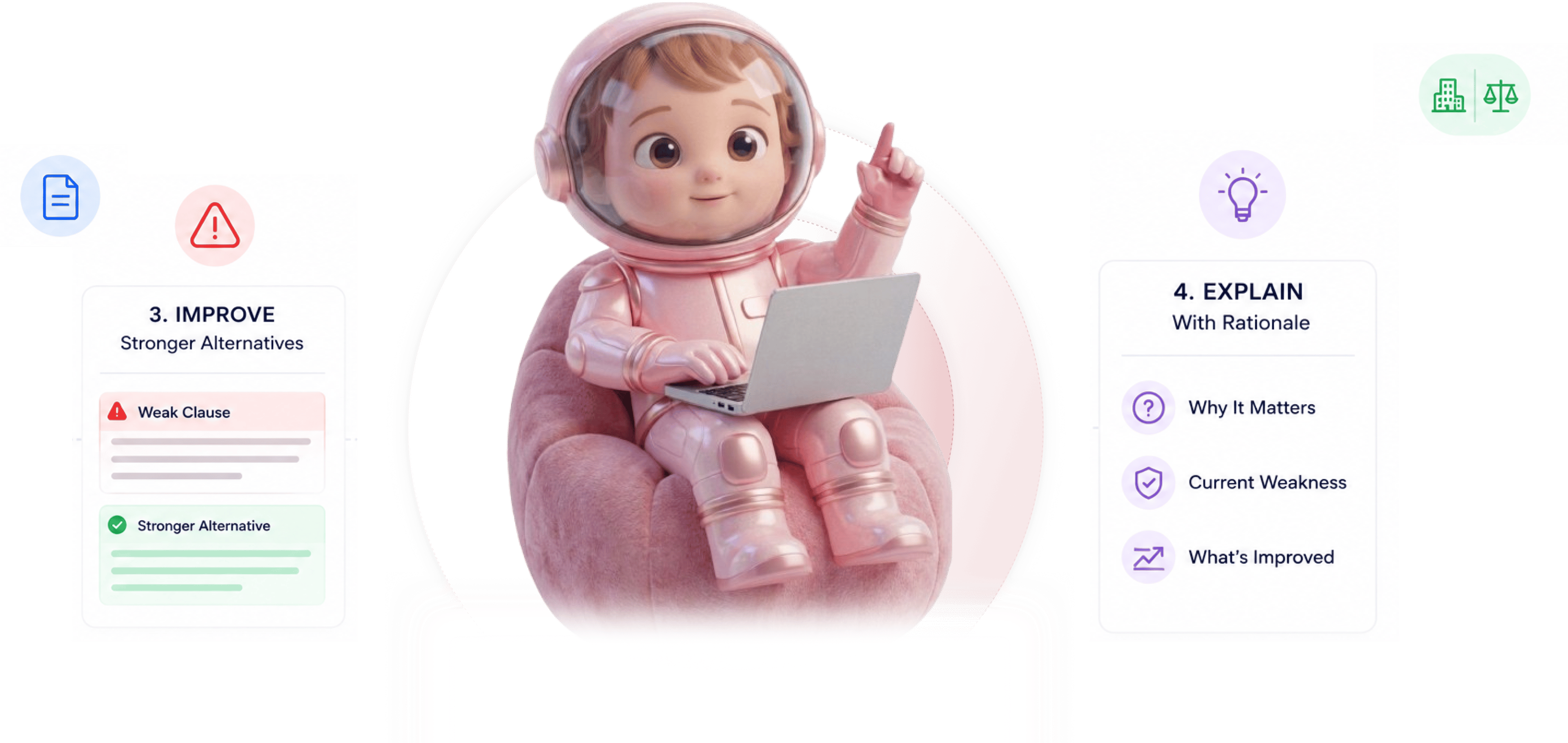
From every clause to a stronger contract in 4 steps
Sigi reads every clause, analyses with context, flags weak language, recommends fixes with rationale.
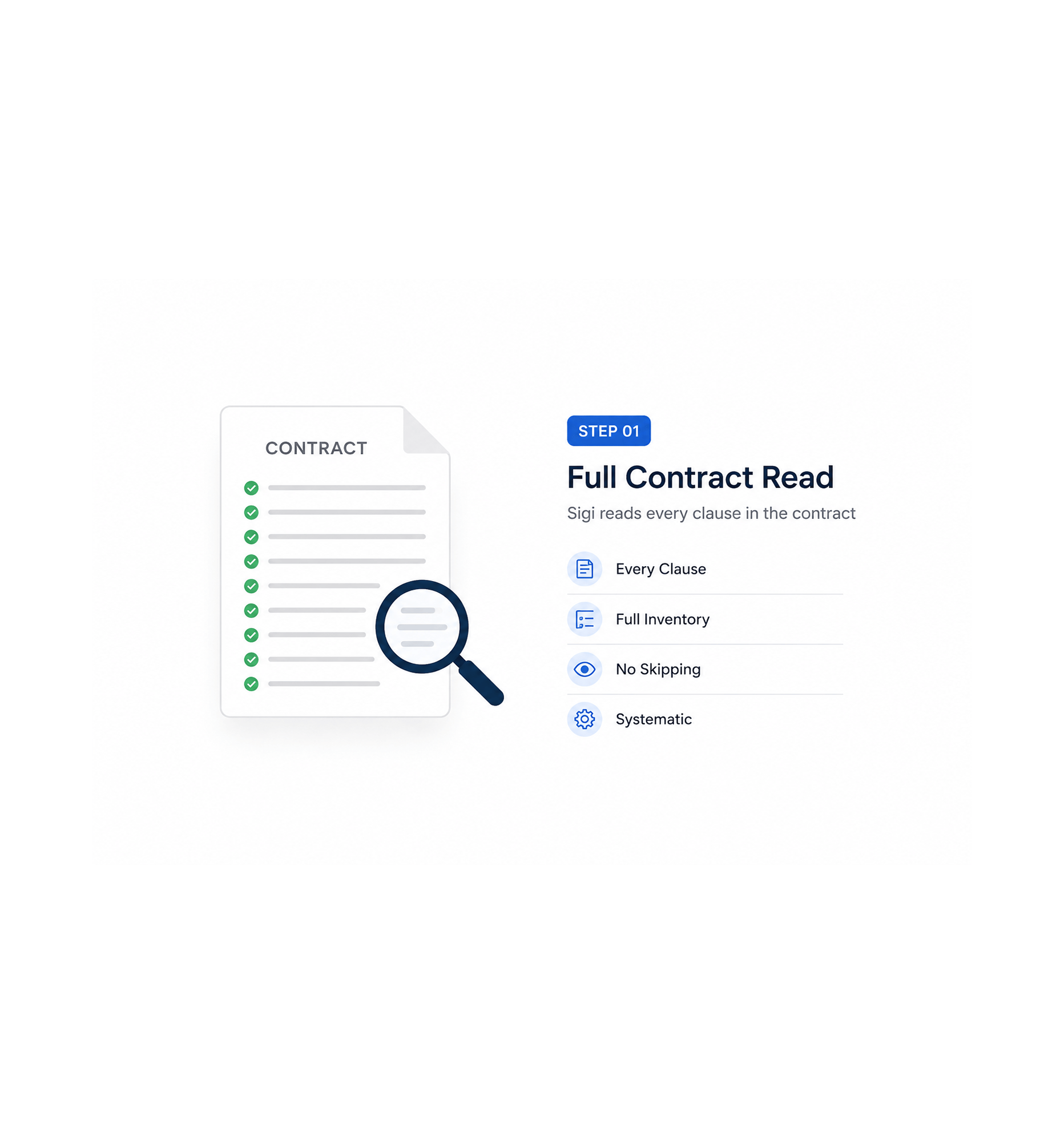
Full Contract Read
Sigi reads every clause in the contract
Not just the obvious provisions, every clause. Indemnification, warranties, payment terms, termination, IP, confidentiality, and the rest. The full inventory gets reviewed, not just headline provisions.
- Every Clause
- Full Inventory
- No Skipping
- Systematic
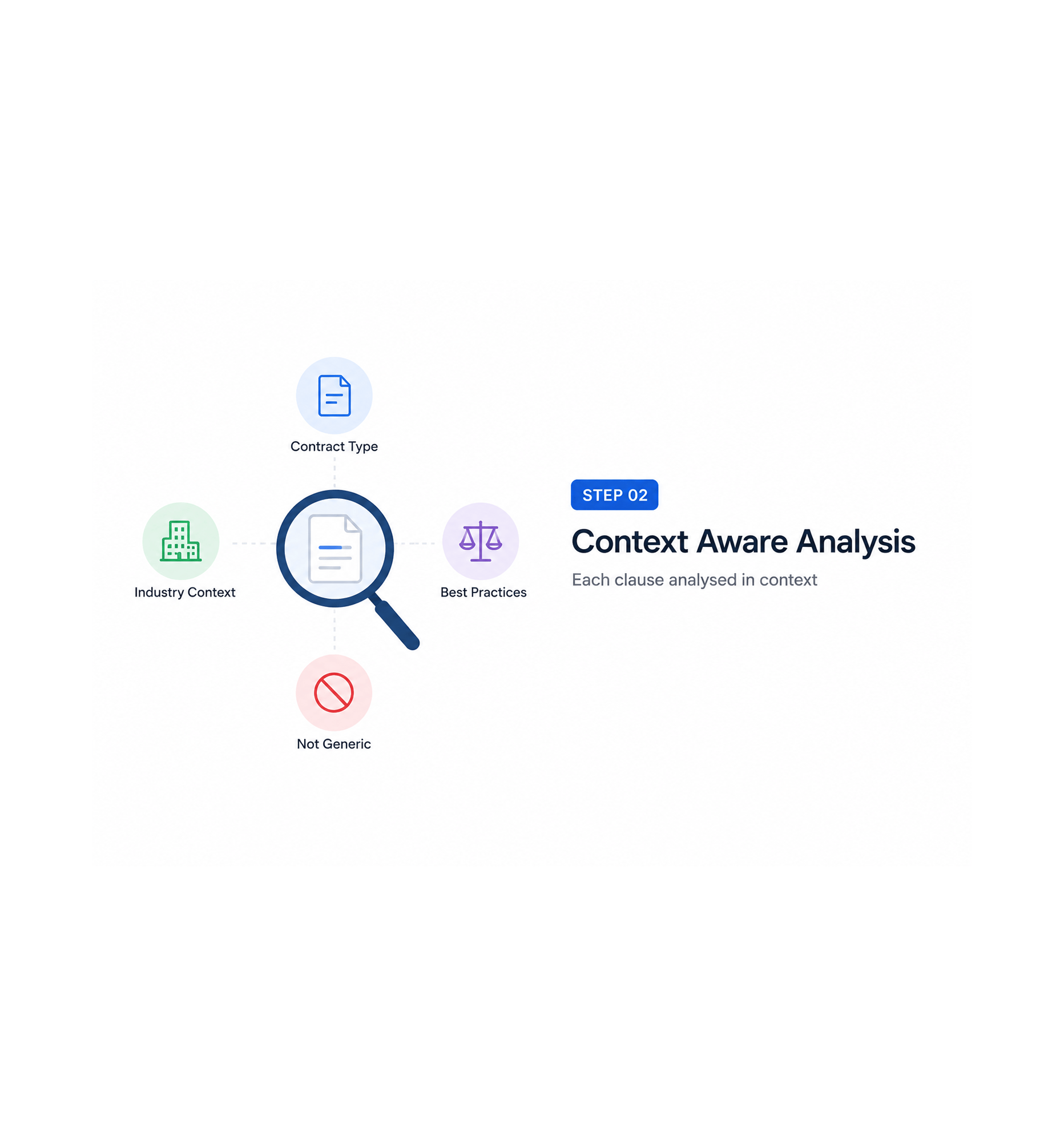
Context Aware Analysis
Each clause analysed in context
A payment term standard for a service agreement is weak for a high value vendor contract. Sigi weighs contract type, industry, and best practices for that mix. Suggestions reflect real context, not templates.
- Contract Type
- Industry Context
- Best Practices
- Not Generic
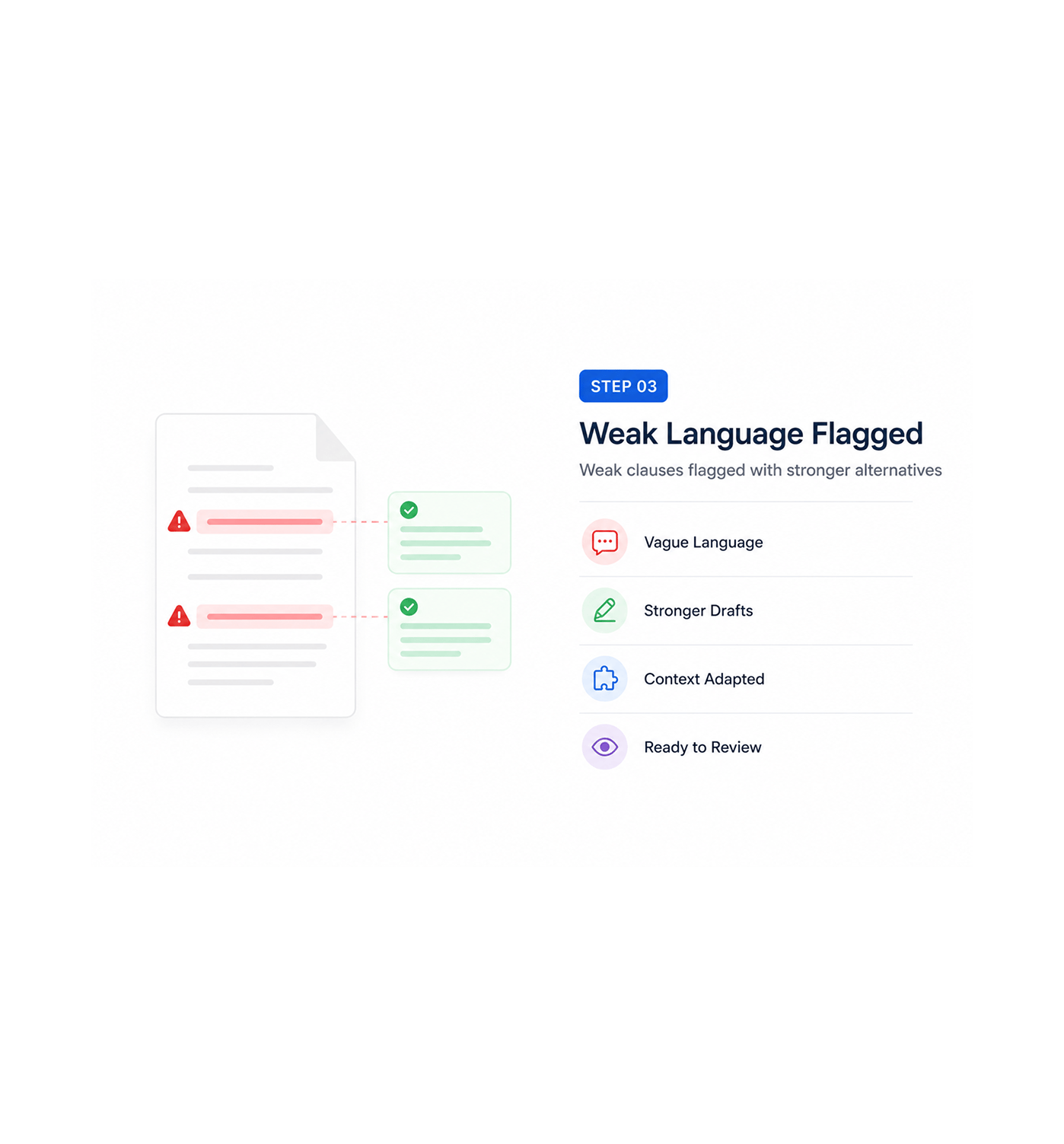
Weak Language Flagged
Weak clauses flagged with stronger alternatives
Vague language, missing protections, asymmetric terms, ambiguous wording. Sigi flags weak clauses and drafts stronger alternatives fitted to the contract, adapted to parties, subject matter, and structure.
- Vague Language
- Stronger Drafts
- Context Adapted
- Ready to Review
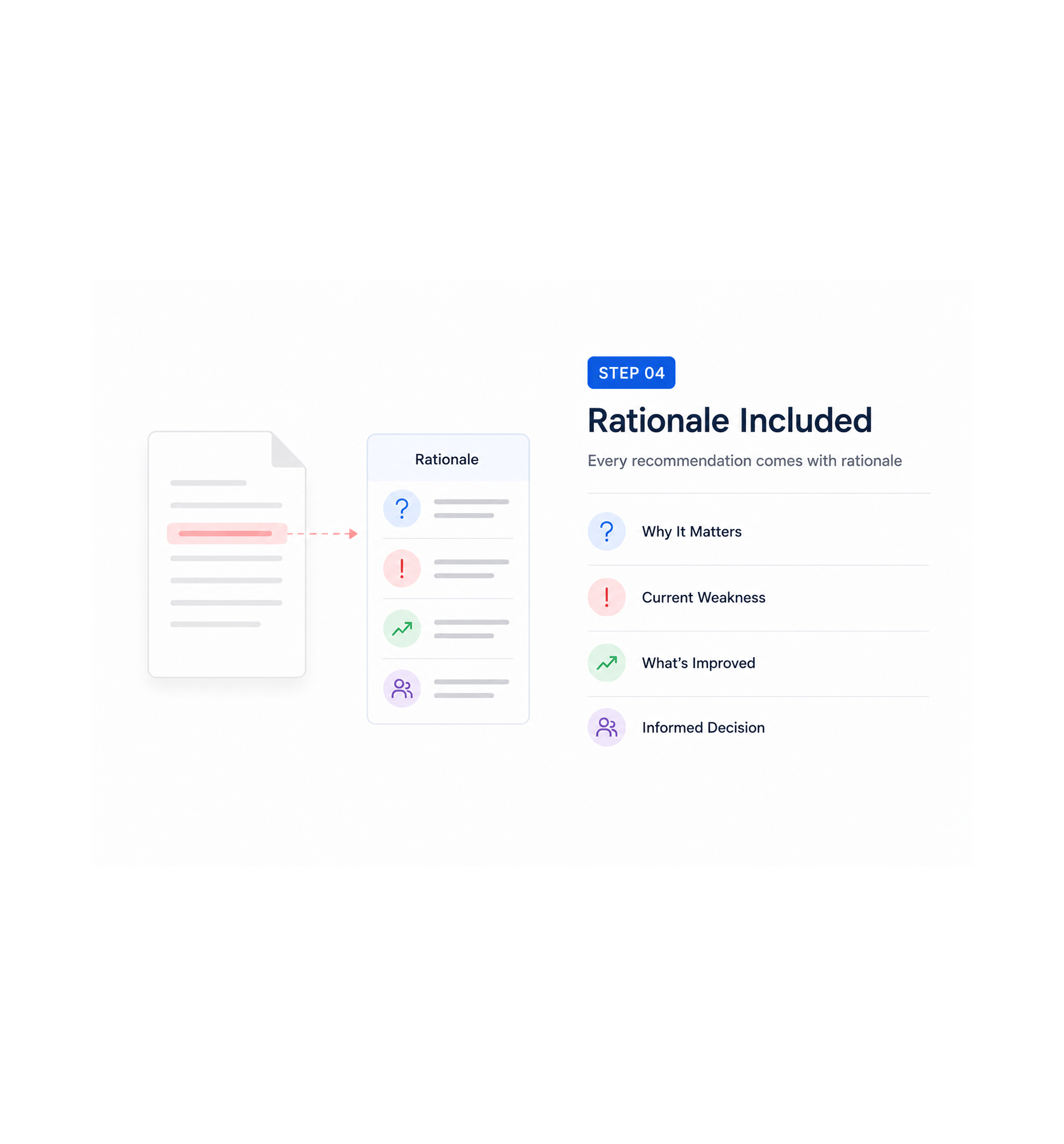
Rationale Included
Every recommendation comes with rationale
Replace this with that is not enough for review. Sigi explains why each change matters, the current weakness, and what the stronger version protects against, so the team decides with full information.
- Why It Matters
- Current Weakness
- What's Improved
- Informed Decision
Six reasons every contract becomes a stronger one
Every clause reviewed, every weak one flagged, every fix drafted, every change explained. Acceptable becomes excellent.

Every clause reviewed, not just the obvious ones
Manual review focuses on headline provisions and skims the rest. Systematic review catches weak language everywhere, with equal scrutiny.

Suggestions reflect industry context
Strong varies by contract type and industry. A term standard for service work is weak for a vendor deal. Sigi weighs real context, not generic templates.

Stronger language drafted to fit
Boilerplate substitutes that ignore the contract's structure create awkward seams and rework. Sigi drafts alternatives fitted to the document, ready for legal review.

Rationale explains why each change matters
A bare recommendation forces legal to guess. Sigi explains the weakness, what the stronger version protects against, and why it matters.

Raise the bar across every contract
Even the best counsel is inconsistent at high volume. Systematic clause intelligence raises the floor on every contract, quarter over quarter.

Works alongside risk analysis and gap detection
Clause Intelligence improves existing clauses. Risk Analysis flags problematic ones. Missing Clause Detection catches absent ones. Together they cover every review category.


7800+
Teams turning every contract into their best one
Built for every team that touches pipeline
In house counsel raising the bar across high volumes. Founders wanting stronger terms than the counterparty's draft. Procurement strengthening vendor agreements. Anyone who signed and later wished the language were stronger.
Reviewed
Aware Context
Language
Provided
Reads every clause with industry context
Sigi reads every clause, not just headline provisions. Each is analysed against contract type, industry context, and best practices for that mix. Systematic review, not spot checks.
Everything the intelligence layer ships with
Full clause review, contract type and industry awareness, weak clause flagging, stronger drafting, rationale.

Full Contract Clause Review
Every clause gets reviewed, not just headline provisions. Indemnification, warranties, payment terms, termination, IP, and the rest. No skipped sections.

Contract Type Awareness
What's strong for a service agreement differs from a vendor or employment contract. Sigi weighs the type first and applies standards for that category.

Industry Context Awareness
Industry shapes what counts as standard, strong, or weak. Software differs from manufacturing differs from services. Sigi factors in the industry.

Weak Clause Flagging
Vague language, missing protections, asymmetric terms, ambiguous wording. The weaknesses most likely to cost you get flagged with a clear reason.

Stronger Alternative Drafting
Every flagged clause comes with a stronger alternative, fitted to the parties and surrounding clauses. Drop in ready.

Rationale For Every Recommendation
Every recommendation includes rationale: the current weakness, what the stronger version protects against, and why it matters. Informed decisions.
Everything you need to know
Common questions on weak clauses, context, rationale, and the other Sigi features.
Vague language, missing protections, asymmetric terms, ambiguous wording. The categories of weakness that historically cost teams something when contracts get tested. A vague payment term that doesn't specify late fees. An indemnification clause that's heavy on one side. A termination provision that lacks the cure period the team's standards usually include. Each weakness gets named explicitly with a clear explanation.