


Every contract protected.
Every access controlled.
Each organisation's data stays separate, with three permission levels, secure sessions, single sign on, and lockout.
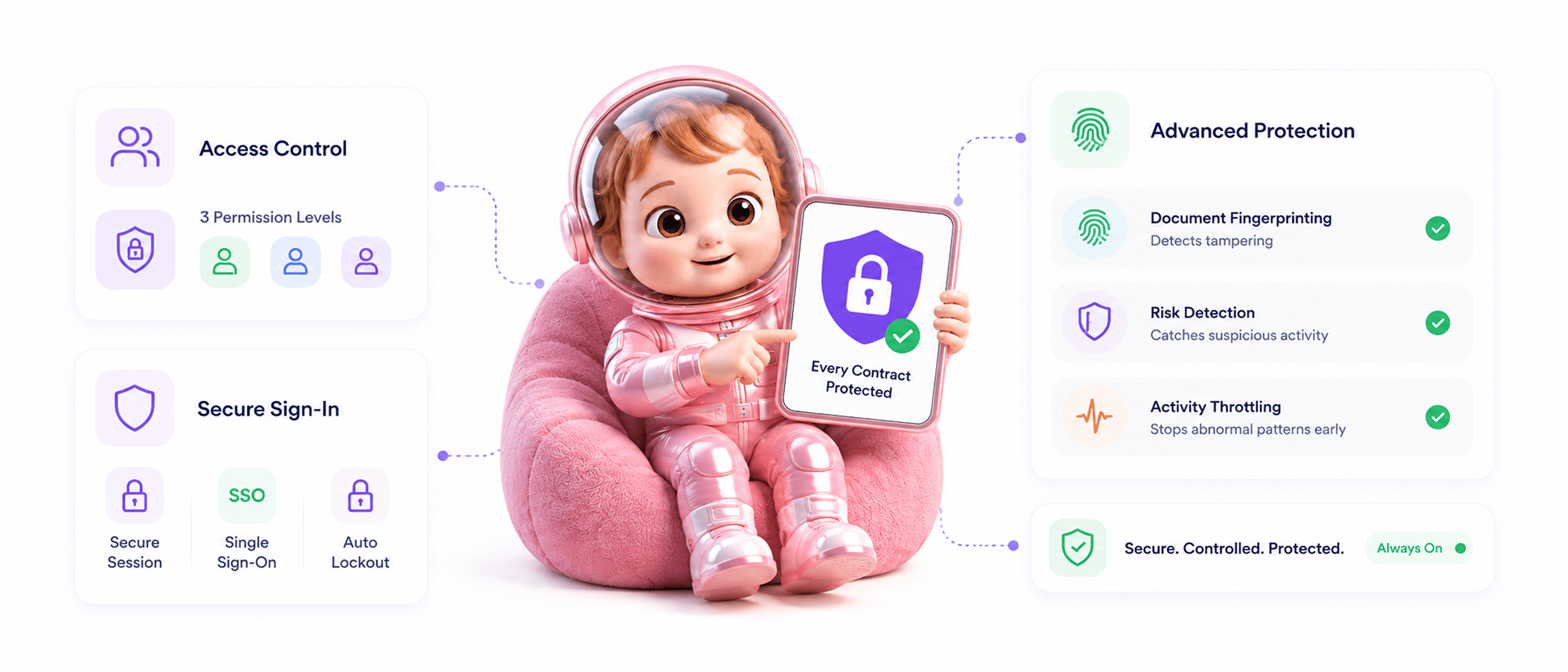
From organisation isolation to document protection in 4 steps
Data stays separate per organisation, sign in is protected, roles control access, tampering is flagged.
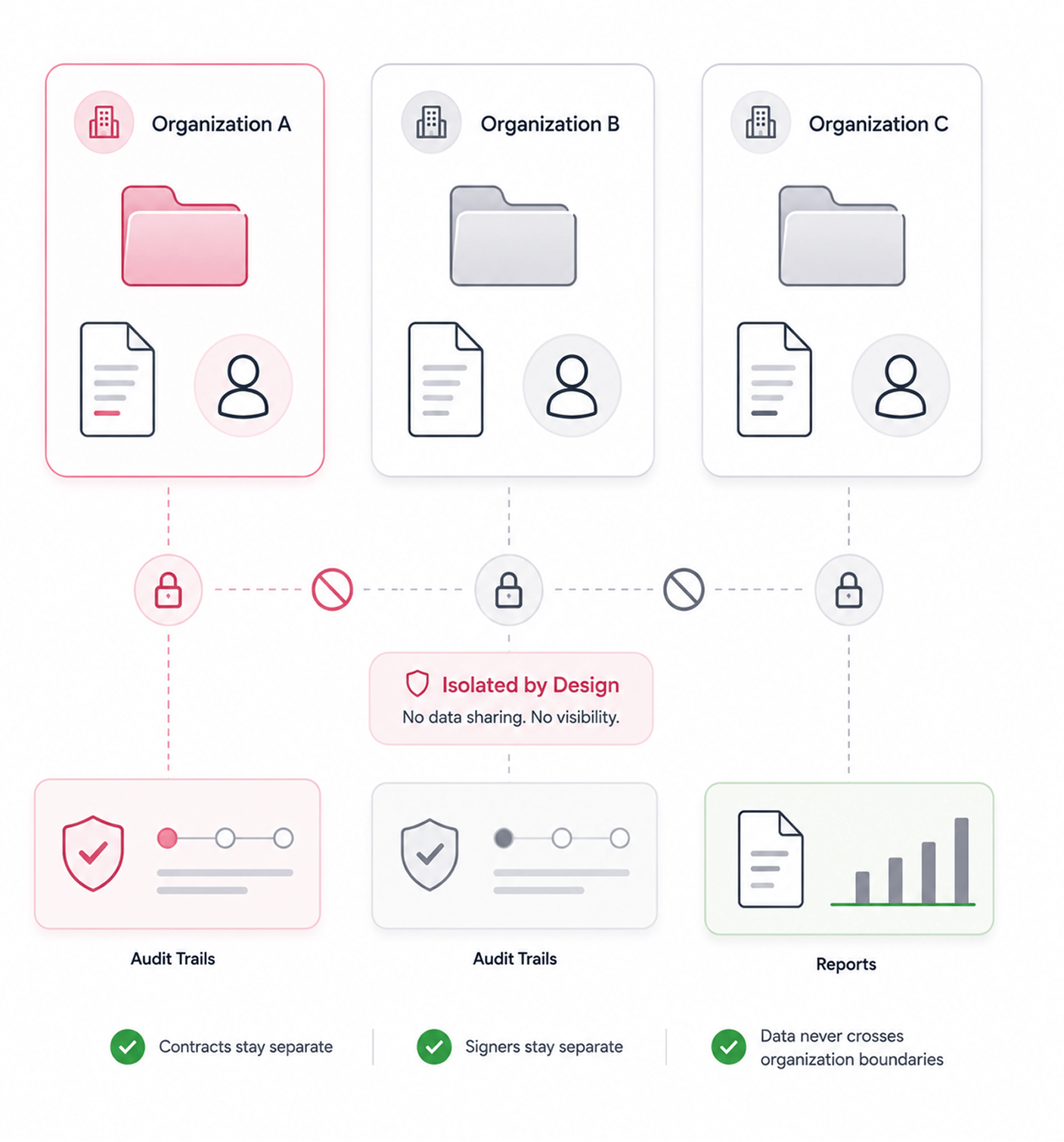
Data Isolation
Each organisation's data stays separate
Every organisation operates in its own isolated space. Contracts, templates, signers, audit trails, and reports for one cannot be seen by another. The separation is built into the foundation, not configurable rules.
- Strict Isolation
- Per Organisation
- No Cross Access
- Built In
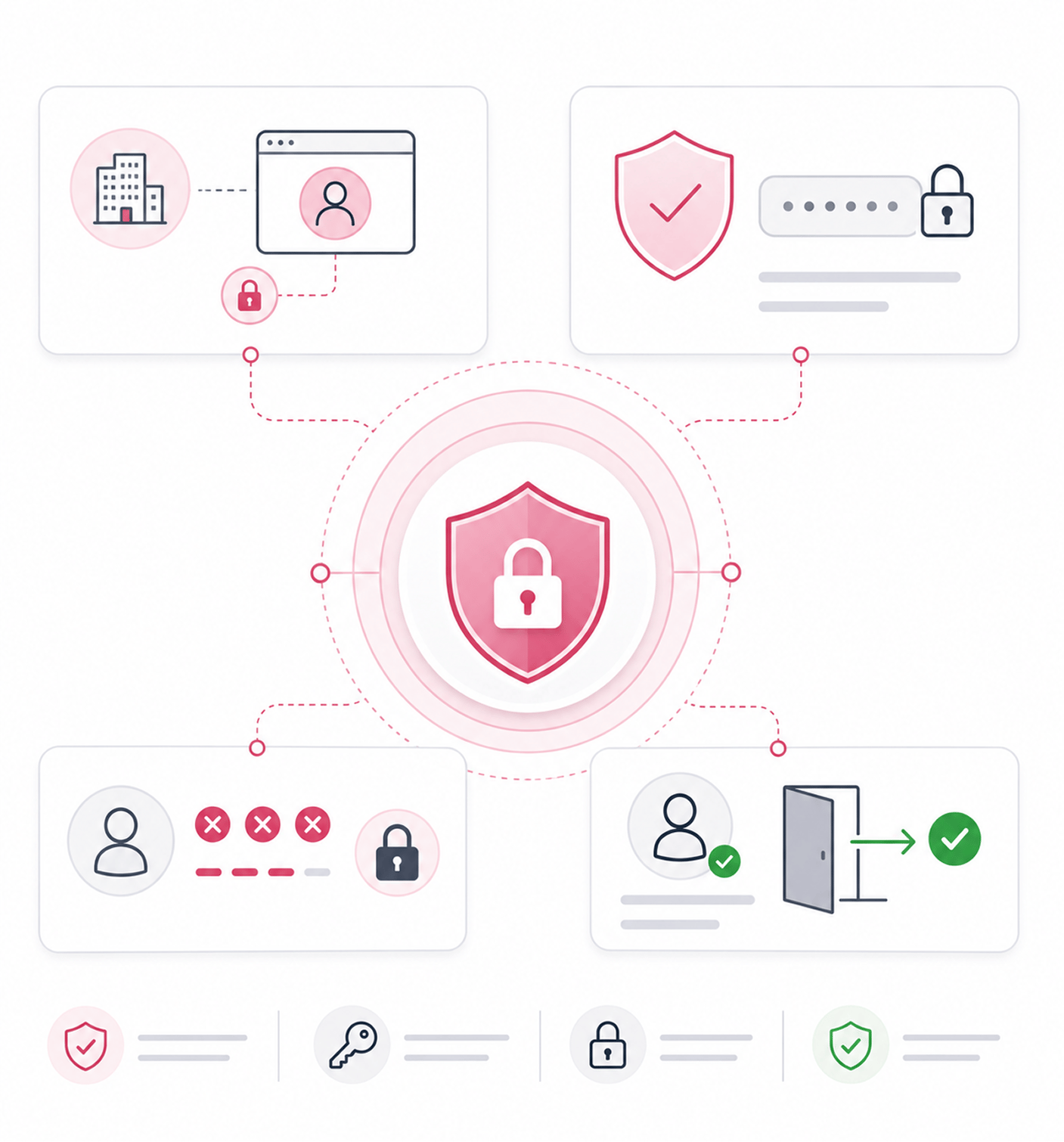
Sign In Protection
Sign in protected by multiple layers
Secure sessions protect every signed in user from forged requests and session hijacking. Single sign on lets the team use the company's existing identity system. Automatic lockout stops guess attacks after repeated failures.
- Secure Sessions
- Single Sign On
- Auto Lockout
- Multiple Layers
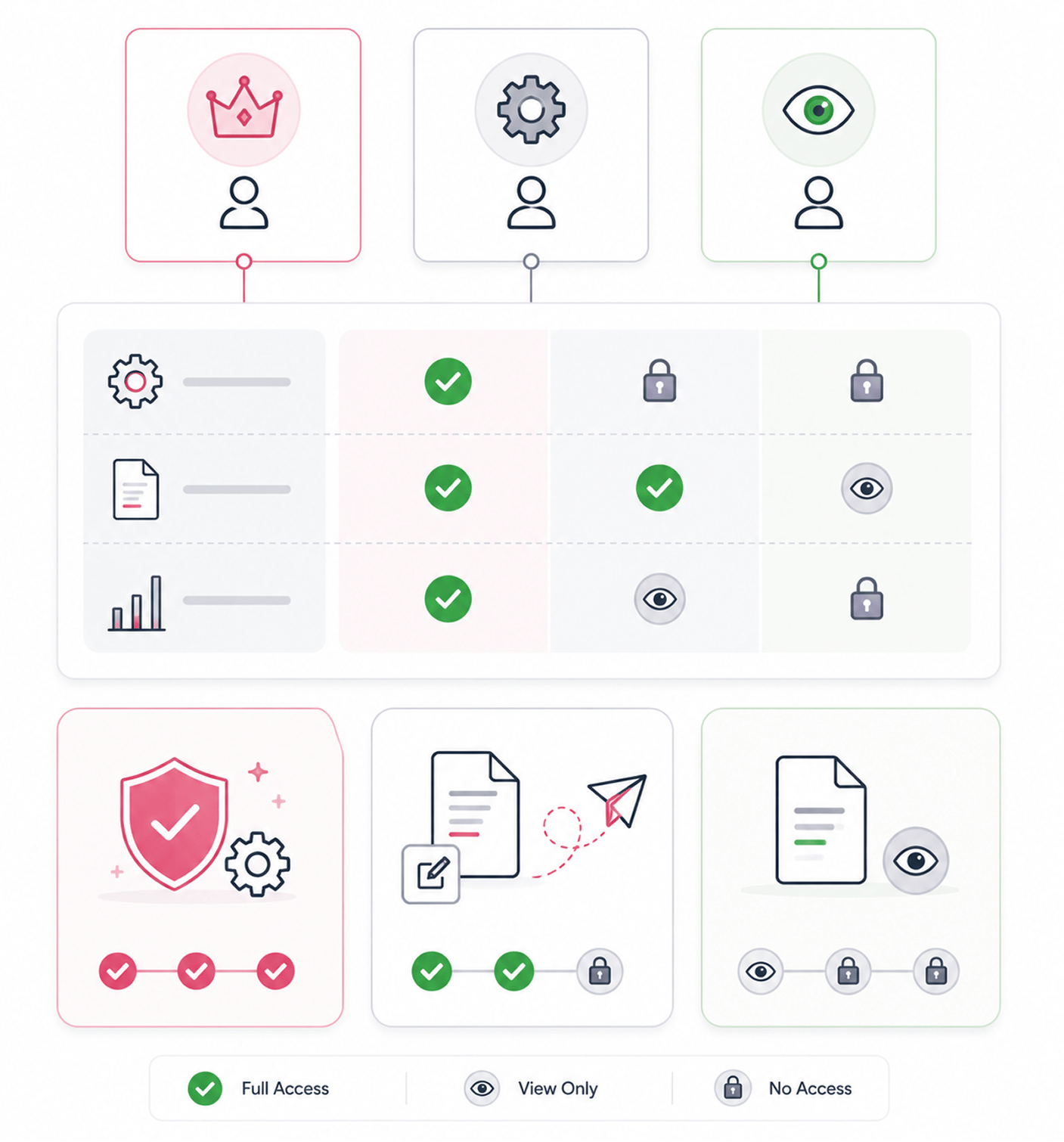
Role Permissions
Permissions control what each role can see
Three permission levels match real teams. Admin has full control over settings and data. Manager can create, send, and manage contracts but not change organisation settings. Viewer can see assigned contracts but not modify anything.
- Admin · Manager
- Viewer
- Matched To Role
- No Over Access
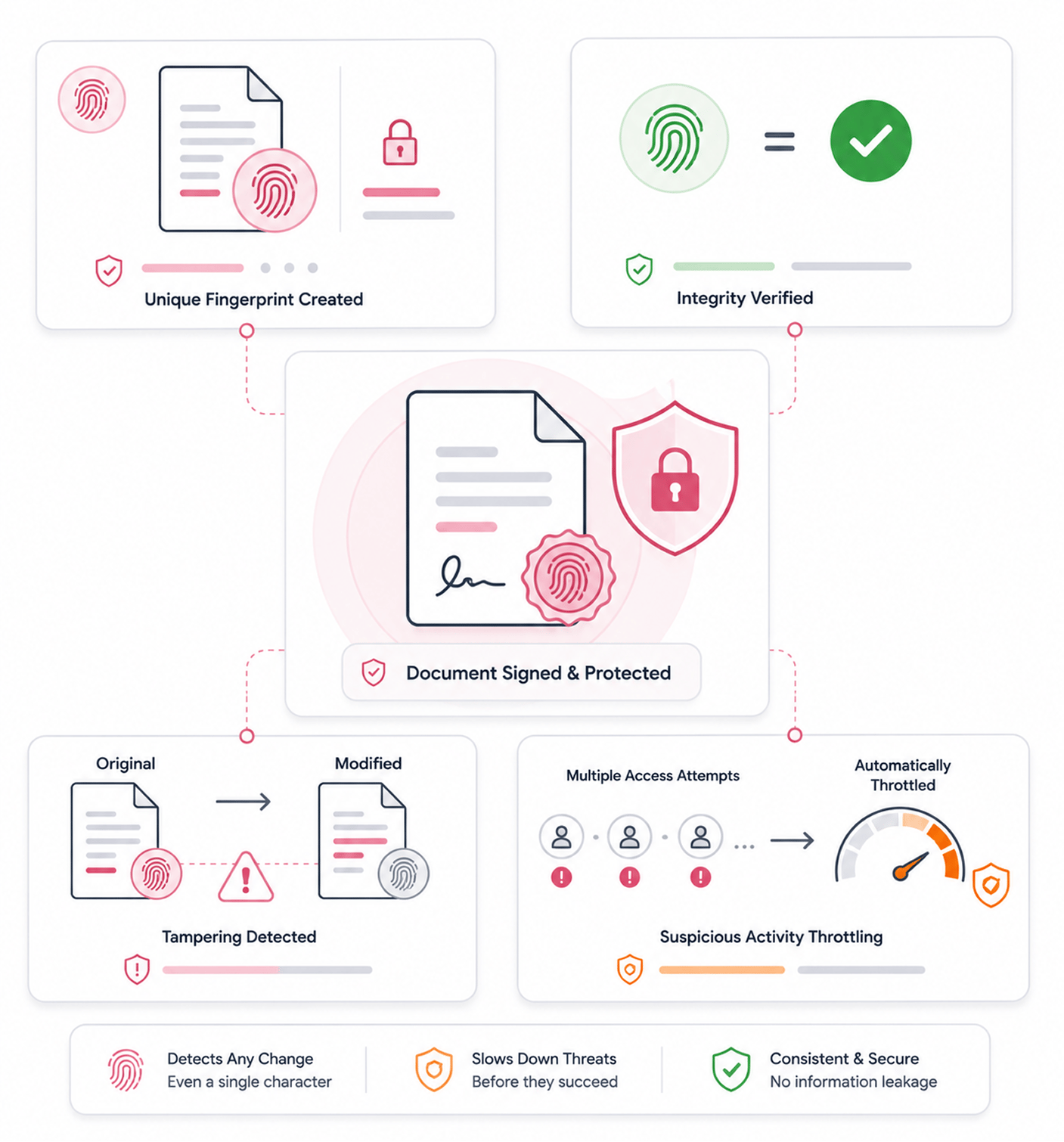
Document Protection
Document fingerprinting catches tampering
When a document is signed, the platform creates a unique fingerprint from its exact contents. Any later change, even one character, gives a different fingerprint. Throttling slows unusual access, and consistent timing hides information.
- Document Fingerprint
- Activity Throttling
- Consistent Timing
- Layered Protection
Six reasons security reviews actually pass
Organisation isolation, three permission levels, single sign on, automatic lockout, document fingerprinting, activity throttling.

Organisation data isolation prevents cross team leaks
A platform shared by many organisations must keep each one's data fully separate. Strict isolation means contracts are never visible to another.

Three permission levels match real team structures
Admin, manager, viewer cover the access patterns real teams need. Junior members get viewer access, senior members manage workflows, only admins control organisation settings.

Single sign on works with the company's existing identity
Teams using a company identity system shouldn't keep separate passwords per tool. Single sign on lets members use one identity, managed centrally.

Automatic lockout stops repeated guess attempts
Repeated failed sign in attempts from the same source trigger automatic lockout, so the attacker can't keep guessing. The legitimate user gets a clear path to recover access.

Document fingerprinting protects signed contracts
A signed contract quietly changed later defeats the purpose. Fingerprinting creates a unique pattern at signature that matches only the original.

Suspicious activity throttling catches patterns early
Attackers often probe systems with high volume requests. Activity throttling slows unusual patterns, and consistent timing leaks nothing usable.


13200+
Teams running on platform security their reviewers actually approve
Built for teams whose security and compliance reviews are not negotiable
Security teams evaluating the platform who need real controls, not claims. Compliance teams verifying controls for audit and procurement. IT teams managing access and sign in flows. Legal ops leads responsible for data protection.
Isolation Strict
Levels
Supported
Fingerprint Active
Organisation isolation, role permissions, secure sign in
Each organisation's data fully separated. Three permission levels (admin, manager, viewer) match real teams. Secure sessions protect signed in users, and single sign on integrates with the existing identity system.
Everything the security layer ships with
Organisation isolation, three permission levels, secure sign in and SSO, lockout, fingerprinting, throttling.

Organisation Data Isolation
Each organisation operates in its own isolated space. Contracts, templates, and reports cannot be accessed by another.

Three Permission Levels
Admin controls all settings and data. Manager can create, send, and manage contracts but not settings. Viewer can see, not modify.

Secure Sign In and Single Sign On
Secure sessions protect every signed in user from forged requests and hijacking. Single sign on uses the company's identity system.

Automatic Lockout After Failed Attempts
Repeated failed sign in attempts from the same source trigger automatic lockout, so guessing stops. The user gets a clear path back.

Document Fingerprinting
At signature, the platform creates a unique fingerprint from the exact contents. Any later change, even one character, is revealed.

Suspicious Activity Throttling
Unusual access patterns get automatically slowed, making attacks impractical and giving security teams time to investigate.
Everything you need to know
Common questions on organisation isolation, permission levels, SSO, lockout, and fingerprinting.
How does organisation isolation work?
Every organisation operates in its own isolated space. Contracts, templates, signers, audit trails, reports, and every other data type are tagged to a specific organisation at creation. The data layer refuses to return any data tagged to a different organisation than the requesting user's. This separation is built into the foundation rather than enforced through rules that could be misconfigured, so cross organisation access is structurally impossible.
What does each permission level do?
How does single sign on integration work?
What triggers automatic lockout?
How does document fingerprinting protect contracts?
Why does consistent response timing matter?